[ad_1]
Davide Skerlj graduated at the Academy of Fine Arts in Venice in 1986. Since 1991 he has spent long periods of time in New York, collaborating with non-profit organizations active in the field of video art and contemporary art (NY Arts Magazine; Broadway Gallery; Downtown Community Television Center). He has exhibited in museums and institutions such as: Grand Palais, Paris; Künstlerhaus, Vienna; MACRO – Asilo, Rome; 29 – Les Instants Vidéo, Marseille; DCTV – Downtown Community Television Center, New York. Since 2000, he has mainly lived in Trieste.

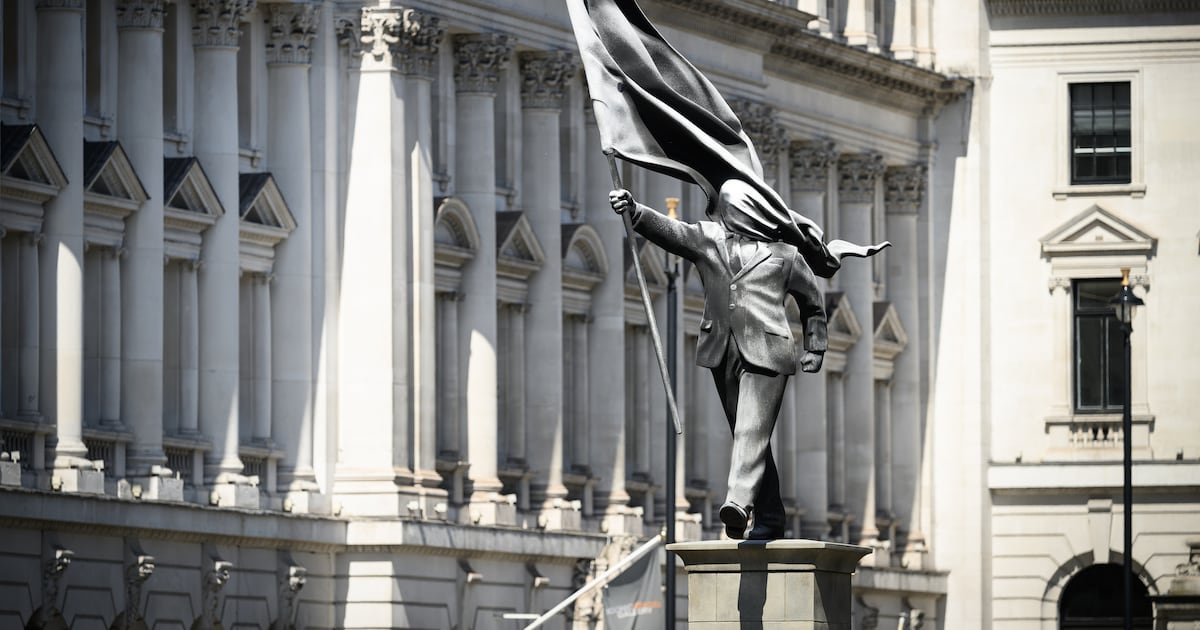
Davide Skerlj, “Esterno”, installation, 2006, Centro d’Arte Contemporanea Villa Manin, Passariano, courtesy of the Artist
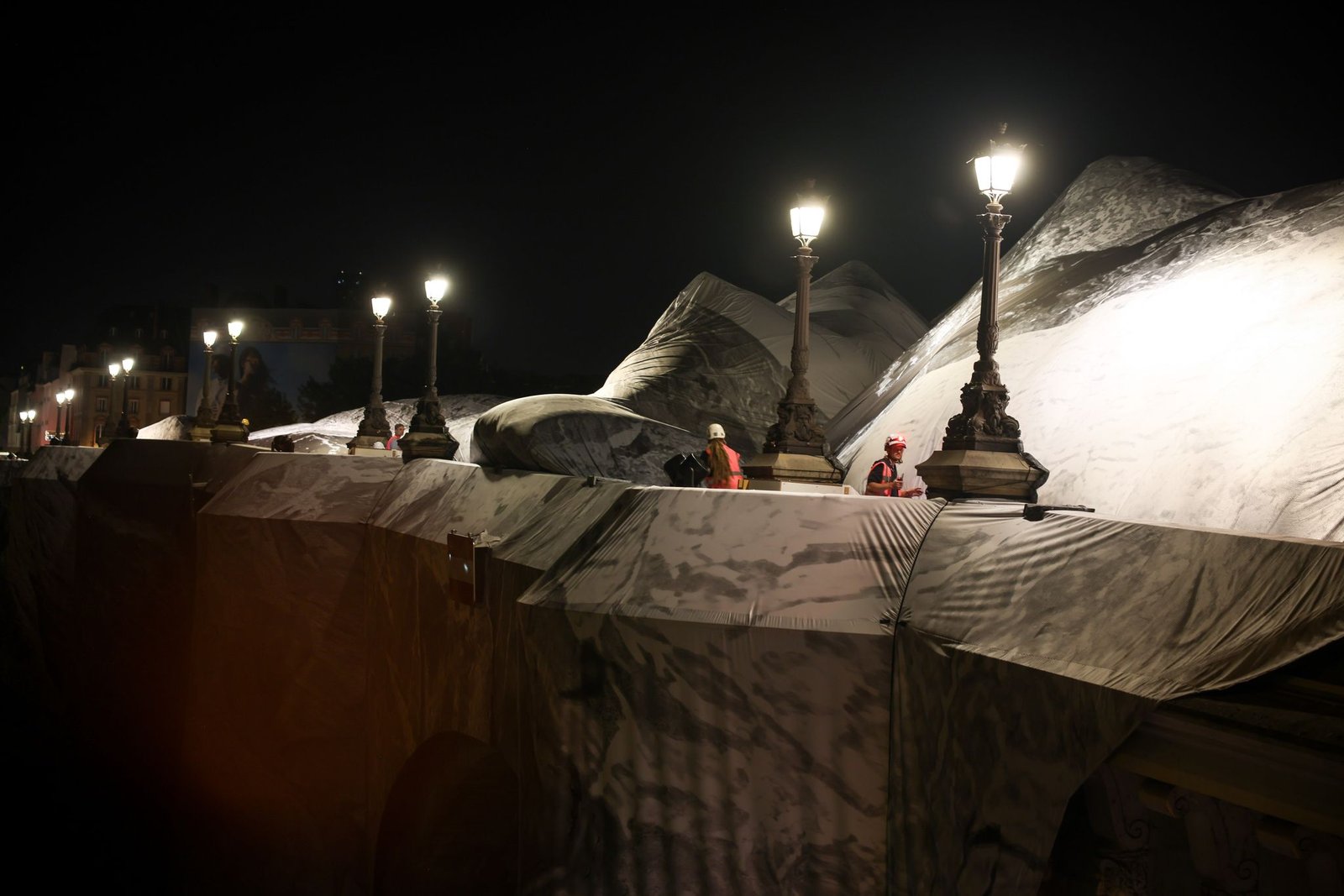
On the occasion of his Mythos Erz project, which he is currently developping for the town of Vordernberg in Austria that focuses on the redevelopment of a former steelworks, we met Davide Skerlj in his studio in Via San Francesco in Trieste.

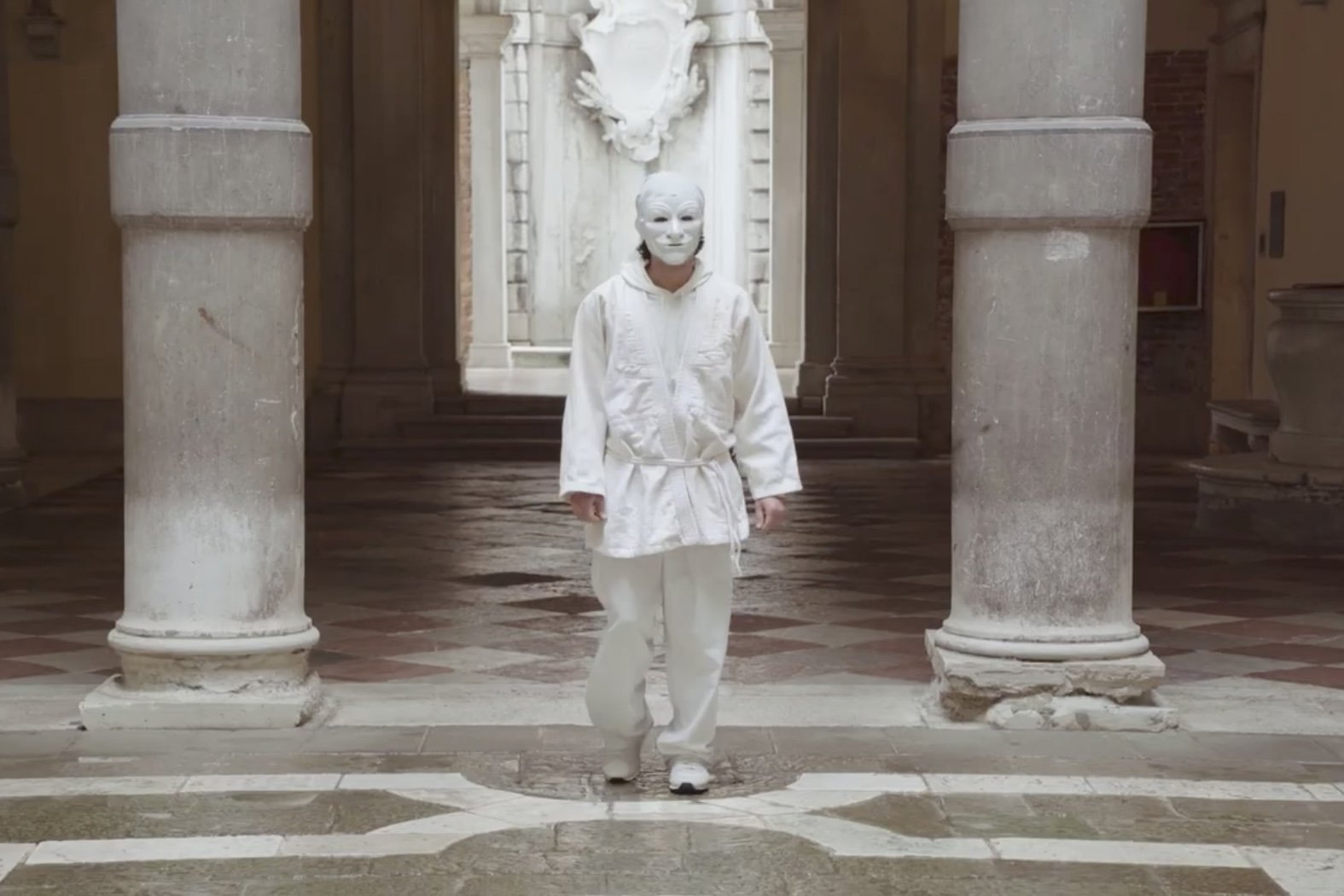
Davide Skerlj, “Bianco”, 2025, still from video, Museo Ca’ Rezzonico, artistic action with the collaboration of Itineris Teatro, Venezia. Photo courtesy of Anna Sandrini
Daniele Capra: Davide, your research ranges from sculpture to performance, to artist video and film. Over the years, for each project, you’ve employed the medium you deemed most necessary, probably feeling comfortable with all of them, if not none. Which form of expression makes you feel at home?
Davide Skerlj: Perhaps there’s nothing so precise and specific in my research. I remember the beginning of the war in the Balkans and how it was argued everywhere; then the birth of the World Wide Web, globalization, new forms of consumption, and even the music of Nirvana. But, for me, a fundamental question always remains: what do I leave here and what will I carry with me in my backpack? Drawing is probably the form of expression that makes me feel at home. This is a medium that allows me to elaborate and visualize the fragilities of my research, suspended between the body and the human, between narrative and action, and technology.

Davide Skerlj, “Presence”, 2012, still from video, 29-Les Instants Vidéo Marsiglia, courtesy of Marc Mercy
It’s said that drawing is simultaneously a form of synthesis of reality, a diary, but also a direct projection of the person. And it often embodies, in some way, an idea or a possible project. Do you draw often? What does this medium mean to you?
Yes, I draw frequently. I consider it a fundamental means of expression, because it’s as if it connects your present with your future. Using it allows you to define a precise vision. The drawings I make are generally actual sketches, fragments, visual details of works, scattered here and there. For me, they answer the question: “If it were like this, what could be done?”

Davide Skerlj, “Ritratto”, 2012, site-specific, Galleria S. Tommaso, photo by Tiziano Neppi, courtesy of Museo Civico Rovigno, Croazia
However, I’ve always sensed an interest in involving other people: a desire to work and operate collectively. Where does this desire to work with others come from?
On the one hand, I feel close to many historical avant-gardes of the twentieth century, where this approach was already in use. Think, for example, of the Dada practices of the Cabaret Voltaire, the interventions of Gordon Matta-Clark, the theatrical narratives of Viennese Actionism, or the visual, comic-like narratives of Alejandro Jodorowsky. On the other hand, there is the desire to expand my research beyond the boundaries of the studio, entering the complexity of the public sphere and relationships with others. This aspect led me to seek collaborations and to engage with different dynamics, especially when I became interested in video.

Davide Skerlj, “Luna d’acqua”, 2015, artistic action, Side events Biennale Arte di Venezia, Venezia, courtesy of the Artist
This aspect also led you to imagine operations in which people are involved experientially, invited to experience a situation or condition that you then incorporated into the work. Why are you interested in people’s time and lives? And what fascinates you about sharing an experience with others?
Time is the aspect that interests me the most. Perhaps because I don’t always perceive it as a simple succession of events, but rather as a material to be shaped, working between chronology and coincidence. People, on the other hand, interest me because we, as human beings, are not merely biological and psychological subjects, but unique individuals with a transcendental dimension, tied to life and the very condition of existence.

Davide Skerlj, “Heart”, 2016-17, european project Sold Out, Künstlerhaus, Wien, courtesy of Nextkunst
Your video works often reveal traces of this variability. They are often characterized by an uncertain line, in which facts are simultaneously exposed and deconstructed through a non-sequential format. It’s as if the narrative follows autonomous logics, responding exclusively to other visual aspects, without any qualms about manipulating or distorting events. I remember a work of yours from about twenty years ago, Mute Rhythm, in which, as a spectator, I felt disoriented because I didn’t know what the focus of the work was.
Yes, it’s a dimension that belongs to me. I’m generally interested in works characterized by an unpredictable or incoherent path, based on the fragment, the deconstruction, the incomplete.

Davide Skerlj, “Dal pesce al flauto”, 2018, still from video, Palais Thinnefeld, Graz, courtesy of Trieste Contemporanea
What fascinates you about this kind of storytelling that breaks down and deconstructs narrative and chronological succession? Even in casual conversation, I have often had the impression that the way you interpret events – whether happening around you or to you – follows, on the one hand, a logic of expanding concentric circles around certain key elements, and on the other, projections of long lines leading elsewhere…
The deconstruction of narrative interests me because it develops a process of openness that does not lead to a defined and definitive meaning. It is not about producing a closed, complete work that must be understood, seen, and read immediately. On the contrary, the observer is called upon to complete the process, to elaborate it: they must finish something through engagement, avoiding quickly forgetting it and shifting their attention elsewhere.

Davide Skerlj, “Acqua”, 2019, performance, MACRO-ASILO, Roma, photo by Paolo Weber, courtesy of Angela Giassi
Is this approach also reflected in other expressive mediums you use, such as sculpture or installation?
Most of the time, yes, the matrix is always the same. Generally, I look for deviations, openings that lead elsewhere. I look for cracks in the walls.
Daniele Capra
(Translated by Martina Palaskov-Begov)
Info:
is a contemporary art magazine since 1980
[ad_2]
Source link