


The language of fighting is everywhere
Men are told to fight illness, fight pressure, fight grief and fight their way back. The metaphor can be motivating, but it can also become a trap. A person who believes every difficulty must be defeated alone may interpret asking for help as surrender.
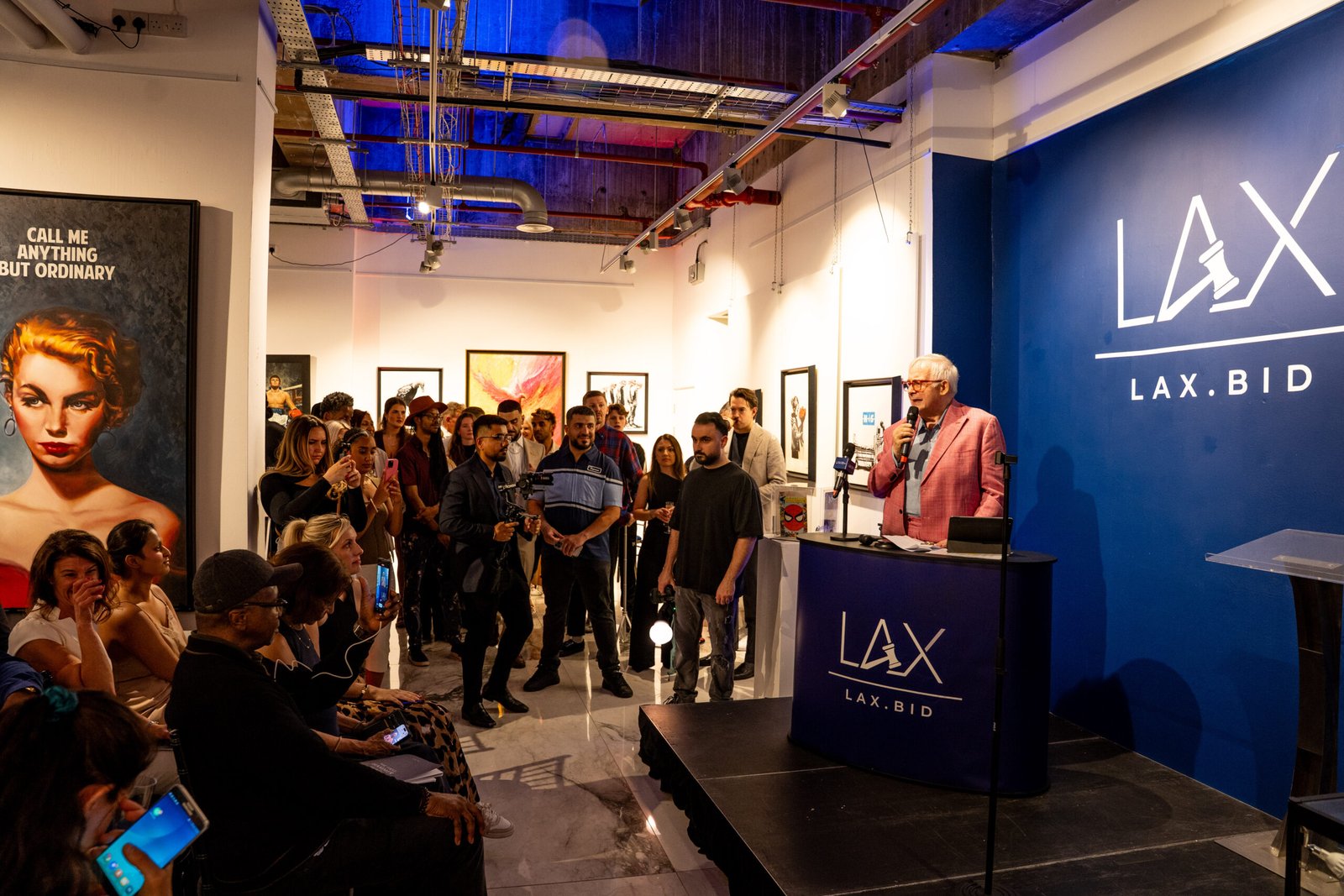
The LAX.BID event on 18 June used the language of boxing differently. Its central message – Nobody Needs to Fight Alone – did not deny strength. It questioned the idea that strength must be silent.
The exhibition and auction were presented in aid of Mind, with the Ricky Hatton Foundation, London Art Exchange and LAX.BID forming part of the evening’s public identity. The event combined a new auction-platform launch with a men’s mental-health message, an uneasy pairing that required the art to carry more than decorative weight.
A face built from pressure
Mr Phantom’s tribute artwork made the psychological theme visible. The profile appears monumental, constructed from blocks, but one side is breaking apart. Words associated with mental strain – silence, pressure, stress, exposure and expectations – move outward like physical debris.
At the base, a child climbs a ladder toward the larger figure. The image can be read as a relationship between generations, a son reaching a father, or a younger person trying to understand a model of masculinity built above him. The ladder suggests effort and support rather than rescue arriving from nowhere.
The artwork is effective because it does not present mental distress as a soft or abstract cloud. It gives it structure, weight and fracture. The face remains upright while the internal architecture fails. Many people recognise that condition: appearing functional in public while private pressure becomes unsustainable.
Art can make a difficult subject easier to approach
A charity speech asks an audience to listen. An artwork allows people to arrive at the subject at different speeds. One visitor may begin with technique, another with the Ricky Hatton reference, another with a word in the fragmented section that feels familiar.
That indirect route is valuable. Mental-health language can feel clinical, confessional or politically rehearsed. A visual image creates room for reflection without demanding immediate disclosure.
Art is not therapy, and an exhibition is not a substitute for professional support. The value lies in making conversation more possible and directing people toward real services.
Public figures change the reach, not the truth
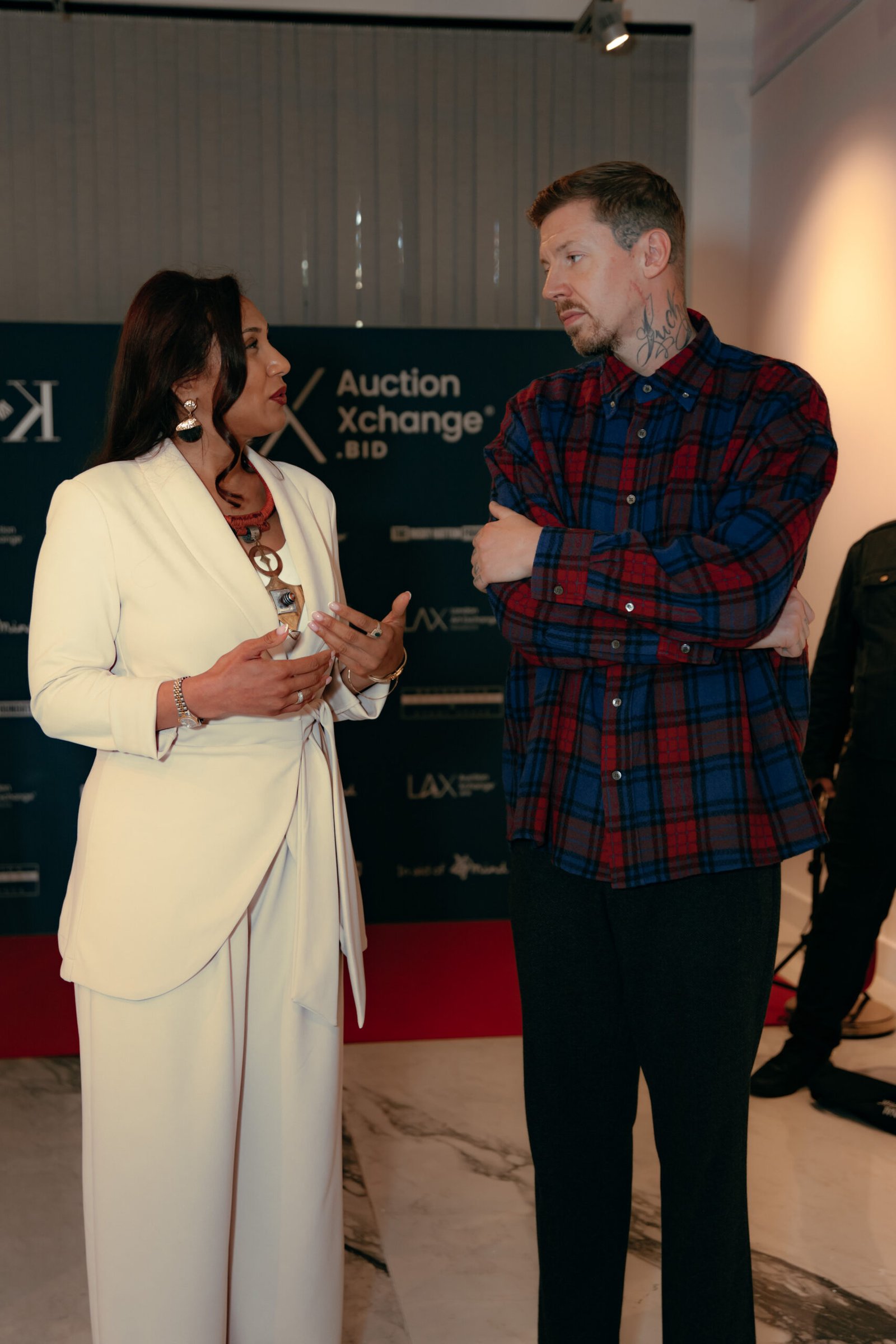
The evening attracted entertainment and lifestyle coverage through guests including Kelly Osbourne, Freddy Brazier, Aaron Thiara and DJ Fat Tony. Some of the reporting focused on fashion and personal stories; some returned to grief, body-shaming, recovery and family pressure.
Celebrity presence can help a mental-health event reach people who would not read a formal campaign. It can also distort the subject if the guest becomes more important than the cause. The ethical line is simple: a public figure may open the door, but the message must still lead to support, information and action.
The event’s best use of celebrity was not to present famous people as experts. It was to show that public visibility does not remove private difficulty.
The boxing connection matters
Boxing offers a powerful but complicated setting for a mental-health conversation. The sport values discipline, courage, endurance and the ability to continue after pain. Those qualities can help people survive. They can also discourage disclosure if vulnerability is treated as weakness.
Ricky Hatton’s public openness about his own struggles challenged that culture from within. The Foundation associated with his legacy has sought to keep sport at the heart of support while widening the definition of strength.
The phrase “fight alone” therefore carries particular force. It speaks to people trained to endure and to communities that understand courage through physical action. The event redirected that courage toward conversation.
What responsible charity language looks like
Cause-led events should describe relationships accurately. “In aid of Mind” means the event supports fundraising for the charity; it should not be described as sponsored, endorsed, or organised by Mind unless the charity formally confirms those roles.
Report the amount raised or donated only when someone has verified it. If the event involves costs, auction proceeds, or percentages, explain the calculation clearly. Public trust grows when the event explains what happened after the promise.
For LAX.BID and London Art Exchange, this means publishing an impact update once someone confirms the figures and beneficiaries. The company can also explain whether the mental-health partnership continues beyond the launch.
A commercial platform can host a social purpose – carefully
The event launched a business. It also drew attention to a public-health issue. Those purposes are not automatically incompatible, but people must not confuse them.
The auction platform gained press, guests, and emotional relevance. The cause should gain money, awareness, or practical support that people can demonstrate. If the relationship becomes one-sided, people may remember the artwork as branding.
A more durable model would connect future auctions, artist projects, client events, or content to transparent support. Not every LAX.BID sale needs a charity theme. The ones that do should receive the same operational discipline as payment and provenance.
The market also has a language problem
Art and luxury markets often celebrate resilience, winners and record prices. The stories that do not sell, the collectors under pressure and the artists struggling behind public success are less visible. A mental-health event can challenge that culture by acknowledging that status and value do not protect a person from distress.
The broader market context is uncertain. Interest rates remain meaningful, operating costs are high and public confidence moves quickly. Sellers may be under financial or personal pressure. Buyers may use collecting as identity, refuge or legacy. None of those motivations should be simplified into investment slogans.
London Art Exchange’s educational material rightly notes that art is illiquid, unregulated and capable of falling in value. The same honesty should apply to wellbeing: progress is rarely linear, and a public appearance should not be interpreted as proof that someone is “fixed.”
What should happen after the evening?
A useful legacy would include three things. First, publish verified fundraising or donation information. Second, keep links to Mind and other appropriate support visible in the archived event content. Third, create future opportunities for artists and public figures to discuss mental health without requiring crisis as the entry point.
The event made a persuasive image: a face opening, the hidden words becoming visible and a ladder already in place. The responsibility now is to make sure the ladder leads somewhere.
Strength is not silence. It is the ability to remain present, to accept support and to help build a route for the next person.