[ad_1]
I am in a house, in the middle of a field, on an island. Cows are closely circling the house outside, in a methodical, clockwise direction, like bovine security guards. A black cat paws at my legs. It vanishes, and a different cat appears in its place. I am listening to a woman singing in the next room. The song is Molly Bawn, and the singer’s voice is sweet and true. I find myself wondering whether the circling cows are attracted to the house by the melodies emanating from it: this traditional old farmhouse temporarily transformed to a music box.
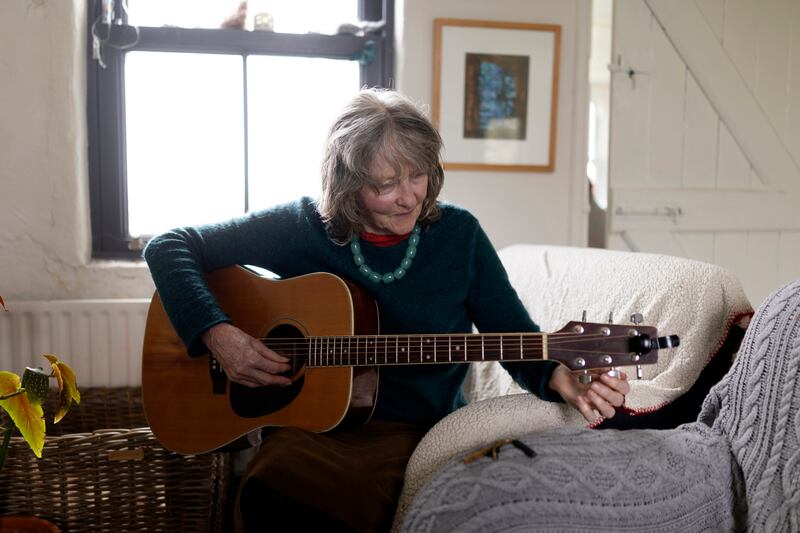
Artist Brigid Madden is the person singing. She came to live here, on Sherkin Island off West Cork, some 15 years ago. It was a BA in Visual Arts that brought her here; a degree organised by Technological University Dublin (TUD).
The course runs for four years, over six weekends of two semesters, where students come to the island every second weekend for lectures, workshops, study, to work on their projects, and all the while immersing themselves in island life. Most students work full-time throughout the course. Some 120 of them have competed the course since it began 26 years ago.
Madden, who had attended the National College of Art and Design (NCAD) as a younger woman, was a mature student of 60 when she did the TU course. Her studio is upstairs. She paints in oils, and her work focuses on seabirds, particularly gulls. There is a jar of pencils on the windowsill, along with three small white envelopes where dandelion heads are drying out. She also makes salves from herbs.
“I stayed on in Sherkin after finishing the course,” she says. “It’s a great place to have your own space, and also to get involved in the community. You might not see anyone for a couple of weeks, and that is fine too. It’s amazing in the winter; very wild. I prefer it at that time of the year. Being on the island gives me space to reflect more.”
At present there are two cohorts of students; one are in their fourth and final year, and the other in their second year. There are five students in their final year (Covid affected applicants that year), and 12 in the second cohort, in second year. The course takes in students every two years, and there will be 14 starting at the beginning of the next academic year.
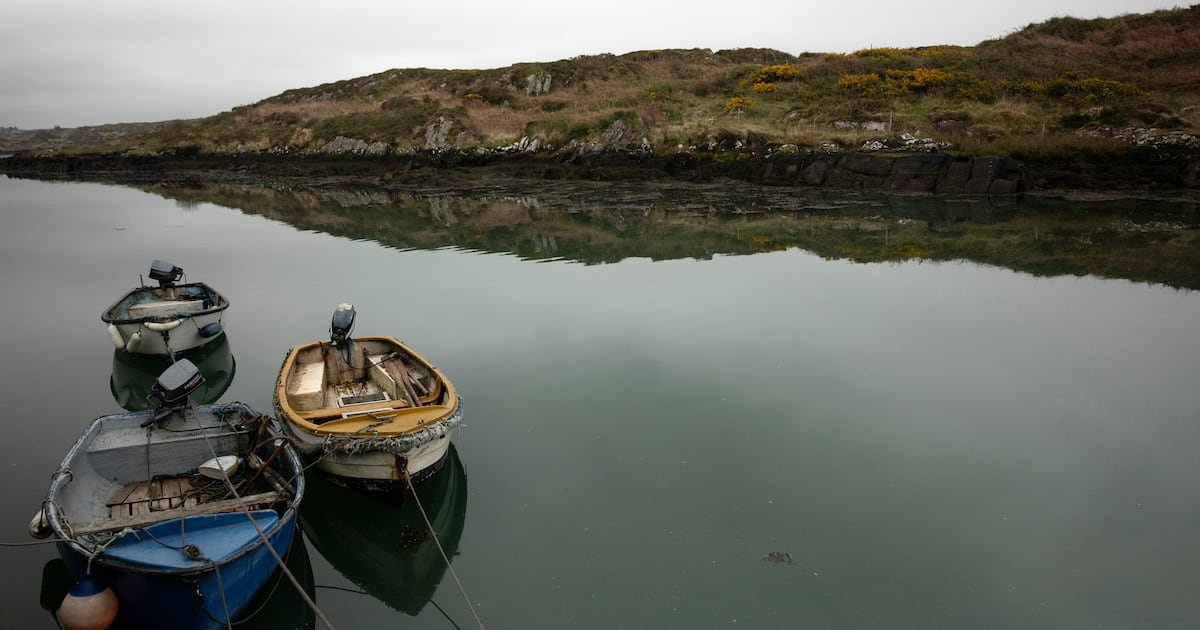
Sherkin Island is a short 15-minute ferry ride from Baltimore Harbour, not far from its island neighbours Heir and Cape Clear. It is a ridiculously beautiful place, with picturesque ecclesiastical ruins, narrow green lanes, a horseshoe-shaped bay, and beguiling views everywhere you look. However, it is short on facilities. There is, for instance, no primary school, no post office, and no shop.
There is a lovely atmospheric pub, The Jolly Roger, and a community cafe, the Northshore, where you can pre-book simple evening dinners. The evening I visited, the set meal was a vegetarian curry with rice and naan bread.
[ Matt Murphy leaves an extraordinary legacy in and around Sherkin IslandOpens in new window ]
The sole hotel has been closed for some years now. That’s because 50 Ukrainian refugees arrived unannounced on the island and were housed in the privately owned hotel, thereby increasing the population overnight from 110 to 160. It is a tribute to everyone involved that there seems to have been a true integration of the two population cohorts in a way that meaningfully celebrates the overused word, “community”.

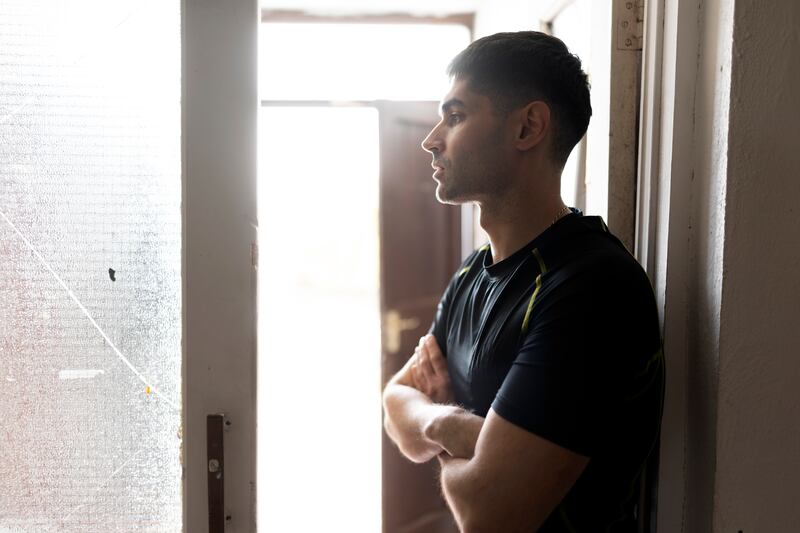
Sergei Kior, who is Ukrainian, has been living on Sherkin for four years, and is one of the five TU final-year students.
“I was working as a photographer for almost 10 years before I came here,” Kior says. He worked as a photographer at music festivals and on cruise ships. Now, he is focused on his own work. “You are not taking pictures for the client; you are making your own art.”
Kior’s final-year project is an absorbing series of large-scale black-and-white photographs called Sherkin Island at Night. Starting in January, he went out at night and took pictures of what interested him using only ambient light. He took 500 images in total, and 12 of them will be displayed at various locations around the island as part of the Art Trail installations created by the final-year TU students.
Kior’s images depict houses lit from inside, moonlight on the ocean, cars that appear to be driverless: all of them with an unsettling atmosphere. They will be displayed in large poster format, including one at the pier. “They will be damaged by the rain and the sun; they will change over the weekend,” he says.
Madden is not the only person who did the on-site course and then decided to make Sherkin her home. Sinéad McCormick has been living on the island for the last 10 years, since completing the course and a further MA. She now also teaches on the course. When she pushes her sleeve up, I can see a tattoo that reads: “An epic or a classic?”
At least her commute to the island’s community centre is now an extremely short one. When she was a student, she lived between Mullingar and Barcelona. “It was a long commute,” she says with understatement. Originally a horticulturalist, she had always wanted to be an artist.
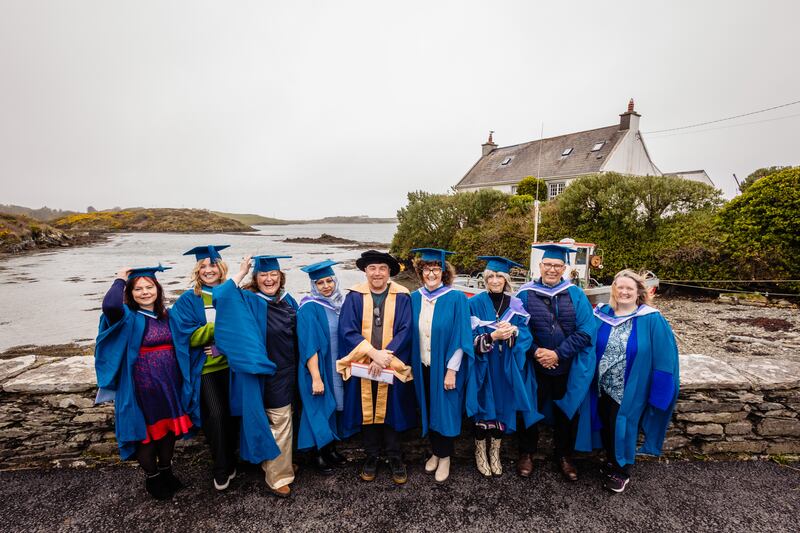
“I came on the course to kind of escape, and when I got here, it didn’t take me long to realise I wanted to stay long-term. It took me out of my comfort zone, collaborating with other people, and making socially engaged art. I learned drawing, painting, sculpture, film-making, textiles, and performance art. We also used found materials around the island. Once you do the foundation year in most traditional art colleges, you have to decide after that year what you want to specialise in, and here you don’t have to decide.”
[ Sherkin Island: a magnet of creativity for artists, writers and musiciansOpens in new window ]
The students pay €60 a night for their accommodation on the island, and have student rates on the ferry. At present, there are three houses available to them. Prior to the arrival of refugees, they stayed at the hotel.
As Mona O’Driscoll, a 2014 graduate points out, “The chances of me going to Dublin to study and being able to afford accommodation were zero. Being able to do this course and not have to rent accommodation in a city was a big thing for me.”
O’Driscoll also now lives full-time on the island. In all, some 15 people who went through the course stayed to make their lives on Sherkin. The regular use of accommodation, the Northshore cafe, additional people taking the ferry and on the island during the off-season, all contribute to the local economy, as well as offering more social occasions. There are regular “social dancing” sessions in the community hall when students are on the island. Local residents are welcome to join lectures, and sometimes workshops. Some also offer studio or exhibition space. Others offer their knowledge and experience of island life, whether it be boat-building, marine life, or the environment.
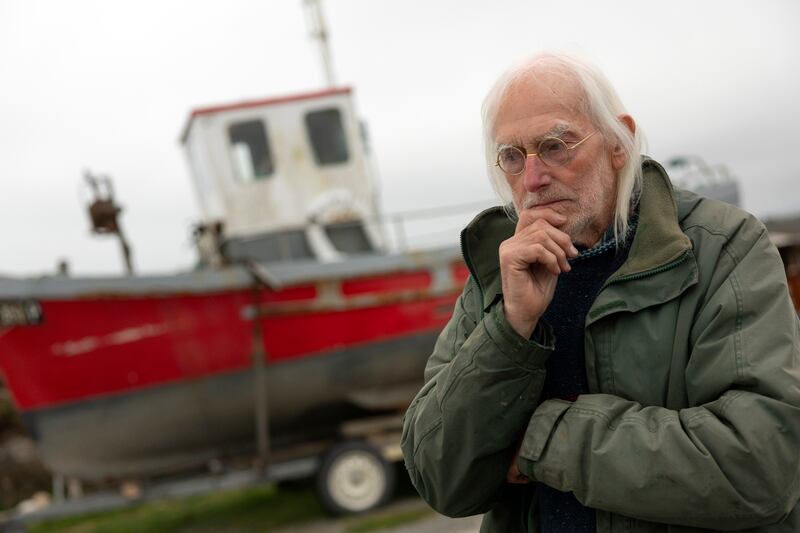
One such resident is Nigel Towse, who has been living on the island for 35 years, originally having arrived to play music there. He now teaches boat-building, and helps out students who want to try to use carpentry in their work, or who need some technical advice. We meet him on the pier, by the water, where he feels most at home. “I’m around, and I’m handy,” as he puts it, talking of his ad hoc contributions to the students’ course work.
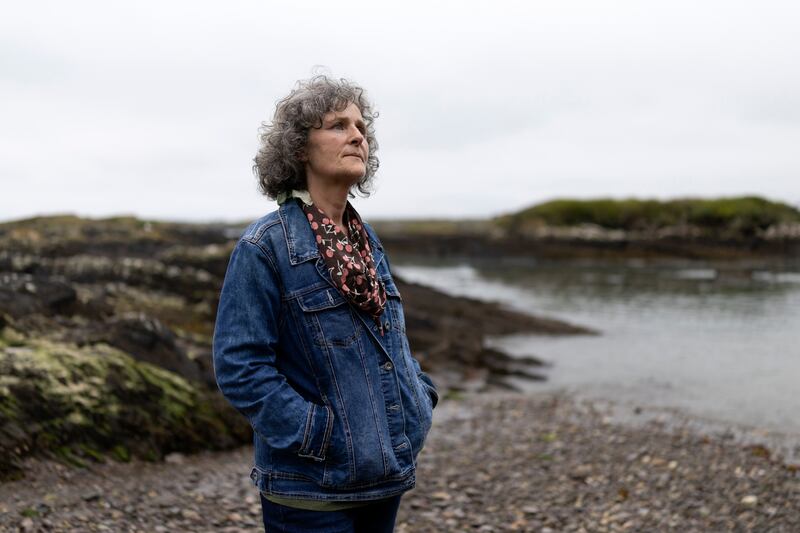

Majella O’Neill Collins drives us around the island. She works as a facilitator between the Sherkin Island Development Society and TU. She is also a visual artist. We make a stop at her studio, where a number of large paintings based on oil tankers are both on the walls and stacked up against the studio floor. With so many creative people on the island, it’s probably not so remarkable that some BA students have chosen to come here and live full-time.
At the small community centre, some of the fourth-year students have gathered to work on their final projects. The centre is right on the water, alongside a stony beach, so if work gets too overwhelming, a quick swim will clear the mind.
For student Mary Callaghan, an engineer by training, Sherkin is not her first experience of island life. “I lived on Dursey [Island, also off Co Cork] in 2016 for nine months,” she says. “There was three of us, and we had a village each. I had too many visitors and I had to put a ban on them, as I wasn’t getting any work done. I never felt lonely there. You cannot be lonely on an island because you have to depend on your neighbours so much more.”
I ask how living on Sherkin has influenced her work.
“I was looking at AI with my engineering background, and the non-human collaboration with the elemental forces of the wind and sun,” she says.
Translated, her piece on the Art Trail, will consist of banners of white fabric set up between poles on a headland above what’s known locally as Cow Strand.
“It will be a live performance of slowly painting lines on the banner,” Callaghan says. She wants the physicality of the slow work to be a counterpart statement to AI. If it rains, it doesn’t matter. She’ll still be painting her slow, contemplative lines on the white banners.

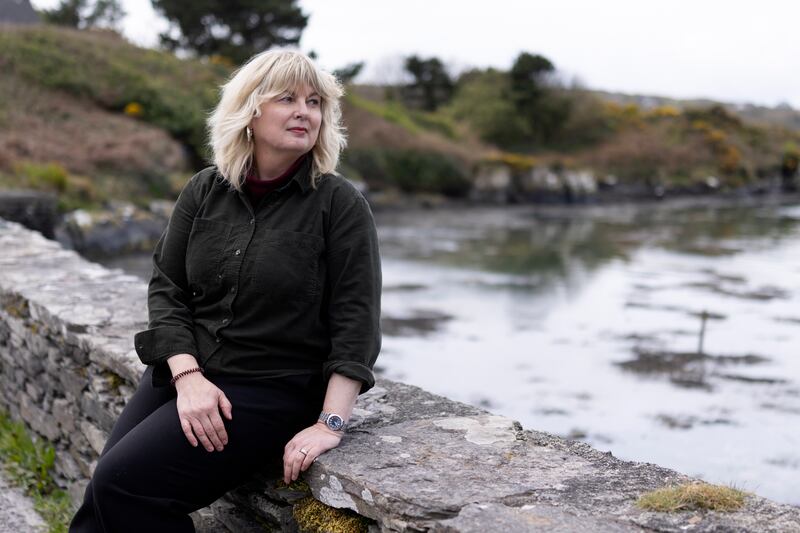
Emma McNulty, who retired early from her admin job at UCC, was determined to have another kind of working life after retirement.
“I have always dabbed in art; in painting,” she says. “It has always been a constant in my life. During Covid, I said I really wanted to do this.” She did some online courses, including one with the Slade School of Fine Art in London. Then she put together a portfolio of work for the TU course, and got in.
How would she describe her experience of Sherkin?
“There are a lot less distractions here. It’s the isolation. When I am here, I am not as distracted as at home. Being on the island is very immersive. It’s in everything you do, even going for a walk. There is a freedom around it. You are not on a timetable. Time is a luxury here. On our course here, there is someone from each decade. We are learning from other people’s life experiences.
“There is a generosity here. An openness,” she says. “I feel like anything is possible for my work, and even for myself. My mind has opened. I want to try new things now. I go to art exhibitions on my own in Europe. I have courage and technical skills I didn’t have before. Career-wise, I am hoping to work within the arts. I have more confidence in myself now.”
McNulty’s project is an installation in the house on the island she will rent for some days. Her plan is to make casts of her hands and some domestic objects in the house, such as a rug and its tasselled fringes.
“I want to look at the invisibility of women in the domestic space,” she says.
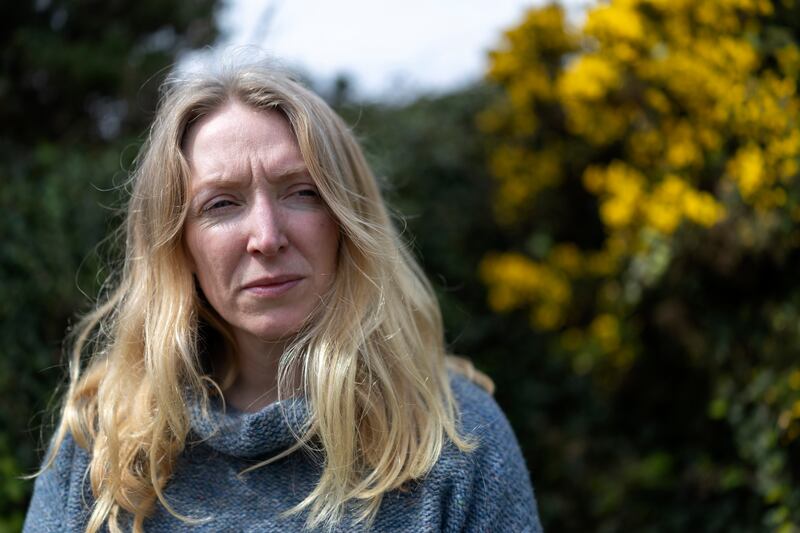
Louise Kiernan, a freelance designer based in Dublin, was drawn to the course by the flexibility of being back to do it at weekends. “I always wanted to do a degree in art, and there is definitely an appeal to being on an island,” she says.
Prior to application, she didn’t even know where Sherkin was. Since being on the BA, she has stayed for six weeks at a time, working remotely in between the course weekends.
“It’s a tough and challenging course, but you meet really interesting people along the way. It feel very authentic to me. It felt like I was making the art with the local people,” she says. “There’s an embedded sense of community in art.”
After graduation, Kiernan hopes to work in some way with art and the community. “I think I’d like to move away from working with a computer to working with people and stories. As soon as you bring conversation into something, the dynamic is different.”
Could she live on an island full-time?
“Yes. Definitely,” is the reply. Sherkin Island may possibly get another resident from its graduation class in due course.
An Art Trail created by the final-year students of the TU BA in Visual Arts will be installed on Sherkin Island over the weekend of May 16th-17th, and then be on show at the West Cork Arts Centre from May 23rd to June 13th.
[ad_2]
Source link