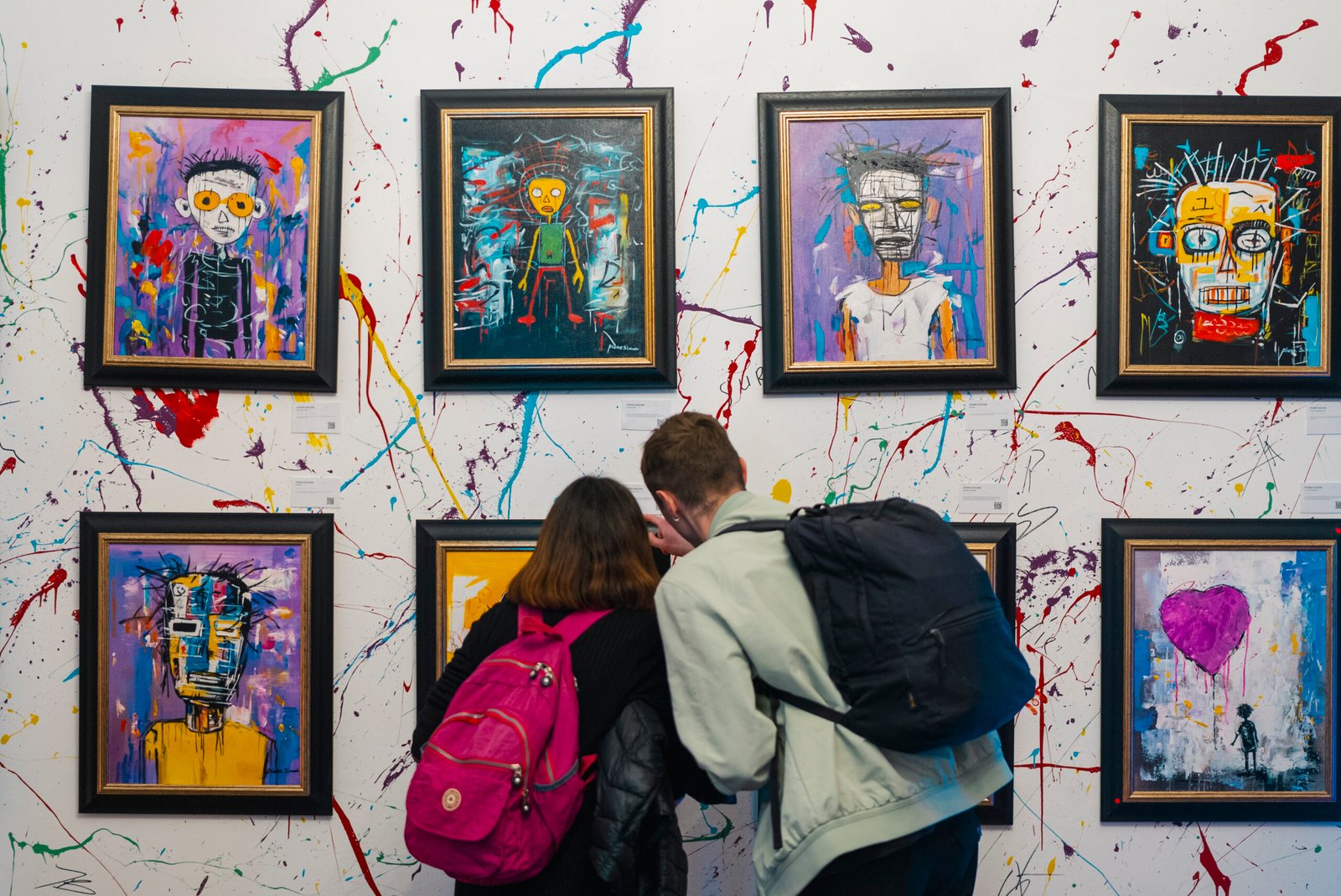
Pierre Simone is a Haitian contemporary artist whose work explores the poetic interplay of memory, identity and emotion. Through bold colour, layered textures, expressive figures and symbolic imagery, Pierre Simone’s paintings offer glimpses into the fragility and resilience of the human experience.
His work moves between abstraction and figuration, drawing on cultural heritage, personal experience and contemporary life. This distinctive visual language allows Pierre Simone to explore the passage of time, the elusiveness of memory and the ways in which individual experiences shape identity.
Who Is Pierre Simone?
Pierre Simone is a multidisciplinary contemporary artist from Haiti whose work combines neo-expressionism, cultural storytelling, abstraction and figuration. His paintings use energetic colour, symbolic imagery and expressive mark-making to explore identity, memory, culture and modern life.
Born in Haiti and influenced by the visual energy of New York City, Pierre Simone has developed an artistic language that brings together heritage and contemporary experience. His work is characterised by expressive compositions, vivid colour and recurring symbols that encourage viewers to look beyond the immediate image.
Pierre Simone’s background, selected works and exhibitions can be explored further through his official artist websiteand Artsy artist profile.
Memory in Pierre Simone’s Art
Memory plays an important role in Pierre Simone’s work. Rather than treating recollection as fixed or complete, his paintings explore the way experiences can become layered, fragmented and reinterpreted over time.
Pierre Simone’s use of layered colour, expressive forms and symbolic imagery mirrors the way memories themselves can form in layers, often obscured or reinterpreted by time. Fragments of human figures can emerge among abstract shapes and expressive marks, suggesting the fragmentary nature of remembrance.
For Pierre Simone, memory is not static but fluid, shifting as it is shaped by personal perception, cultural identity and external influences. His compositions invite viewers to consider what is present, what is absent and how individual experiences continue to influence our understanding of the world.
Light and Colour in Pierre Simone’s Art
Pierre Simone’s exploration of colour is central to his artistic language. His paintings frequently use vibrant hues alongside darker or more muted passages, creating a dynamic interplay between visibility and obscurity.
Colour, for Pierre Simone, is not merely an element of design. It can establish atmosphere, emotional intensity and movement while drawing attention to individual figures and symbols within a composition.
His works often feature forms that emerge and recede into layered backgrounds. This interaction between colour, figure and abstraction gives the paintings a sense of movement and allows different elements to become visible as the viewer spends more time with the work.
Pierre Simone’s use of bold colour also reflects the relationship between his Haitian heritage and contemporary visual influences. The result is a practice that feels culturally grounded while remaining distinctly contemporary.
Pierre Simone: Personal and Universal Themes
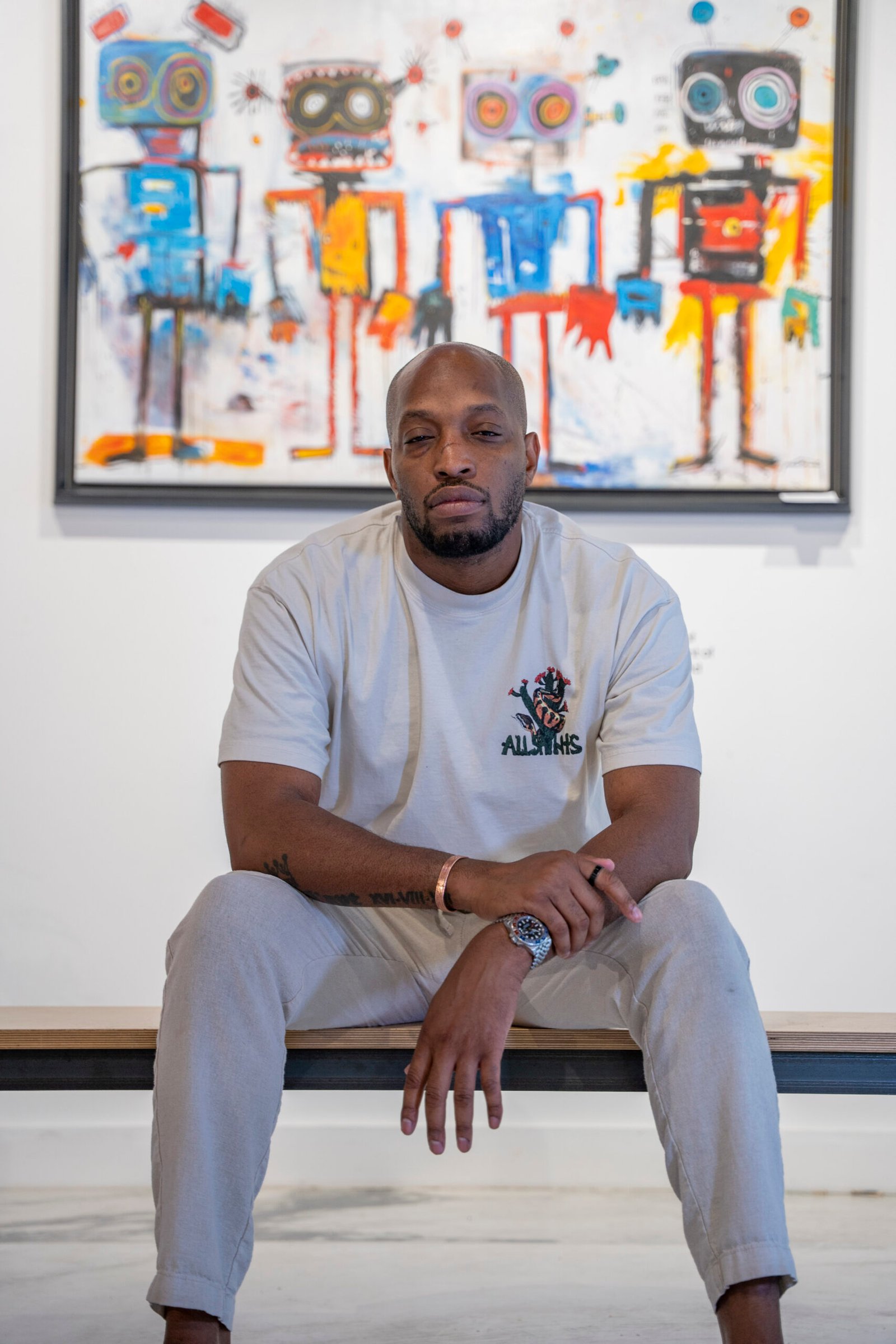
What sets Pierre Simone apart as an artist is his ability to weave deeply personal and cultural narratives into universally resonant themes.
Born in Haiti and later influenced by the visual energy of New York City, Pierre Simone draws on heritage, memory, identity and contemporary experience. These influences contribute to the intimacy and emotional depth of his work.
At the same time, his art transcends individual experience, allowing audiences from different cultures and backgrounds to develop their own interpretations. The universality of memory, identity and the passage of time allows viewers to find elements of their own experiences within his paintings.
Whether evoking recollections of the past or examining the complexity of contemporary identity, Pierre Simone’s art connects personal experience with wider human themes.
Pierre Simone’s Painting Style and Techniques
Pierre Simone’s approach lies not only in conceptual depth but also in his expressive use of colour, texture, abstraction and figuration.
Rather than relying on conventional realism, Pierre Simone builds compositions through layers of expressive marks, figures and symbols. This gives his paintings an immediate visual intensity while allowing individual details to reveal themselves gradually.
His approach is closely associated with contemporary neo-expressionism, where energetic mark-making and emotionally direct imagery can take precedence over traditional representation.
Jean-Michel Basquiat is among the influences associated with Pierre Simone’s artistic development. This can be seen through an interest in raw mark-making, symbolic imagery, expressive figures and the relationship between abstraction and figuration.
For more context on the artist who helped define this visual movement, Arts Is Life has also examined Jean-Michel Basquiat and his influence on contemporary art. Arts is Life –
Pierre Simone combines these influences with his own Haitian heritage and personal visual vocabulary, creating work that remains recognisably his own.
Pierre Simone’s Paintings and Body of Work
Pierre Simone’s body of work includes paintings such as Port-au-Prince, Burning Serenity, Dead Cowboy, Watchful Crown and State of Mind.
These paintings provide different examples of Pierre Simone’s evolving visual language while retaining recurring elements of colour, symbolism, expressive mark-making and contemporary neo-expressionism.
Port-au-Prince, for example, connects directly with the artist’s Haitian heritage through its title, while other works demonstrate the breadth of imagery and symbolism that appears across his practice.
Together, these paintings allow viewers to see how Pierre Simone’s approach to identity, memory and cultural storytelling develops across individual works rather than existing within a single composition.
Identity and Fragmentation in Pierre Simone’s Art
Pierre Simone frequently explores identity through the lens of fragmentation, reflecting the multifaceted and often disjointed nature of self-perception.
Fragmented human forms, expressive faces, abstract markings and recurring symbols contribute to this exploration. Rather than presenting identity as something fixed, Pierre Simone’s art can be read as examining the way identity is shaped by memory, experience, culture and environment.
This is particularly significant within a practice influenced by Haitian heritage, New York visual culture and contemporary neo-expressionism.
The interaction between these different influences allows Pierre Simone to move between the personal and the cultural, creating paintings that can be interpreted differently depending on the viewer’s own experiences.
Time and Memory in Pierre Simone’s Paintings
Pierre Simone’s art can also be seen as a conversation with time itself. Memory, experience and identity are rarely static. They change as people encounter new environments, cultures and stages of life.
Pierre Simone’s layered compositions reflect this sense of continuous development. Figures, symbols and abstract elements interact within the same visual field, allowing past and present influences to coexist.
This relationship between time and memory gives Pierre Simone’s paintings an introspective dimension. Rather than documenting a single moment literally, his work explores how experiences continue to resonate and influence the present.
Pierre Simone’s Haitian Heritage and New York Influence
Pierre Simone was born in Haiti, making his cultural heritage an important part of understanding his wider artistic practice.
His artistic development has also been shaped by the visual energy of New York City. These different cultural environments contribute to a practice that combines heritage with contemporary experience.
The influence of Jean-Michel Basquiat provides another point of reference. Like the wider neo-expressionist tradition, Pierre Simone’s work embraces energetic marks, bold colour, symbolic imagery and the tension between abstraction and recognisable figures.
Yet Pierre Simone’s work is shaped by his own cultural background and experiences. His Haitian heritage, contemporary influences and individual symbolism combine to form a visual language that cannot be reduced to a single influence.
Pierre Simone and the Contemporary Art Market
Pierre Simone’s combination of cultural storytelling, expressive painting and contemporary influences positions his practice within a wider conversation surrounding neo-expressionism and contemporary art.
His paintings move between abstraction and figuration, personal memory and cultural experience. Rather than separating these ideas, Pierre Simone allows them to coexist within individual compositions.
Interest in an artist’s work can also develop as collectors gain greater access to their exhibition history, earlier paintings and wider body of work. Arts Is Life has previously examined collector and market interest surrounding Pierre Simone’s work. Arts is Life –
As audiences encounter more of Pierre Simone’s paintings, recurring characteristics including colour, symbolic imagery, cultural storytelling and expressive mark-making provide a clearer understanding of his developing artistic identity.
Conclusion: Pierre Simone’s Lasting Impact
Pierre Simone’s art stands as a testament to the power of memory, identity, culture and emotion. His ability to transform personal and cultural experiences into expressive contemporary paintings gives his work a distinctive position within contemporary neo-expressionism.
Through bold colour, fragmented figures, expressive mark-making and symbolic imagery, Pierre Simone continues to explore the relationship between personal experience and wider human themes.
His Haitian heritage, the influence of New York City and his engagement with contemporary visual culture provide important foundations for his practice. At the same time, Pierre Simone’s paintings remain open to interpretation, allowing viewers to establish their own connections with individual works.
The result is a body of work that invites introspection and connection while continuing to develop Pierre Simone’s distinctive visual language.