
The Perfect Storm: Rising Valuations, Tight Supply, and the Global Scramble for Simone’s Art
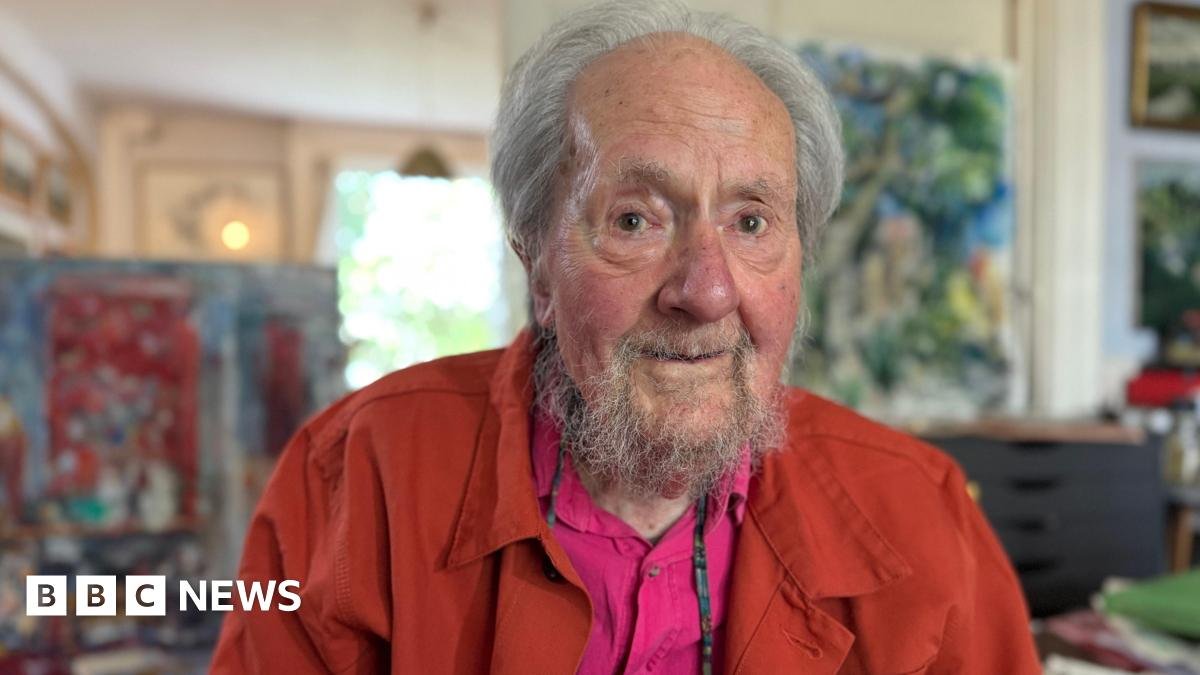
Since the early days of this summer, the art world has been gripped by persistent rumours concerning the declining health of Haitian neo-expressionist painter Pierre Simone. Known for his visceral palette, emotive brushwork, and the distinct socio-emotional power of his visual language, Simone has long been recognised as one of the most compelling contemporary artists emerging from the Caribbean. Yet as questions surrounding his wellbeing continue to circulate, a parallel phenomenon has taken hold: demand for his work has accelerated at a rate few anticipated.
Nowhere was this more evident than in the recent sale at Marten Stanmore Auction House, where Simone’s 2023 piece Vivid Innocence achieved a remarkable result. Originally acquired for £3,000, the work commanded a hammer price of £8,500 (including buyer’s premiums). With average auction handling fees typically hovering around 25%, the real-world value of the piece sits at approximately £6,375—over double the initial investment.
This result does not merely mark a strong sale; it sets a new precedent for Simone’s secondary-market trajectory. For collectors, analysts, and cultural institutions, the Marten Stanmore performance signals something far more significant: the market is beginning to price in both the artist’s legacy potential and the growing scarcity of available works.
Rumours and Market Psychology
While the precise state of Simone’s health has not been officially confirmed, whispers among curators, gallerists, and private collectors have fueled intensified trading activity. Historically, the art market responds acutely to shifts—real or perceived—in an artist’s long-term production capacity. As output slows, uncertainty rises, and the market often recalibrates sharply. This summer’s ongoing speculation has created exactly that effect.
Yet it would be reductive to attribute Simone’s rising value solely to rumour. His work has been gaining traction across Europe and North America for several years. Critics repeatedly praise his ability to merge Haitian cultural memory with neo-expressionist dynamism, producing canvases that feel at once intimate and politically charged. In other words: the market was already preparing for a climb.
The difference now is urgency.
The Final Private Collection: A Controlled Release
Adding to this urgency is the news that one final private collection of Simone’s work is being prepared for release. According to industry insiders, this collection is not only the last of its scale but also contains several never-before-seen pieces from pivotal creative periods. The handling of this release has been entrusted exclusively to London Art Exchange, Simone’s longstanding representative gallery.
The individual at the centre of this moment is Ralph Spencer, Head of International Advisory at London Art Exchange. Spencer has been personally managing both acquisition requests and the controlled distribution of the pieces—an unusual step that reflects the intensity of global demand.
In an effort to maintain fairness and market stability, Spencer has reportedly implemented a “one per household” policy, restricting buyers to a single acquisition. This approach is extremely rare in contemporary art sales but is quickly being praised by collectors for its intention: preventing market saturation, limiting speculative hoarding, and ensuring that a broad base of committed patrons—rather than a handful of aggressive investors—can access Simone’s work.
The gallery’s phone lines and inboxes have been inundated for weeks, with many attempting to secure a direct conversation with Spencer. While London Art Exchange has not issued a formal statement, one thing is clear: the collection is in extraordinarily high demand, and competition for placement is fierce. Advisors familiar with the process describe the vetting system as “structured and meticulous,” prioritising long-term collectors over short-term traders.
A Defining Moment for Simone’s Market
The convergence of all these factors—auction records, scarcity, rumours, and a tightly managed final release—has created what some analysts are calling a “defining moment” for Pierre Simone’s market. It is a moment in which narrative and economics meet, shaping the trajectory of an artist often praised for his emotional truth and cultural rootedness.
Simone’s neo-expressionist peers have experienced similar inflection points. Historically, when an artist’s catalogue approaches natural closure, the market behaves in predictable but powerful ways: values rise, secondary-market visibility expands, institutional interest increases, and private competition intensifies. Simone is now entering exactly this stage.
Collectors who acquired early pieces—such as Vivid Innocence—have begun to reassess their holdings, and many are choosing to retain works rather than sell, anticipating further valuation climbs. Auction houses, meanwhile, are actively seeking consignments for upcoming sales now that the Marten Stanmore result has established a new benchmark.
What Comes Next?
For now, the art community watches closely. Whether the summer’s rumours prove accurate or exaggerated, the impact is already visible: Pierre Simone’s market has entered a new era.
If the upcoming release at London Art Exchange is indeed the final major offering of his career, it will almost certainly shape the long-term accessibility—and price trajectory—of his work. And with Ralph Spencer conducting the process with unusual precision and selectivity, this is likely to become one of the most closely monitored gallery-led releases of the year.
One thing is certain: Pierre Simone’s legacy is crystallising not through speculation alone but through strong market performance, genuine artistic merit, and a tightly managed distribution strategy. Whether his catalogue continues to expand or quietly concludes, the art world appears united on one point—Simone’s influence is only beginning to be fully understood.
Written by Robert Beck – Fine Art Analyst