[ad_1]
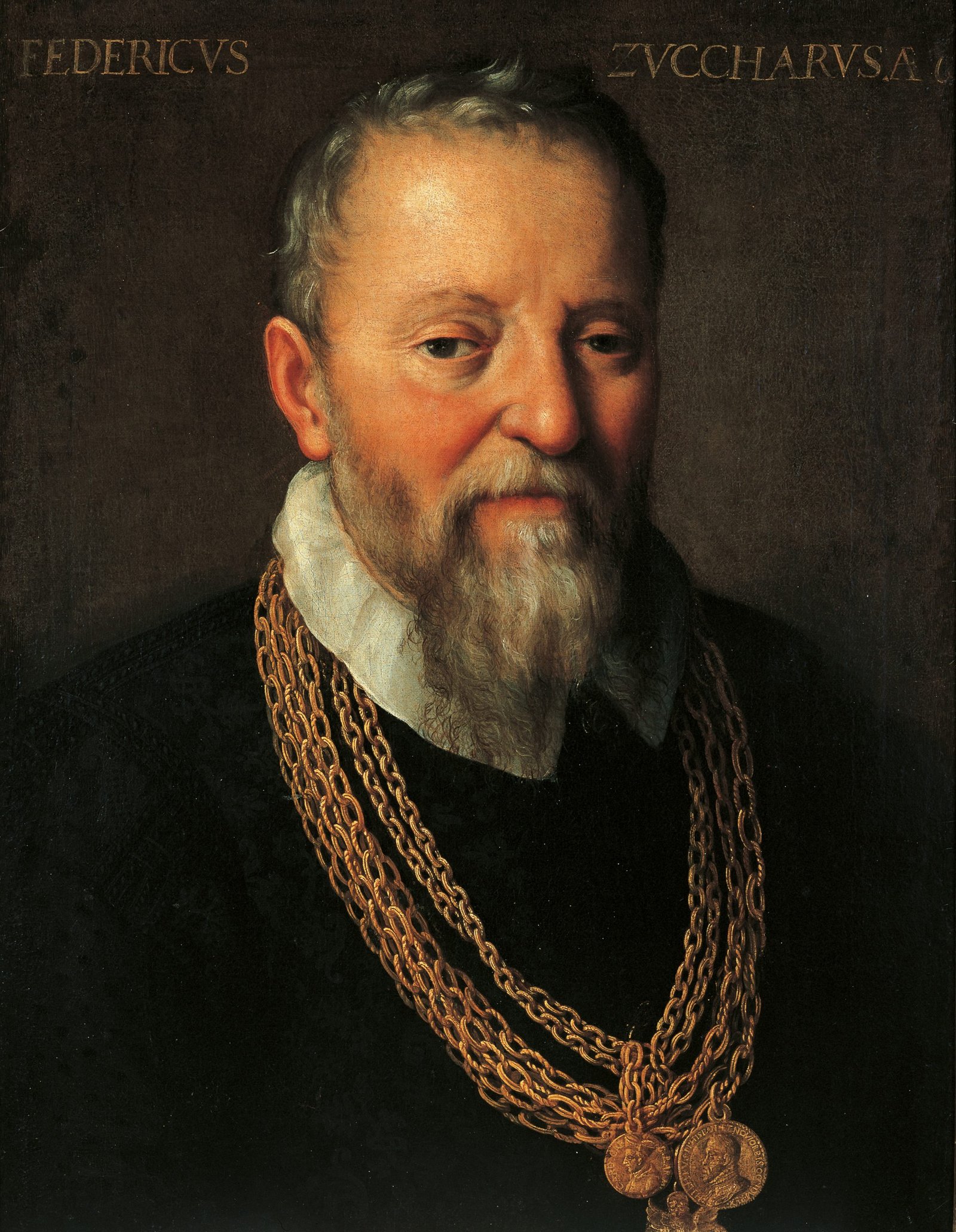
Art was in Federico Zuccaro’s blood. He was the son of a painter, Ottaviano Zuccaro, and the younger brother of Taddeo Zuccaro, widely considered one of Italy’s leading Mannerist masters. Federico trained under his brother (who was a decade older) and quickly proved his own talent, assisting on major commissions in and around Rome. One such commission was to help Taddeo complete a set of frescos at the Villa Farnese at Caprarola, 31 miles outside of Rome.
Federico Zuccaro took over the commission entirely after Taddeo’s sudden death in 1566, at the age of just 37. But after three years working on the frescos, Cardinal Farnese and Zuccaro fell out over payment, and he was unceremoniously replaced on the project.
Now, this is where Zuccaro could potentially have shown a little more professionalism. In his frustration, he created a painting inspired by the story of the Calumnia, an tale written by the ancient satirist Lucian. The tale stars King Midas, portrayed as an ignorant bully with no taste, which Zuccaro painted with the ears of a donkey. This was a not-particularly-subtle dig at Farnese. But it wasn’t Zuccaro’s biggest artistic faux pas…

Federico Zuccaro, Calumny (c. 1569–72). Photo: Royal Collection Trust, © His Majesty King Charles III 2024.
A decade later, Zuccaro was working on a painting for the Vatican’s Pauline Chapel, commissioned by Pope Gregory XIII Boncompagni. At the same time, he was painting an altarpiece for the papal steward, Paolo Ghiselli, for his chapel in Bologna. Zuccaro finished the altarpiece and sent it to Ghiselli in 1580, and the chapel was inaugurated the following year—but Zuccaro’s altarpiece was nowhere to be seen. Ghiselli had rejected the design, and it’s not hard to see why: for one, it wall chock full of nude portraits of plague victims. Zuccaro received no payment, offered to redo the altarpiece and was again rejected, and his career began to collapse.
Never above pettiness, Zuccarro sought his revenge when he presented a 13-foot drawing at a feast in the church of Saint Luke in Rome in 1581. Porta Virtutis (The Gate of Virtue) was another of his depictions of a donkey-fied King Midas, seen illogically judging a competition between the Roman Gods Apollo and Pan, another thinly veiled reference to one of his ungrateful patrons.
And he might have gotten away with it—had he not decided to tell everyone at the feast exactly what the cartoon represented. He explained that Midas was Ghiselli, who had made the foolish decision to reject his altarpiece and go with another artist instead (whose work was represented in the drawing by an empty canvas bearing only the word “presumption”). Zuccarro also pointed out that the triumphal arch in the landscape represented Bologna as the “Reign of Ignorance.” Ouch.
The original controversial cartoon is now lost, but a preparatory drawing of it is held in Oxford’s Christ Church Picture Gallery.

Federico Zuccaro, Porta Virtutis (Gate of Virtue) or Minerva Triumphant over Ignorance and Calumny (c. 1540–1609). Photo: the Morgan Library & Museum.
The problem was, Ghiselli was the lead advisor to the Pope, and the Pope was having none of Zuccaro’s cheek. He summoned the artist to meet with him, and sentenced him with “excesses” and having intentionally offended Ghiselli’s honor. Zuccaro feigned innocence, explaining that it was actually an old design he had come up with years earlier (to be fair, it wasn’t his first time making an ass out of Midas), but his pleas got him nowhere. He was forced to pay a 400 scudi bail to avoid prison, and was banished from Rome.
Despite everything, for Zuccaro, all press was good press. After he returned to Rome (after a relatively short two-year exile, thanks to the death of Pope Gregory XIII in 1585), he was commissioned by the final Duke of Urbino, Francesco Maria II della Rovere, to recreate his controversial drawing as a painting, which now hangs in the National Gallery of the Marche.
Sometimes, controversy pays.
What’s the deal with Leonardo’s harpsichord-viola? Why were Impressionists obsessed with the color purple? Art Bites brings you a surprising fact, lesser-known anecdote, or curious event from art history.
[ad_2]
Source link