
[ad_1]
To create is to confront belief systems, experiences and oneself. That’s what two current theater productions posit. The one-person shows “300 Paintings” presented by American Repertory Theater and The Huntington’s “Sardines (a comedy about death)” delve deeply into the writer-performers’ personal lives and offer honesty, hope and lots of laughter.
In “300 Paintings” (through Oct. 25), Sam Kissajukian details the months he spent living in a former cake factory during an extended manic episode that set him on a new creative path. Kissajukian’s storytelling skills and comedic timing are spot on, spurring the audience to laughter as he shares the ups and downs of those six months. However, it’s his willingness to excavate even his darkest moments while struggling with bipolar disorder that really resonates. There’s so much to learn about the subject and Kissajukian delivers a frank crash-course.
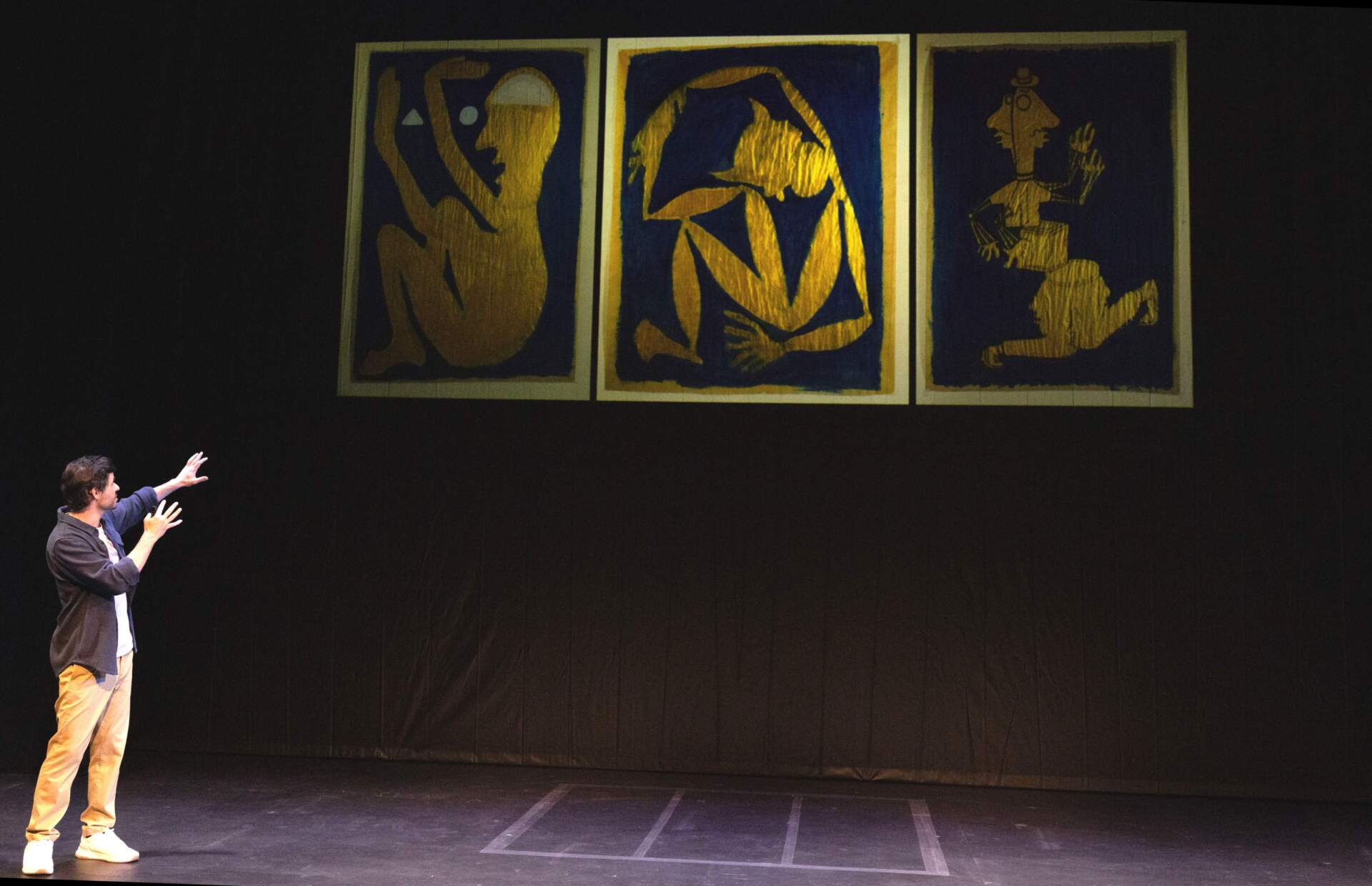
Produced by Sally Horchow and Matt Ross in association with Octopus Theatricals, Kissajukian’s whirlwind offering shows audiences what he was up to month by month, from his foray into portraiture to a film about fluffy mold and his desire to come up with a daily invention that he’d sell each night. This rigorous pace gives some insight into just how quickly his mind was spinning and all that it was teeming with. As gorgeous visual art is revealed, information on bipolar disorder is offered, and the numerous ideas he developed are shown on a screen above him. There are as many gasps and sympathetic oh, wow’s as there are chuckles.

When describing his paintings in an interview in the program, Kissajukian said that he believes “we hold our history in our nervous system.”
If that’s true, his mind’s murkiness, chaos and loveliness shine brilliantly in his artwork, which he continues to exhibit, and in the probing and sincere show. Though the process might have been frightening to watch in real-time, “300 Paintings” shows Kissajukian’s conviction when it comes to his artistry, his fortitude in educating the public and his acknowledgement of the universal need for us to be seen in our fullness. For Kissajukian, comedy is a medium that can’t hold all of him.
What art can hold is also explored in writer-performer Chris Grace’s “Sardines” (through Nov. 16). The taut, 60-minute show asks, “Can we enjoy life even though we know how it ends?”

At the start of Grace’s show, directed by Eric Michaud, he asks the audience to imagine family photos with his siblings, parents and his partner in them and spends the rest of the time talking about what happens to each one of them. From the subtitle — “a comedy about death” — it’s easy to ascertain the fate of his loved ones, but he does share a little bit about each one of them.
What works here is Grace’s conversational style, which makes a heavy topic easier to grasp. He tells a harrowing tale about the swift and painful death of a former partner whose life he tried valiantly to save, and how, in that terrifying moment, he knew he would share the experience in the framework of art. He wonders aloud if art can help, and utilizes “Sardines” to show it just might.
Starting with the year of each person’s death, Grace talks about the anxiety of receiving the call notifying him of the passing of his loved one. In between the losses, though, there’s a wonderful moment where Grace talks about the importance of community. He says that friends and other loved ones hold memories and stories that we don’t remember and that they give them back to us by recounting them. And to cultivate community in the room, he teaches the audience Rihanna’s “Don’t Stop the Music” that we sing together.

Without seeing the faces of Grace’s kinfolk in the show, it’s more challenging to feel their loss; however, Grace does share a poem and some audio from his mom that is grounding. Overall, Grace urges us all to live in the moment, not to worry about dying alone and that even though death is coming, it’s not here right now. He also aims to give hope to those who have lost loved ones, assuring all that one day, grief will fade.
As someone who has suffered significant loss as of late, “Sardines” makes me think hard about cherishing those who I still have left and all of the good times we can still create. In the meantime, I will continue to hold the memories and stories of those who have passed to give back to other loved ones who need reminding and reassurance from time to time.
American Repertory Theater’s “300 Paintings” runs through Oct. 25 at Harvard University’s Farkas Hall; The Huntington’s “Sardines” runs through Nov. 16 at The Maso Studio.
[ad_2]
Source link