[ad_1]
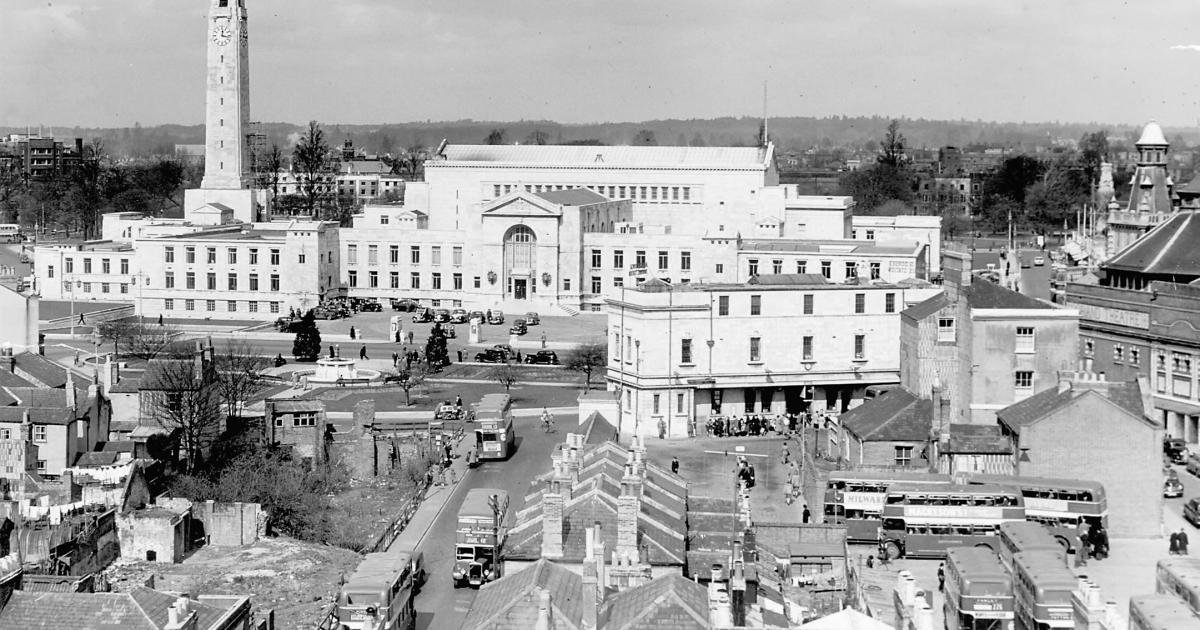
Yet, few might know that beneath its concrete footprint, and later that of the Marlands Shopping Centre, lay the very foundations of a childhood home belonging to one of Victorian Britain’s most remarkable artists – Sir Hubert von Herkomer.
Born in Bavaria in 1849, Herkomer became a true polymath of the late Victorian era – a celebrated painter, printmaker, designer, teacher, composer, and even a pioneering filmmaker.

Herkomer’s journey to Southampton began in 1857, when he was just eight years old.
His family, led by his father Lorenz, a master woodcarver, had initially sought opportunity in the United States but found “little call” for their specialised skills in Cleveland, Ohio.
Seeking a better future, they returned to Europe and settled in Southampton.
Life in the town was not without its challenges. The family were constantly in need of money, and these early experiences of economic struggle and the conditions of life of the poor profoundly influenced Herkomer’s later artistic focus on social realist themes.
The family lived first at 10 Windsor Terrace and later at 1 Beckford Terrace in Manchester Street, living in Southampton for approximately seventeen years.
A pivotal moment in young Hubert’s life came on his fourteenth birthday, around 1863, when he enrolled at the Southampton School of Art.
This marked the formal beginning of his artistic training, complementing the informal learning he had received from his craftsman father.
It was here that he forged lifelong friendships with fellow aspiring artists, including John Gregory, George Washington Sandell, and the brothers Frank and Rowland McFadden.
These early bonds were significant. For instance, he and John Gregory, who would also become a distinguished painter, even started an informal life-class together in Southampton.

Indeed, his precocity was recognised early by the local press. In 1860, the Hampshire Independent newspaper “congratulated him on his success, boasting that Southampton was not barren of artists and had now produced a successor to Millais in Herkomer”.
This early public endorsement from his adopted town must have been a powerful source of validation for the young artist.
After his foundational studies in Southampton, and further training in Munich and London, Herkomer moved to the capital, where he made his Royal Academy debut in 1869.
Crucially, he also began working as an illustrator for the newly founded newspaper The Graphic, where his depictions of the gritty realities of impoverished families gained him early recognition for his social realism.
His reputation soared with The Last Muster—Sunday at the Royal Hospital, Chelsea (1875), a monumental work that cemented his status as a leading artist.
In the 1880s, Herkomer strategically shifted his focus to portraiture, a financially rewarding area that saw him become one of the wealthiest artists of his time, painting figures like Richard Wagner and Alfred Lord Tennyson.
This financial independence allowed him to pursue other ambitious projects, including establishing his own innovative art school in Bushey, Hertfordshire, and pioneering early filmmaking.
He was knighted in 1907, in recognition of his immense contributions to art and culture.
Despite his international fame and established life in Bushey, Herkomer maintained a tangible and deeply personal connection to Southampton.

His last recorded visit to Southampton occurred in October 1913, just six months before his death.
Today, Herkomer’s artistic legacy remains directly accessible within the city that nurtured his early talent.
The Southampton City Art Gallery holds several significant works by him, serving as tangible links to one of its most celebrated artistic sons. These include a portrait of his father, Lorenz Herkomer (1882), gifted by his third wife, a portrait of a prominent local figure Alderman Sir George Hussey (1901), a self-portrait and more.
Sir Hubert Herkomer’s journey from a Bavarian-born, financially struggling child in Southampton to a knighted Royal Academician and pioneering polymath was truly Incredible.
[ad_2]
Source link