L.S. Lowry is perhaps not the first name that springs to mind when considering British painters. Not for him was the cool figuration of Hockney or the psychological complexity of Bacon—his city scenes were understated ones that forewent color and style for the quiet cadence of everyday life. When it comes to writing the British art canon, then, he’s been easily overlooked.
But the tides are slowly shifting in his favor. Tate Britain staged a major Lowry retrospective in 2013 (after haranguing by critics) that reframed his position in art history; recent years have also seen his canvases sell for tidy sums at auction (his $9.2 million record was set in 2011 at Christie’s London). Now, a BBC documentary is set to excavate more about the leading painter of industrial life.

L.S. Lowry, The Rush Hour (1964), on view at Sotheby’s London, 2017. Photo: Tristan Fewings / Getty Images for Sotheby’s.
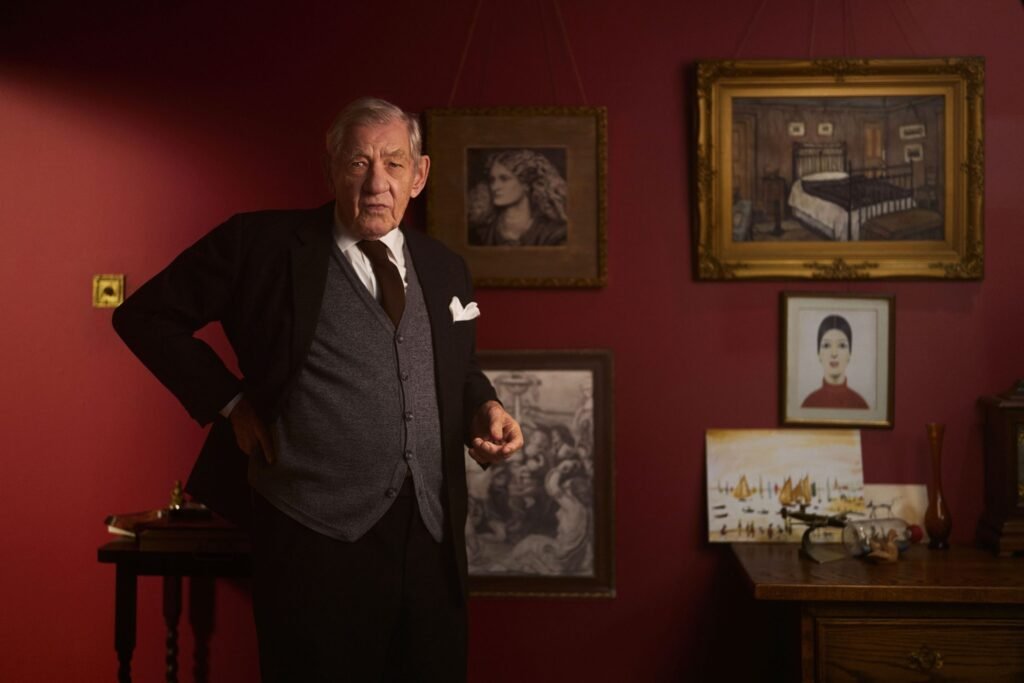
Produced by Wall to Wall Media, L.S. Lowry: The Unheard Tapes will mark the 50th anniversary of the artist’s death in 1976. It’s foregrounded by the titular recordings of conversations between Lowry and a young fan, Angela Barratt. Recorded in Lowry’s living room, the exchanges see him reflect on his life and work in moving and unexpected ways. It was the last, and longest, interview he ever gave.
The conversation will be brought to life in dramatic reenactments starring Ian McKellen as Lowry and Annabel Smith as Barratt. While the authentic tapes play, the actors will lip-sync the words on screen.
“To give play to Lowry through his own voice has been a unique privilege,” McKellen said in a statement. “These tapes reveal an intimate insight into the artist’s thoughts—his ambitions, regrets, and his humor. Anyone like me, who admires his paintings and drawings, will be intrigued and delighted that the artist is brought back to life through his own words.”

L.S. Lowry with one of his paintings at his home in Pendlebury, Lancashire, 1964. Photo: Tony Evans / Getty Images.
Lowry was born in 1887 in the town of Stretford in Greater Manchester, before moving to Pendlebury, where he spent most of his life. The northern town’s industrial terrain—mills, chimneys, towers—drew his loathing, then, suddenly, a strange fascination. Recalling a view of a mill at dusk, he said, “I watched this scene, which I’d looked at many times without seeing—with rapture.”
What followed were some of Lowry’s best-known canvases: cityscapes populated with everyday people engaging in work and leisure, captured with unfussy lines and in desaturated hues. They were warmly received by most, save for the art-world elite who turned their nose up at his technique, subject matter, and northern roots. Some critics deemed him a naive artist or “Sunday painter”—to which Lowry quipped: “I’m a Sunday painter who paints every day of the week!”
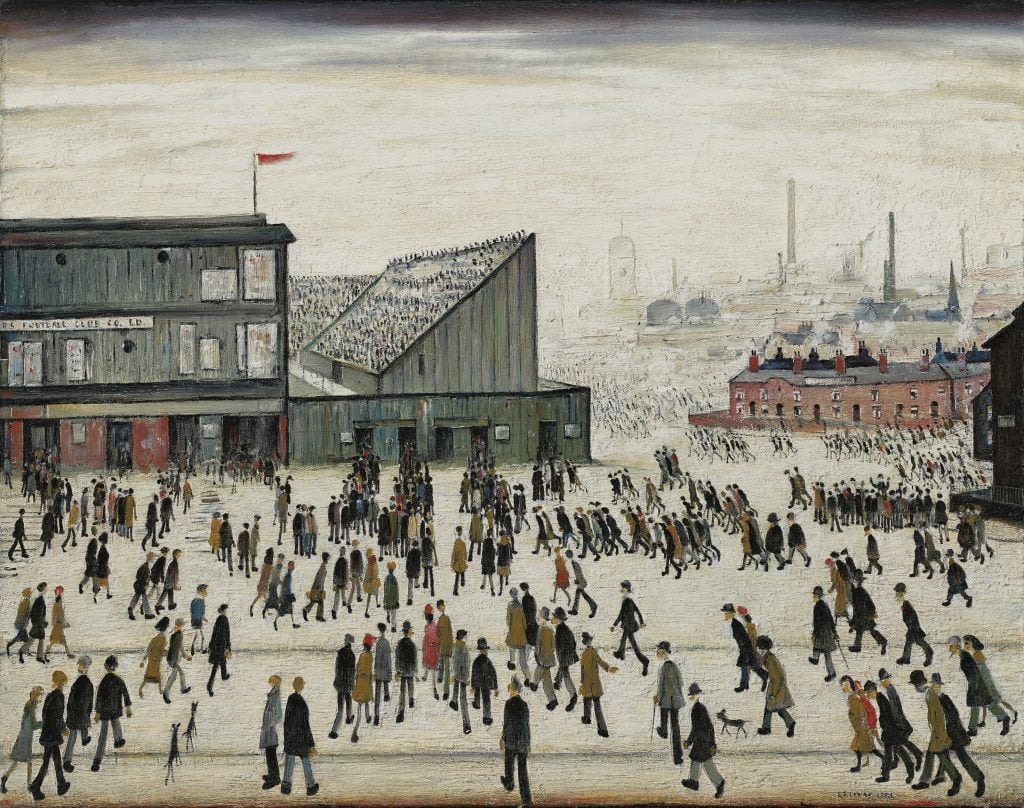
L.S. Lowry, Going to the Match (1953). Property of the Players Foundation. Photo courtesy of Christie’s London.
Still, the artist would find success with his pictures, albeit later in life. Throughout, he remained fiercely private and guarded. Few knew he held a day job at Pall Mall Property Company until he retired on his 65th birthday. Even fewer understood the bizarre erotic paintings he left behind. Lowry died at age 88, ahead of a Royal Academy retrospective that smashed attendance records for a 20th-century artist.
The forthcoming documentary promises to color in our understanding of Lowry, while illuminating the texture of urban life in Greater Manchester in the last century. Barratt’s never-before-heard recordings “capture Lowry at the end of his life and Salford at a pivotal moment of change,” said Michael Simpson of the Lowry, the arts center in Salford that currently holds the tapes, as well as the largest collection of the artist’s paintings.
“These long unheard interviews reveal an artist of wit, contradiction, and perhaps surprising depth,” he added, “far removed from the myth of the ‘simple man.’”