[ad_1]
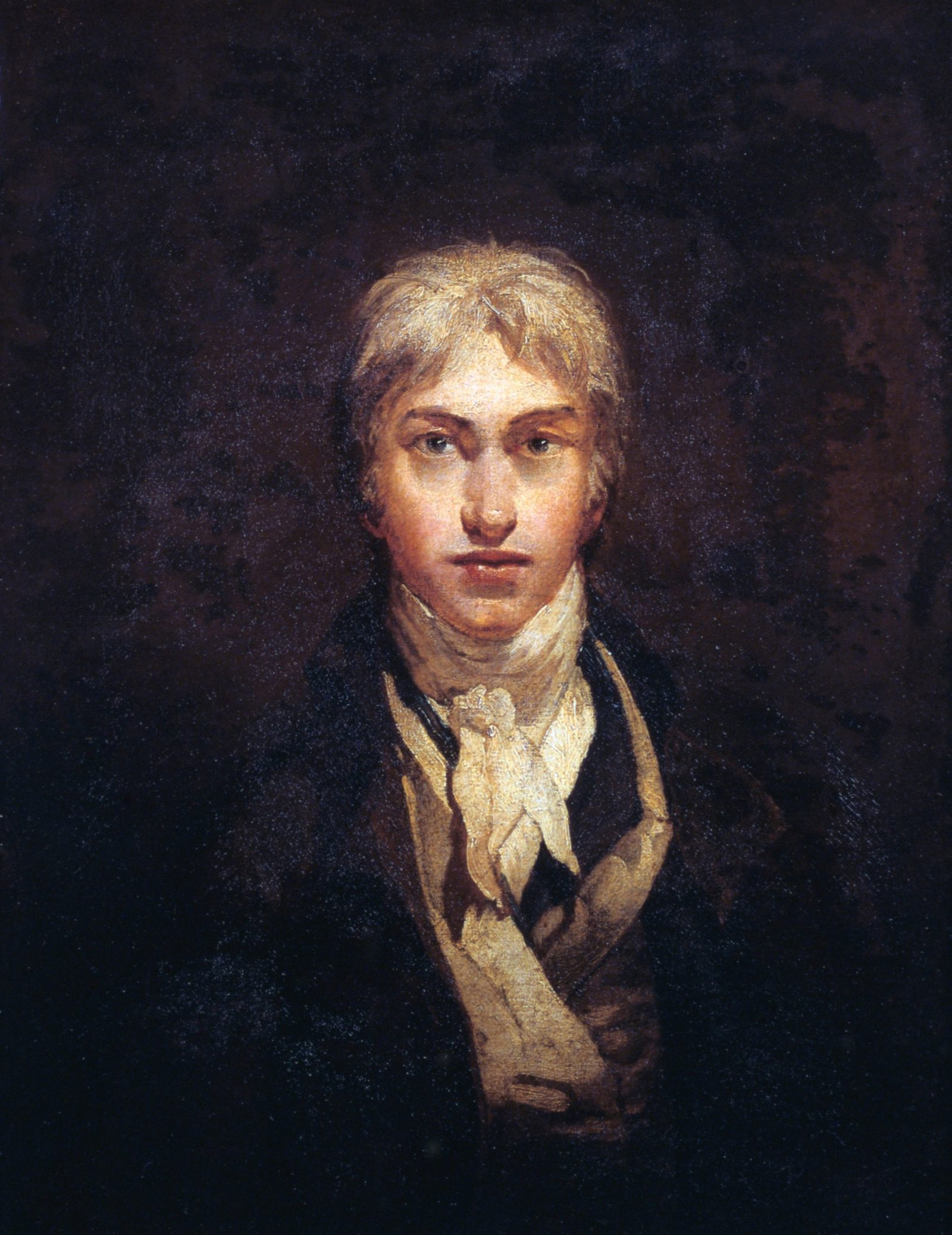
Famed British Romantic painter JMW Turner died in 1851, after a healthy, fruitful life—during which he produced hundreds of oil paintings, thousands of watercolors, and tens of thousands of works on paper. Out of all that art, however, records indicate that Turner made only one self-portrait as a mature artist. That work, owned by the Tate, has become so iconic that it’s printed on money.
But, its attribution might be a misunderstanding. In the new edition of the JMW Turner Society’s semiannual magazine, art historian James Hamilton will lay out his case that the actual author behind this painting was John Opie, a noted British portrait artist 14 years Turner’s senior. The Turner Society chairperson Pieter van der Merwe has said Hamilton is likely the first to broach this subject.
Hamilton shared the broad strokes of his argument with the Guardian. There, he noted that although he’d used this very self-portrait on the cover of his 1997 Turner biography, he only properly reconsidered it far more recently. First off, this piece is an anomaly in Turner’s vast oeuvre, which is better known for storms and vistas than portraiture’s staid expressions. Instead, this work looks much more like one of Opie’s, embodying that artist’s known proclivity for lighting his subjects dramatically.
Opie also immortalized other artists—like Scottish genre painter David Wilkie and English etcher Thomas Girtin—in this same, starkly lit style. He gave at least four away. Opie’s activity also overlapped with Turner’s, too: the former died suddenly in 1807, after the latter had already achieved acclaim. And Opie was a known Turner fan. Hamilton thinks he gave Turner this work, since it had “little or no commercial value to its creator.”

John Opie, Miss Holcroft (c. 18th century). Photo: The Print Collector / Getty Images.
There’s also a very plausible explanation regarding how the authorship of this portrait got lost.
Turner had penned his second will in 1848. In it, the artist declared his desire to donate every one of his finished artworks that he still owned to Britain—to London’s National Gallery, to be specific, which had by then moved to its current Trafalgar Square home. There, Turner wanted them displayed in the same room.
Once Turner’s wishes came to light, a few of his cousins contested the so-called Turner Bequest. According to the National Gallery, Jabez Tepper, a son of one such cousin, “argued that Turner’s philanthropic intention, which was to allocate most of his estate to the establishment of a charitable institution for impoverished artists, was illegal.” Alas, a court subsequently awarded all of Turner’s artworks—not just the finished ones—to the nation, and granted the rest of Turner’s estate to his relatives.
From there, Turner’s portrait ended up at the newly opened Tate, in 1910. The Tate remained part of the National Gallery until 1955 and retained the Turner portrait after the split. In the 175 years since the artist’s death, Hamilton thinks it quietly became accepted as a self-portrait.
“They had no way of knowing who the portrait might be by if it wasn’t by Turner and of course it was too good to lose,” Hamilton told the Guardian. “So it was lumped in with the rest. But it was never, even on early lists, a ‘self-portrait.’ It was always a ‘portrait of Turner.’”
The Tate is aware of Hamilton’s forthcoming paper. “As the home of the Turner Bequest, we always welcome new ideas about Turner’s life and new interpretations of his work,” a representative for the museum told me over email. “We look forward to exploring James Hamilton’s research further.”
[ad_2]
Source link