[ad_1]
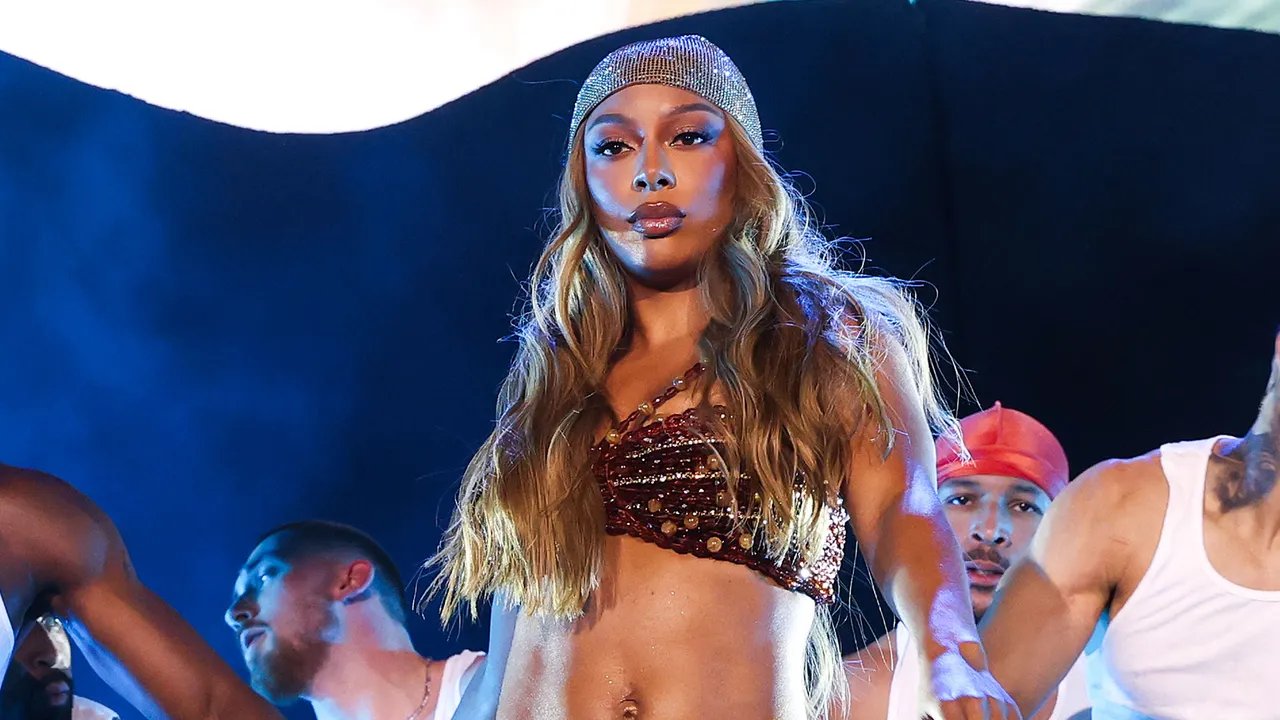
Grammy-winning singer, songwriter, and producer Victoria Monét has built her career on turning emotion into melody, writing hits for stars like Ariana Grande, Blackpink, and Coco Jones, as well as recording her own deeply personal records. Her songs are intimate, intentional, and overtly shaped by her voice, vision, and human collaboration. So when Xania Monet, an AI-powered R&B “artist” bearing a similar name, reportedly landed a $3 million record deal with Hallwood Media and started charting, the corporeal Monét felt uneasy. “Monet” also sonically evokes the name of another musician, Janelle Monáe, adding an additional layer to the confusion. (Hallwood Media did not respond to a request for comment.)
Monét can’t definitively say that the AI artist was trained on her music, but the resemblance feels uncanny. “It’s hard to comprehend that, within a prompt, my name was not used for this artist to capitalize on,” she tells Vanity Fair. “I don’t support that. I don’t think that’s fair. When that name starts to ring bells in a certain way, it can easily be mixed up with my brand. It’s not ideal.”
Even if the similarity is just a coincidence, that’s beside the point. Monét says when one of her friends typed a random prompt into ChatGPT, asking it to create a photo of “Victoria Monét making tacos” in a fictional setting, the image generator produced a woman who looked eerily like the emerging AI artist.
As the first AI artist to hit a US radio airplay chart, Xania Monet has been met with heavy pushback. In an interview last Wednesday with CBS Mornings, Telisha “Nikki” Jones—the woman and lyricist who created the artificial artist and her sound—defended her practice. “Xania is an extension of me, so I look at her as a real person,” she said. “I just feel like AI…it’s the new era that we’re in. And I look at it as a tool, as an instrument, and utilize it.” (Jones has not yet responded to Vanity Fair’s request for comment.)
The anxiety surrounding AI’s role in music isn’t new: In September, Kehlani decried Xania Monét landing a record deal. Last fall, Beyoncé told GQ an AI song mimicking her voice “scared” her; the year before that, Cher blasted the tech for using her voice. In a January BBC interview, Paul McCartney said AI isn’t all bad, but it shouldn’t “rip creative people off.” Last year, in a public show of solidarity, more than 200 musicians—including Billie Eilish, Stevie Wonder, Kacey Musgraves, and the estates of Frank Sinatra and Bob Marley—signed an open letter demanding protection against AI systems that imitate artists’ likeness, voice, and sound.
[ad_2]
Source link