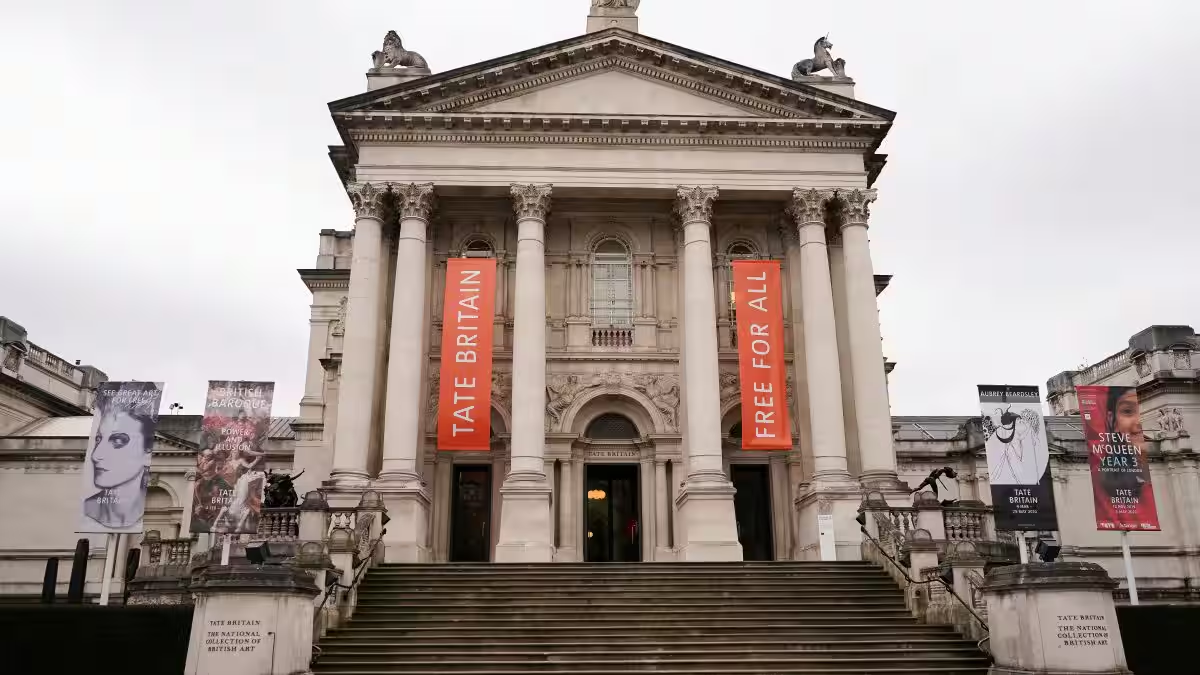

Tate’s decision to loan a Lowry painting to a UK school highlights a growing push to expand access to art beyond traditional gallery spaces.
In a first-of-its-kind move, the Tate has loaned a painting by L. S. Lowry directly to a school, signalling a shift in how major institutions are rethinking access to art.
The 1927 work, Dwelling, Ordsall Lane, Salford, was displayed at a secondary school in Salford, marking the first time a Tate artwork has been placed in a classroom rather than a gallery.
A ‘once-in-a-lifetime’ classroom
For students, the impact was immediate. Teachers described the experience as a “once-in-a-lifetime opportunity”, noting that the presence of an original painting changed how it was received: not as something distant, but as part of daily life.
Unlike a gallery visit, the artwork was not encountered briefly and left behind. Students returned to it across lessons, responding through art, writing and discussion: a more sustained engagement that traditional museum visits rarely allow.
Taking art beyond the gallery
The initiative reflects a broader concern within institutions like the Tate: that access to art remains uneven.
Many young people, particularly those outside major cultural centres, have never visited a gallery, and may not see it as a space meant for them. As Helen Legg, director of Tate Liverpool, put it, “We want young people to come to our museum, but sometimes you need to make that invitation really explicit.” Here, the invitation has been reversed. Instead of asking students to come to the museum, the museum has come to them.
The choice of Lowry is deliberate. Known for his depictions of working-class life in industrial England, his work reflects the landscape of Salford itself, collapsing the distance between subject and viewer, and making the painting feel less like an artefact and more like something recognisable.
Not without challenges
Loaning a major artwork outside a museum setting required months of planning, from security protocols to something as specific as checking CCTV camera angles.
“This is not run-of-the-mill museum work for us,” Legg noted, underscoring the complexity behind what might otherwise seem like a simple gesture.
The Tate is already one of the world’s largest lenders of art, with millions encountering its works outside gallery spaces each year. But placing a painting inside a school marks a more direct shift: one that embeds art within everyday environments rather than exceptional ones.
The initiative has also been welcomed by UK culture minister Ian Murray, who described it as a chance to “inspire and ignite the creativity” of young people, adding that the next major artist could be growing up in a classroom like this.
The move signals a change in approach from expecting audiences to seek out art to meeting them where they are. For the students who encountered the Lowry painting, the impact may be difficult to measure. But it alters something quieter in the sense of who art is for, and where it belongs.
End of Article