
[ad_1]
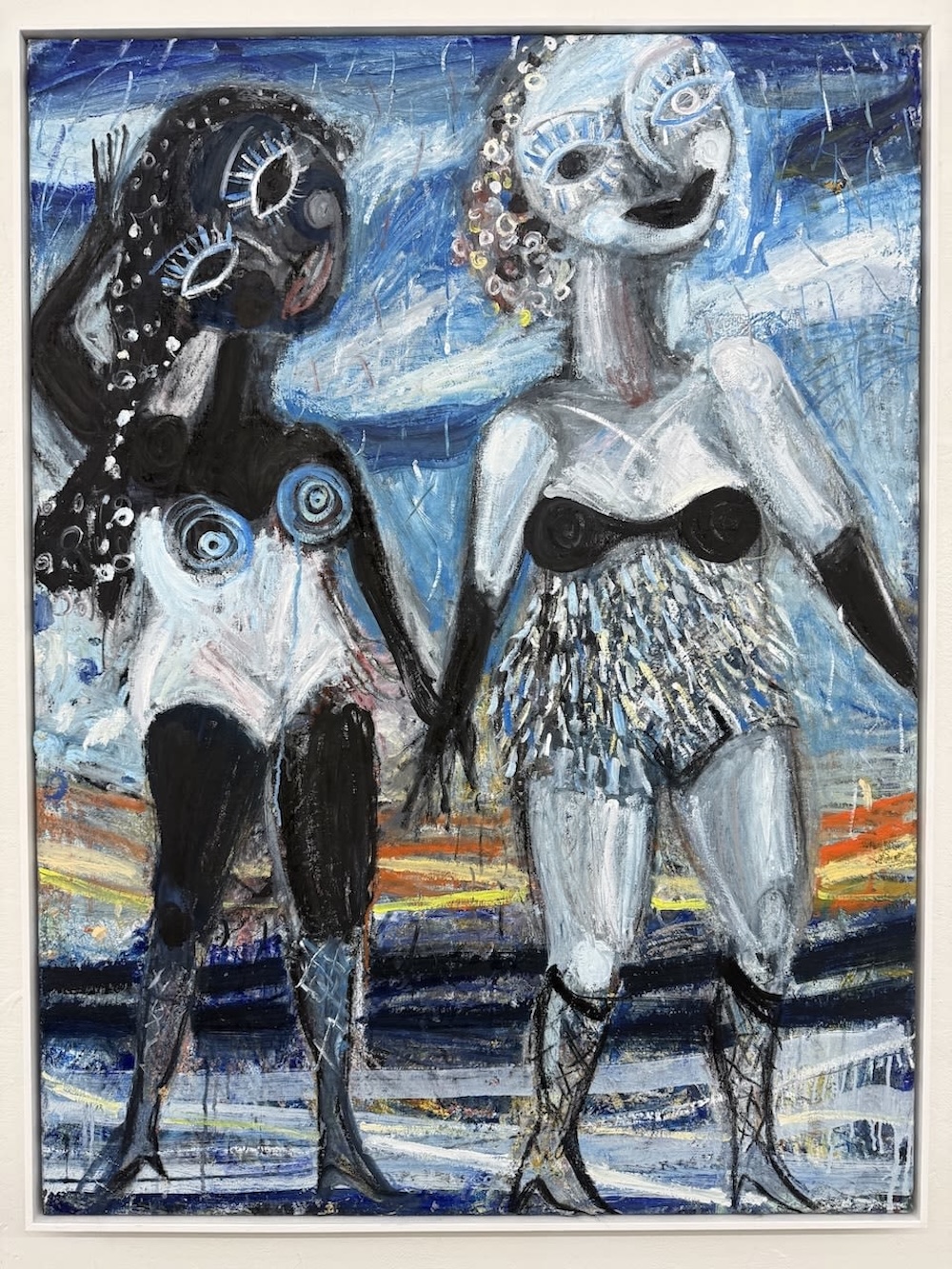
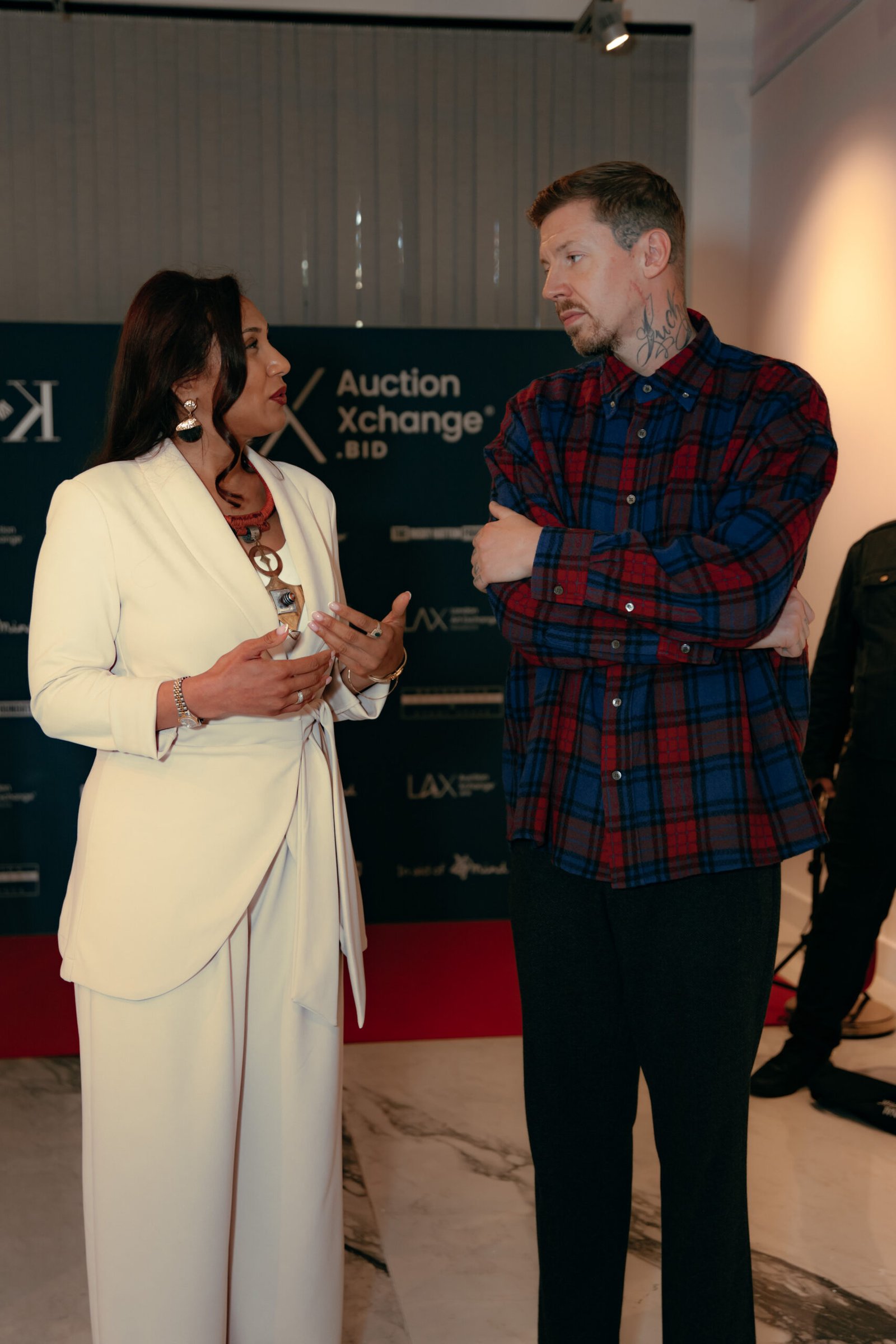
Few of the visitors are as stylish as this pair, but the Netherlands’ leading fair for contemporary art (26-29 March) does a good job of presenting quality across diverse media. Every fair has plenty of painting, but Art Rotterdam also has a sculpture court, an innovatively presented film section, and – for the first time this year – is integrated with the photography fair Unseen. Moreover, Rotterdam is a dynamic and architecturally striking host city in easy reach of other art centres: I was able to catch impressive shows by Danh Vo and Erwin Olaf (Amsterdam), Lois Dodd (The Hague) and Maria Roosen (Schiedam). Back at the fair, here are a dozen choices reflecting that democratic range of media: two each of painting, sculpture, photography, textile, ceramic and multi-media installations, plus a film and a sculpture…
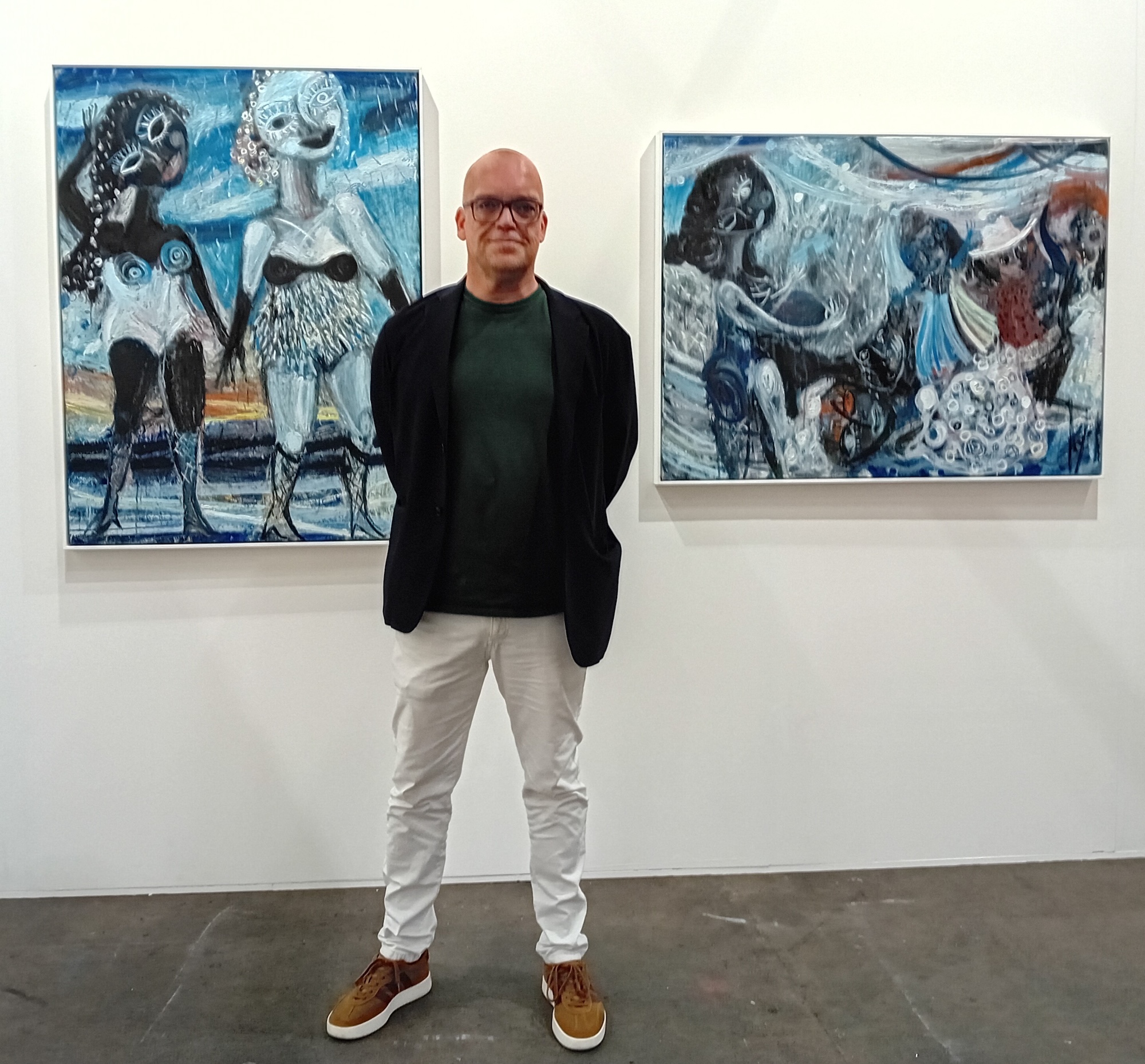
Gerben Mulder with ‘Best of Friends’ and ‘Vigil for an Outcast’, 2026, at Frank Taal Galerie, Rotterdam
Self-taught Dutch artist Gerben Mulder has worked between New York and Rio since 1993. He returned to the Netherlands with works in progress which he made fair-ready by converting Frank Taal’s space into a temporary studio – these are so fresh he told me they might still be unfinished! Whether or not, they are a darkly humorous, intoxicatingly painterly mix of such inputs as German expressionism, Picasso, Brazilian carnival, and transgender street characters. They emerge – with considerable difficulty, he told me – from oneiric narratives that he keeps to himself.
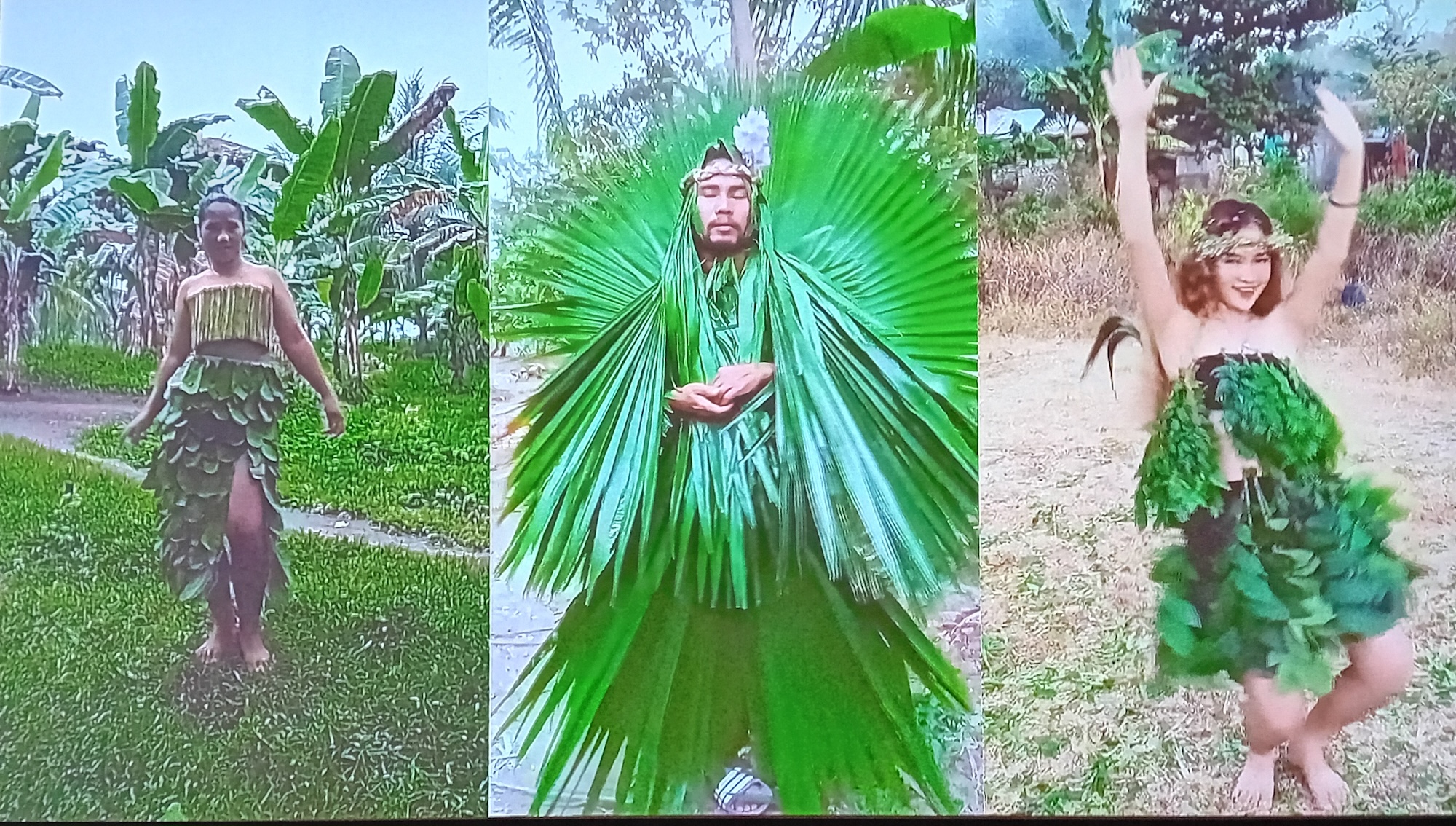
Annouk Kruithof: still from ‘I identify as’, 2024, at Galerie Vriend van Bavink, Amsterdam
If the 21st century has taught us anything, it’s that plants are both more important and more intelligent than previously realised. That’s picked up by Kruithof’s 10 minute exploration of fluid identities between human, nature and technology. Scenes feature people in plant-disguise, and others in costumes made from plants as they dance, parade, and connect with their surroundings as if shedding human exceptionalism to ‘wear the colours of our mother’ – Earth – and become at one with the natural world. ‘I identify’, say various voices, ‘as a tree / a box / a trunk / a machine / an ecosexual… ‘
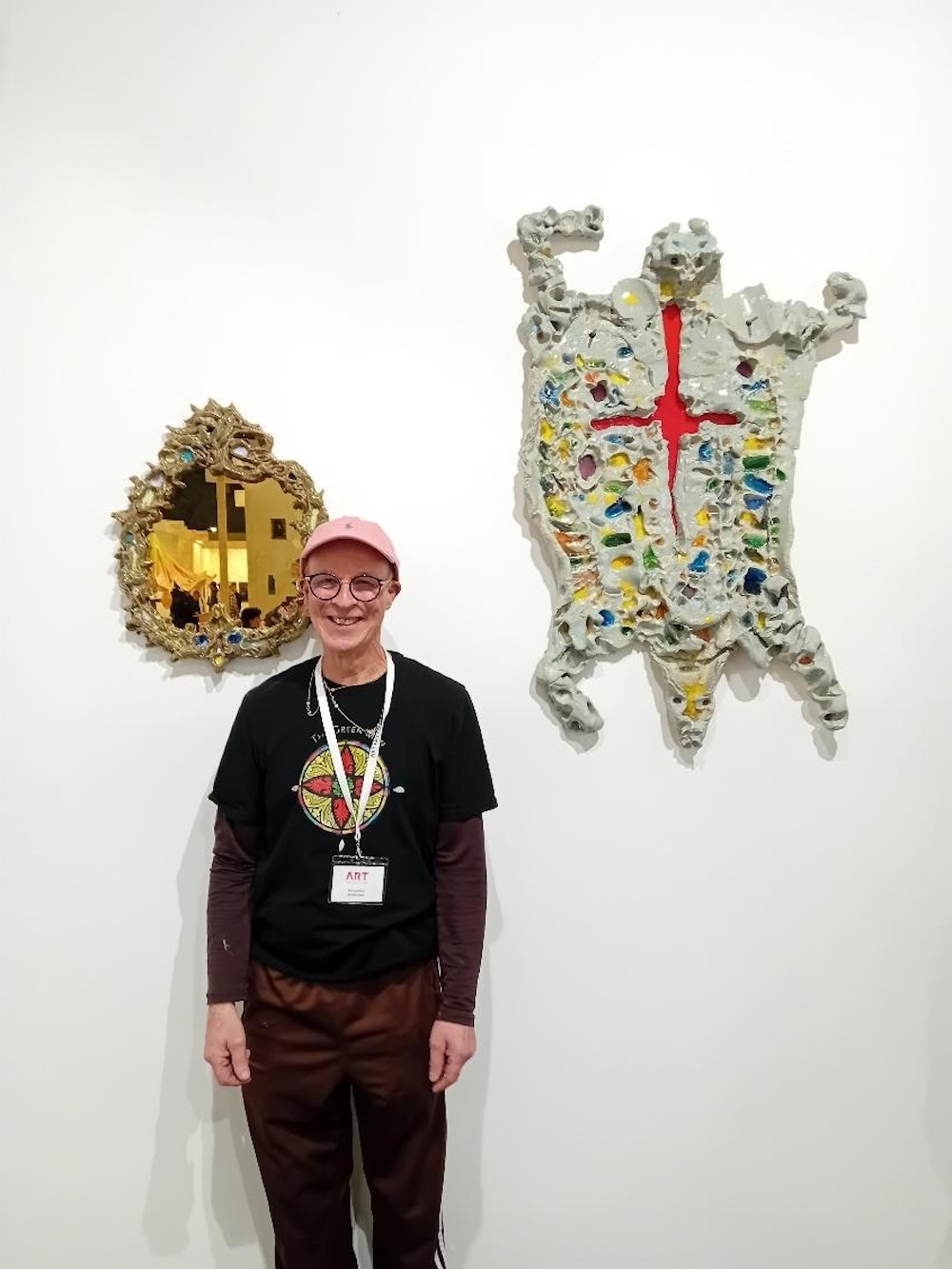
Marc Mulders with ‘Ouroburos’ and ‘Amulet’, 2025, at Kers Gallery, Amsterdam
Dutch artist Marc Mulders is known for paintings which combine various historical styles to abstract from natural flora and fauna. A recent residency in Cor Unum, a ceramic studio in ‘s-Hertogenbosch with a community focus on people facing difficulties in their lives, has expanded his language into a series of fantastical clay beasts. They build stained glass references into the ceramic as a way of suggesting spiritual presence. Mulders told me he’s not too good at drawing, so he delegated the initiating outlines of the animals to others.
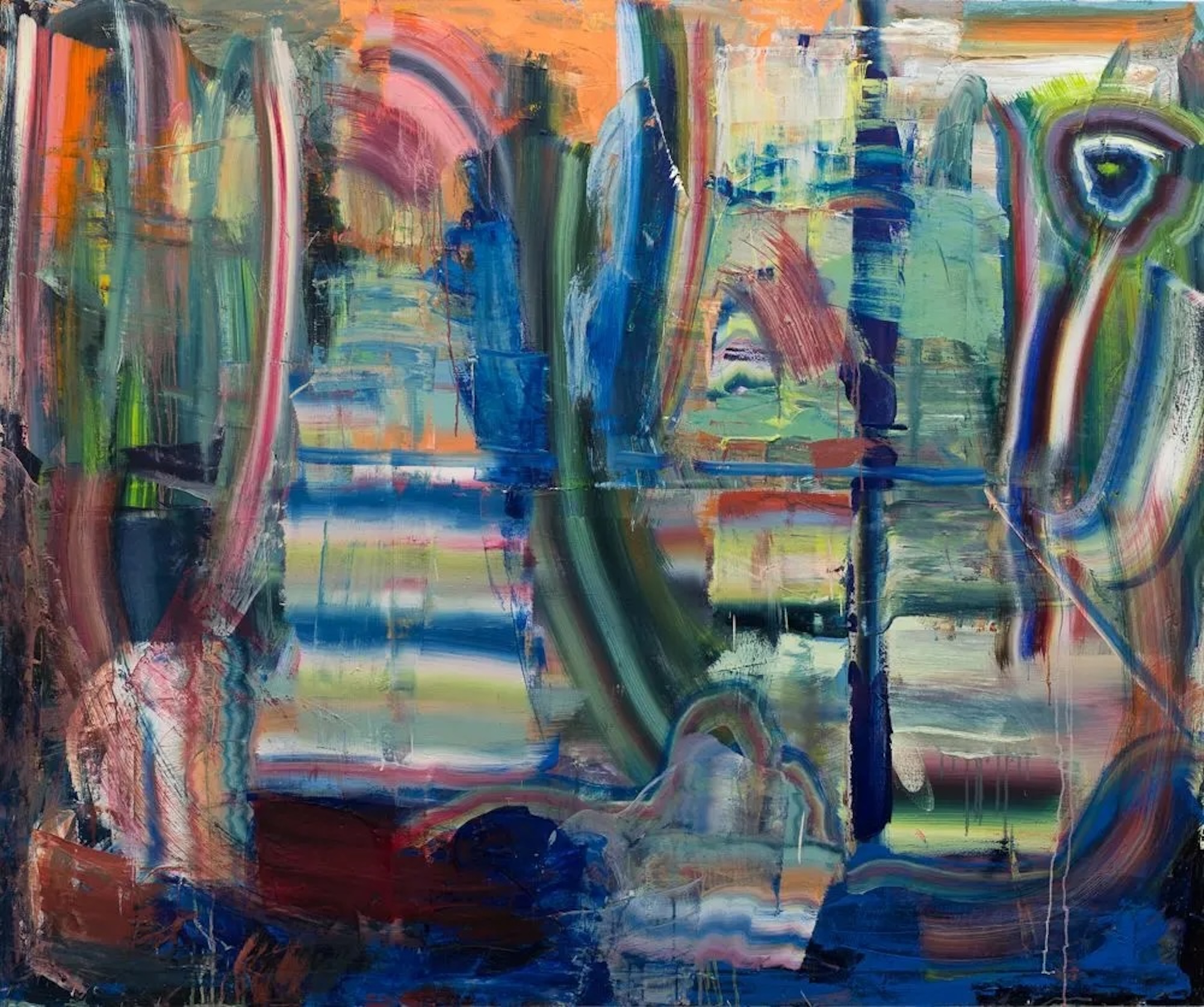
Diana Copperwhite: ‘The Anatomy of Gardens’, 2026 at Kevin Kavanagh, Dublin
Limerick-born Diana Copperwhite – now based between London and Dublin – has a compelling way of creating tension between representation and abstraction. She cites Diebenkorn and de Kooning, chemistry and physics as key influences in arriving at her energetic explorations of light and colour, with their characteristic spectral bands. One might think both of seeing through a prism, and the charting of unseen forces – as well as the figures in a garden recognisable here.
Gaia Di Bello with ‘Shielded’, 2024 at Copperfield, London
The Italian Swiss artist, based in Lugano, raided her grandmother’s house for the crochet doilies from which she constructed this sword. Historically, there is a tradition – illogical, perhaps – of fine decoration on weapons: indeed, they are often displayed in stately homes to show that off. Here, though, the aggressive purpose is fully negated as contrasts are introduced between domestic and military, male and female, functional and decorative, aristocratic and humble.
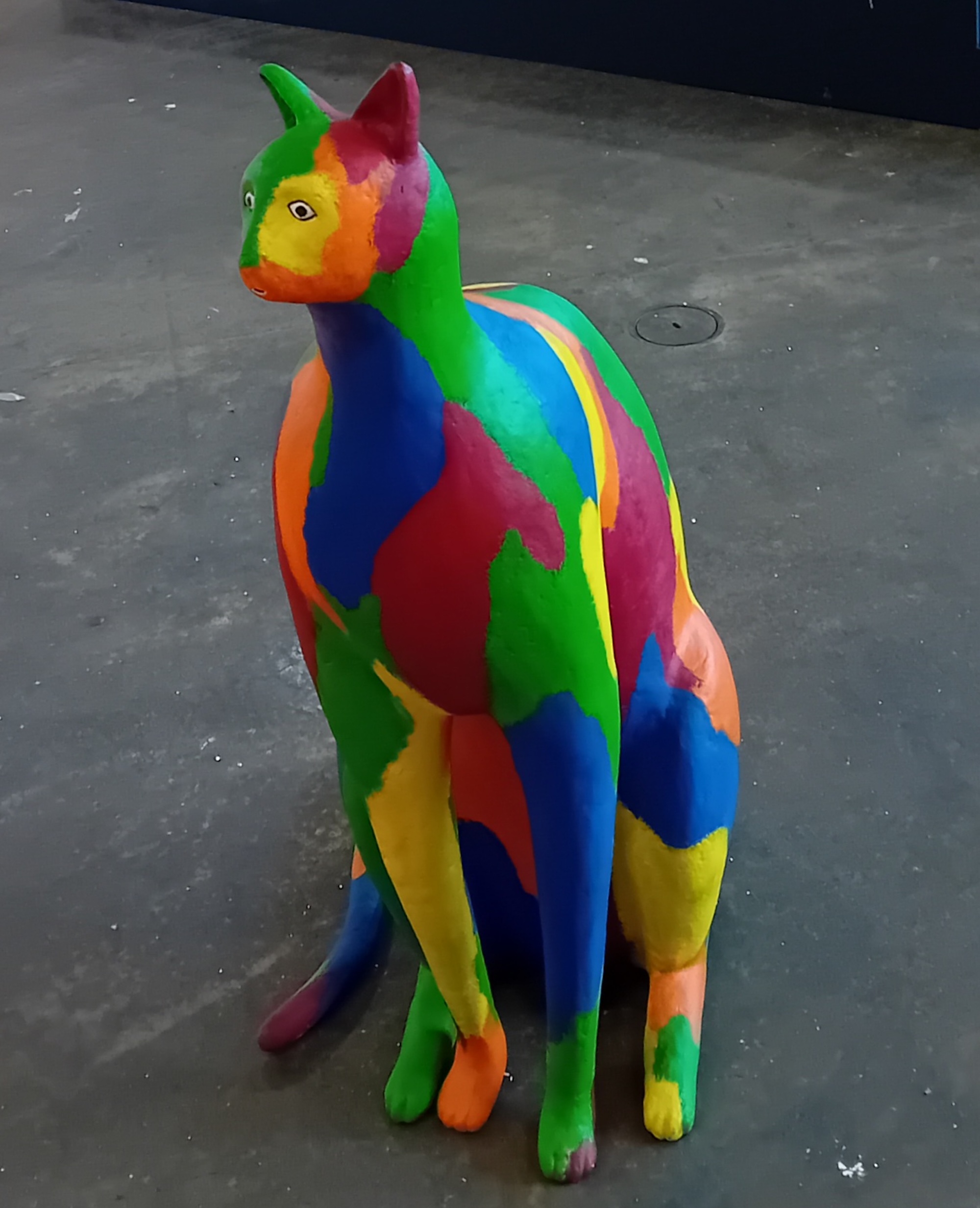
Henk Visch: ‘The stolen painting’, 2019, as shown in the sculpture court by BLOOM, Düsseldorf
If this looks like a somewhat cheesy double-bill of rainbow meets cat, I suppose it is: the point of that lies in the title and Henk Visch’s explanation: ‘The cat is a very attentive animal that observes everything. ‘The stolen painting’ refers to the theft of a painting, in which the cat becomes a witness. But how can she report it? By taking on the colours of the painting herself, of course!’ What was the painting? Possibly a colourful abstract, possibly itself of a rainbow cat – there are plenty of those online.
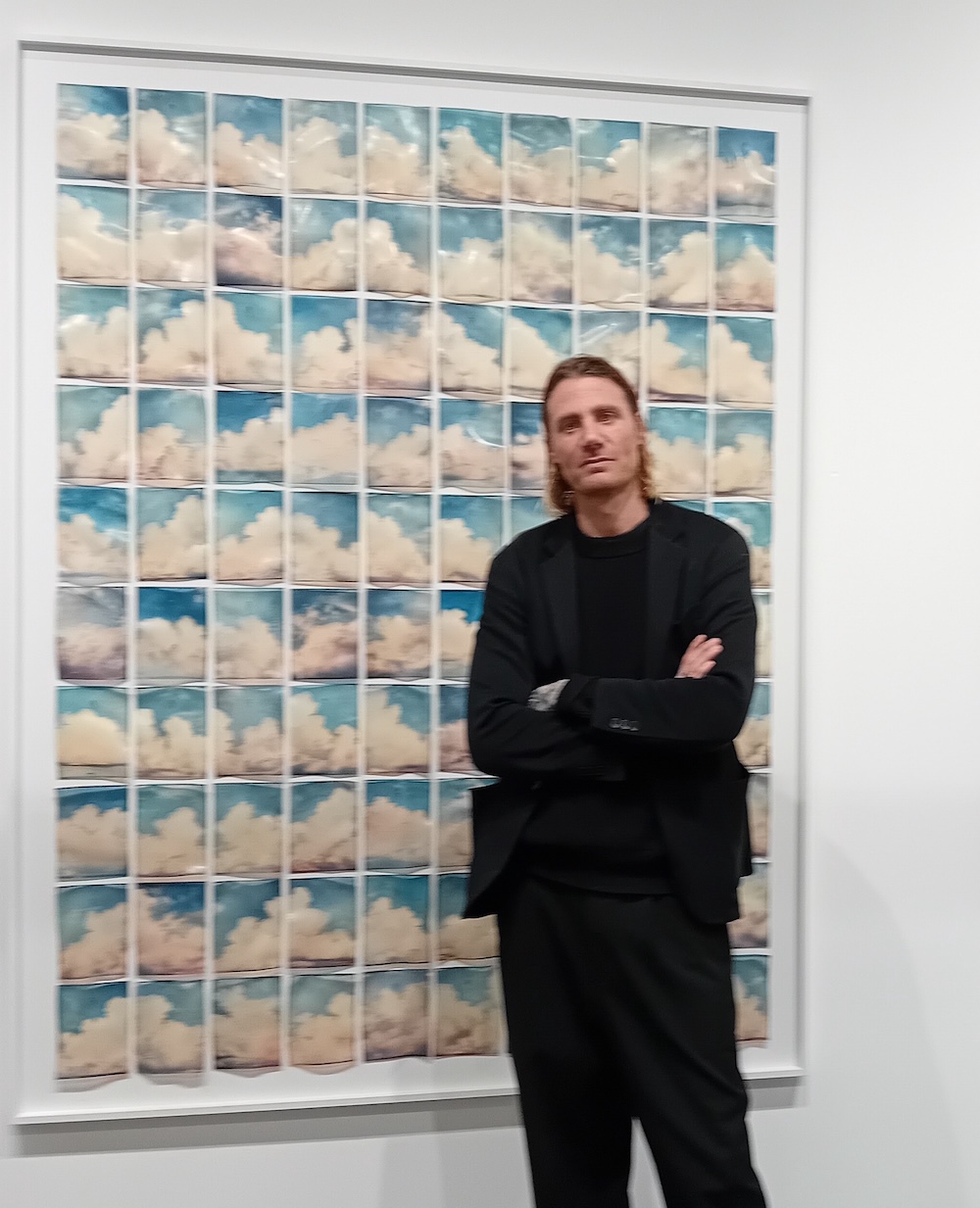
Joost Vandebrug with ‘Clouds I’ from ‘Moment in Time’, 2025
The ever-changing nature of clouds suits them to making time visible in a photographic sequence: more obviously than is the case with stepping in the same river twice, the same watery moment cannot recur. Joost Vandebrug plays with that, rather, as he admitted that the photographs aren’t arranged in exactly the order he took them. They are, though, surprisingly hard clouds (being printed on raised washi paper fused with thermo-formable acrylic) and clouds that can be held in place with pins (Vandebrug, who specialises in this type of arrangement, likes to fix the images rapidly but flexibly, in case he wants to switch things around).
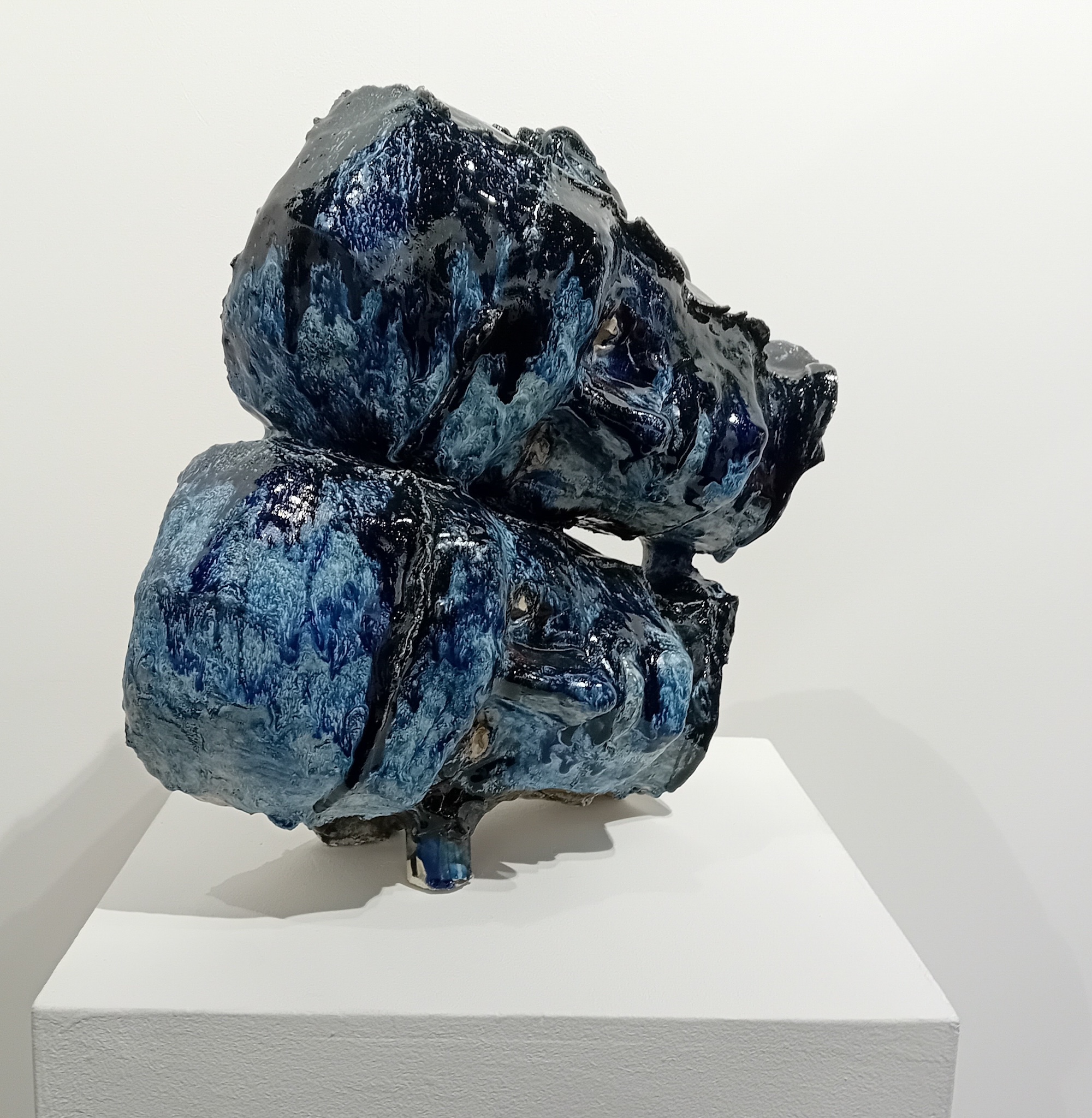
Johan Tahon: ‘Double Munch’, 2025 at Gerhard Hofland, Amsterdam
Belgian sculptor Johan Tahon is a long-haired, heavy-metal-loving, spiritually-driven neo-expressionist who seeks to capture primal being. He is showing two two-headed works – one in the sculpture court, this one in the booth – symbolising both the two-sidedness of many characteristics and the possibility of reconciling them in an intermediate state. Tahon is currently working on a statue of Munch for the eponymous museum in Oslo, where, his gallerist tells me, it will be bigger than Tracey Emin’s 9m high ‘The Mother’… Meanwhile, this is a doubled stoneware version of Munch’s head.
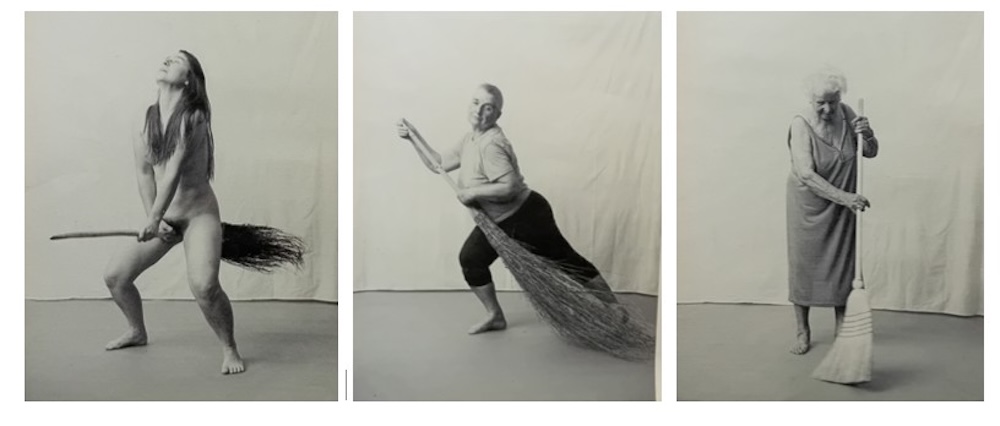
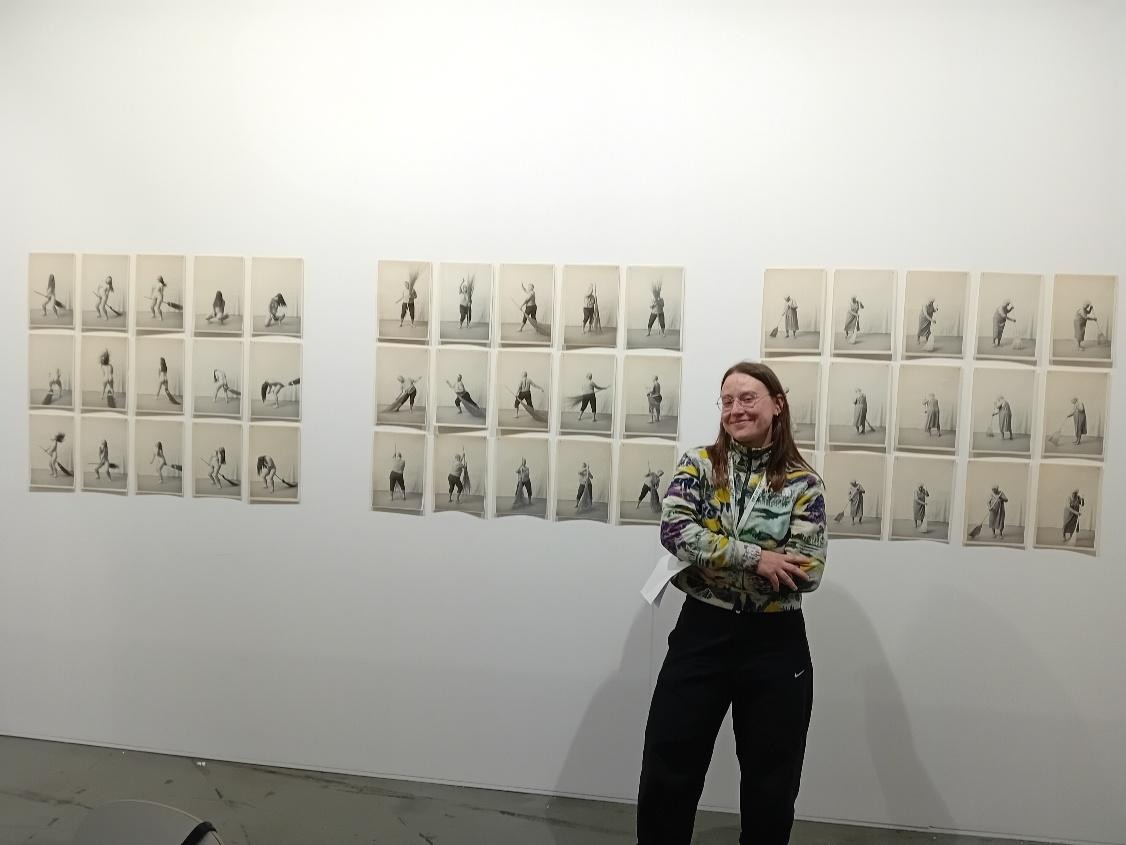
Zzuzsi Simon with ‘And yet we still keep on living…’ 2024, plus details, at Kisterem, Budapest
If these look like old photographs, that’s down to the Hungarian artist printing them on vintage paper to imitate the current look of seminal 1970s feminist records of subversive actions. The apparent witches zestfully wielding their brooms as a symbol of purification and liberation are herself, her mother and her grandmother. Alongside the series, Simon showed films in which the three of them told stories of trauma across the generations.
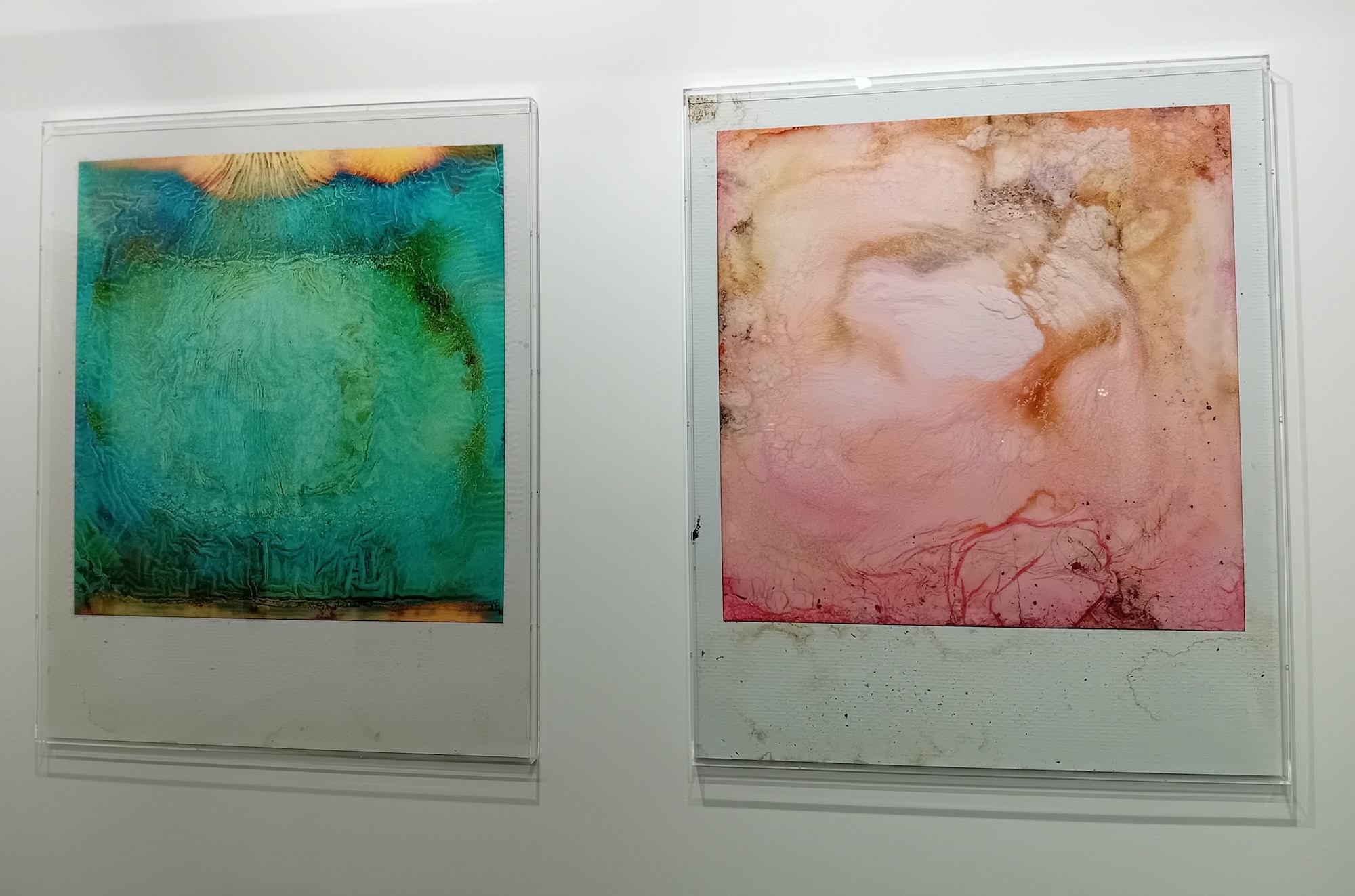
Marike Schuurman from the series ‘Toxic’, ongoing since 2022, at Dorothée Nilsson Gallery, Berlin
From a distance, attractive abstract paintings. Actually, though, photographs of the acidic, lifeless, contaminated waters of lakes resulting from open-pit lignite mining in Lusatia, in the far east of Germany. The Dutch artist documented them with Polaroids, which she developed in the lakes shown, so that their PH levels interacted with the film’s own acidic emulsion. That yielded a surprising – and beautifully disturbing – range of colours. She then blew the originals up to an immersive scale, encasing them in Plexiglas to underline the untouchability of the landscapes.
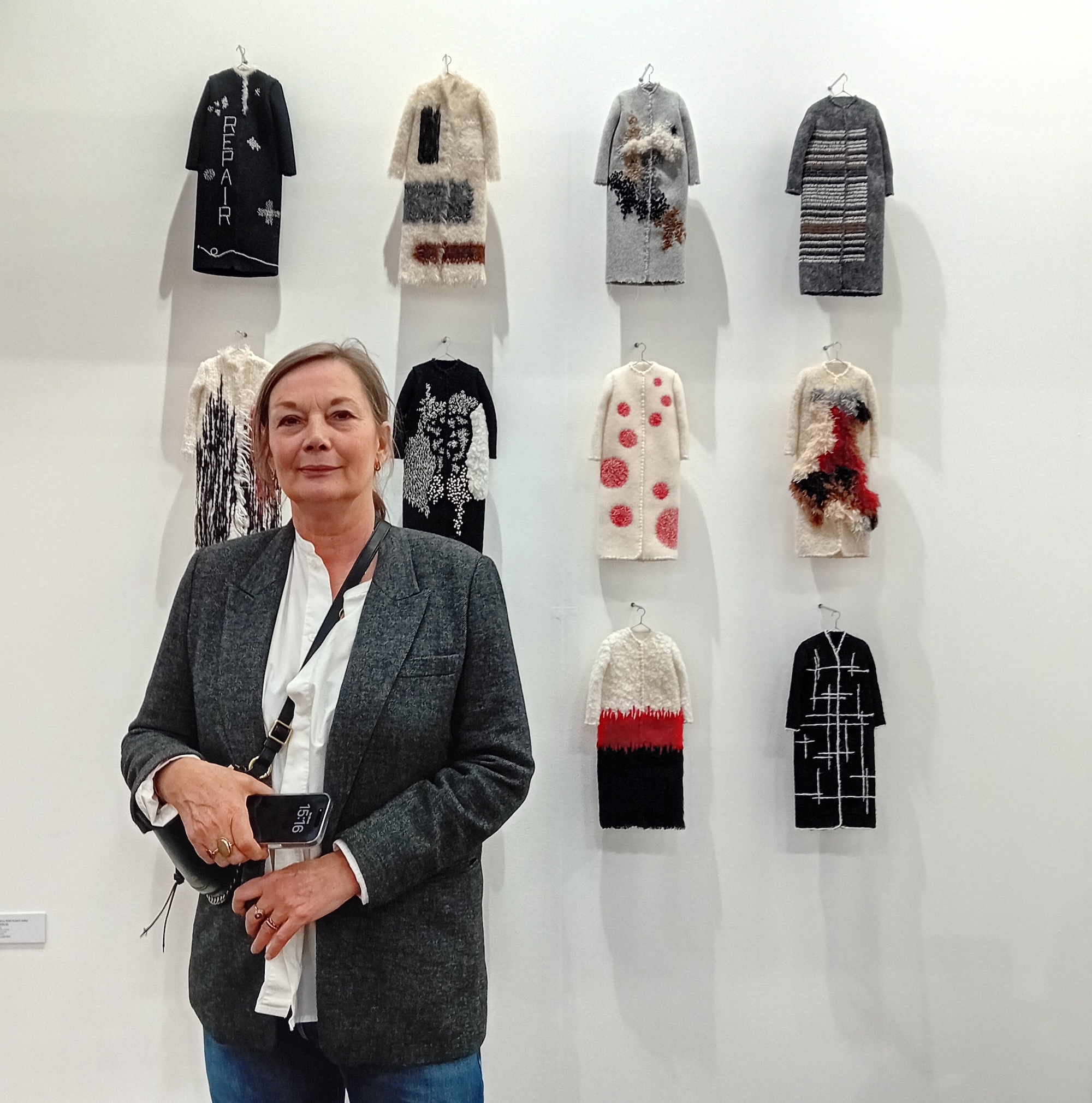
Meta Struycken with ‘Stitch’, 2026, at Weisbard, Rotterdam
Meta Struycken, who turned from fashion to art, told me that she develops these works intuitively in the making – a contrast with her former method of drawing designs that are then evaluated and assessed for sizing before any production commences. The set of wool and yarn works neatly suggest abstract paintings without being too close to any particular artist, and have individual titles such as ‘Crossings’, ‘Dry Brush’ and ‘Impasto’ which hint similarly. Part of a themed stand titled ‘Fabric for Thought’, a stimulating display of textile art.
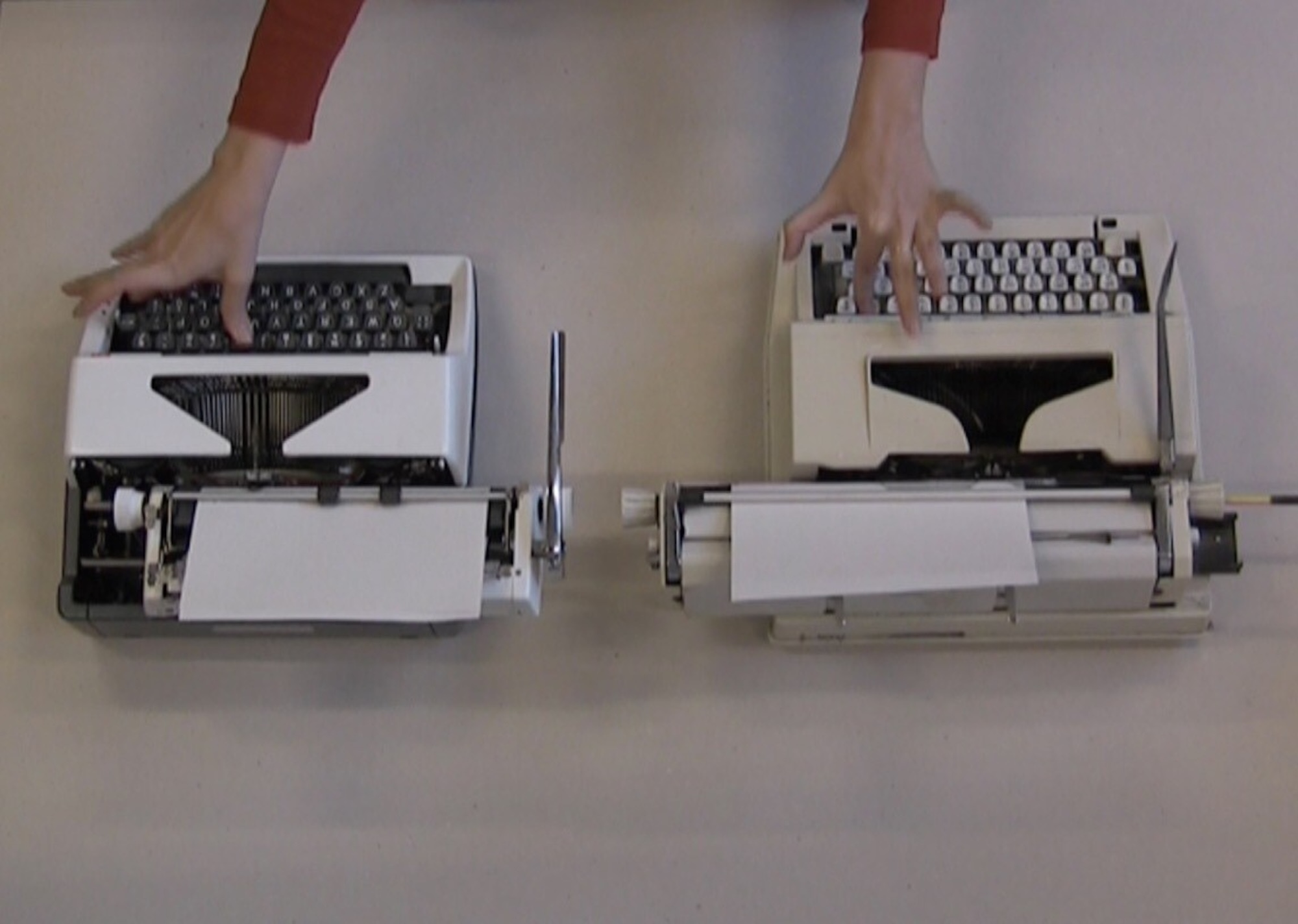
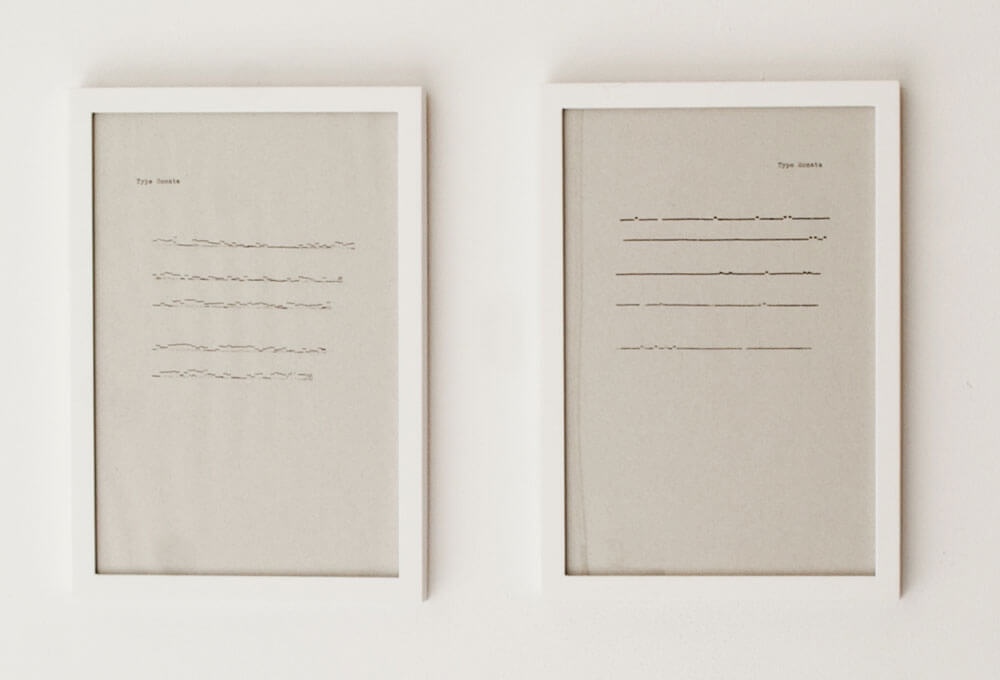
Dina Danish: ‘Type Sonata’, 2011, at Stigter van Doesburg, Amsterdam
Dina may be Danish by name, but is a Franco-Egyptian artist based in Amsterdam. This work from 15 years back with now-quaint technology seems freshly relevant now: Danish hits the dash key continually on both a Western and an Arab typewriter. They move left-to-right and right-to-left respectively in line with their writing conventions, so that clashes occur as the carriage returns come into play. Both a film and the resulting pair of typed sheets – the imperfect ‘sonata of lines’ you see below – record the recurring disruptions.
Categories
Tags
[ad_2]
Source link