
The Independent was not involved in the creation of this sponsored content.
When images are generated, categorised, and transformed through code, who is responsible for what the viewing public sees? Is authorship located in the artist’s intention, the system’s logic, the dataset’s bias, or the final material outcome? Across the UK and beyond, artists working with machine learning, generative software, and algorithmic processes are increasingly resisting simple answers, using computation not as an end point but as a site of friction. Their work reveals authorship as something distributed, unstable, and deeply political.
In recent years, high-profile debates around artificial intelligence in culture have often been dominated by spectacle: large-scale data visualisations, autonomous image generators, and questions of replacement rather than relation. Yet within contemporary art, a quieter but more critical conversation is taking place. Artists are interrogating how computational systems see, misread, and abstract the world, and what happens when those processes are translated back into physical form. Rather than surrendering authorship to the machine, these practices slow it down, complicate it, and, crucially, reassert the role of human judgment.
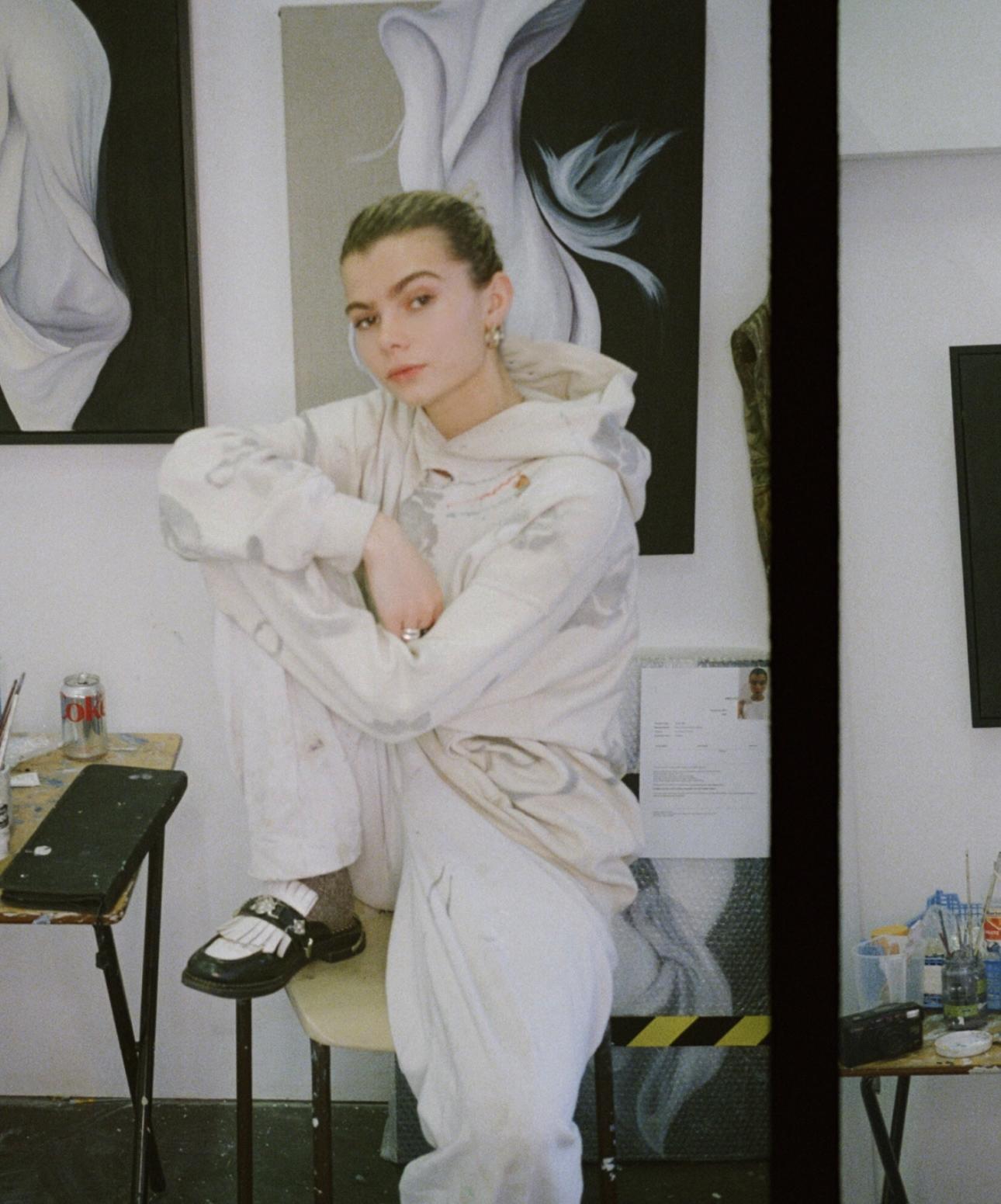
This tension is particularly visible in the work of Camilla Ridgers, an intermedia artist whose practice operates between generative technology and painting. Her work does not treat digital systems as neutral tools or autonomous collaborators, but as unstable frameworks through which images are processed, distorted, and returned to the hand. Positioned within a lineage of artists engaging critically with technological mediation from the essayistic image-politics of Hito Steyerl to the data-driven environments of Refik Anadol yet it remains firmly grounded in questions of materiality and touch.
Ridgers’ Pixel Pants offers a focused entry point into contemporary debates around digital authorship. Rather than treating computational output as a finished image, the work positions algorithmic processing as an intermediary stage. Visual material drawn from the artist’s archive is subjected to systems that misread, compress, and abstract it, producing distortions that resist clarity. These fragments are then translated into painting, where gesture, surface, and colour reintroduce judgment and contingency. The digital output functions not as authority, but as provocation.
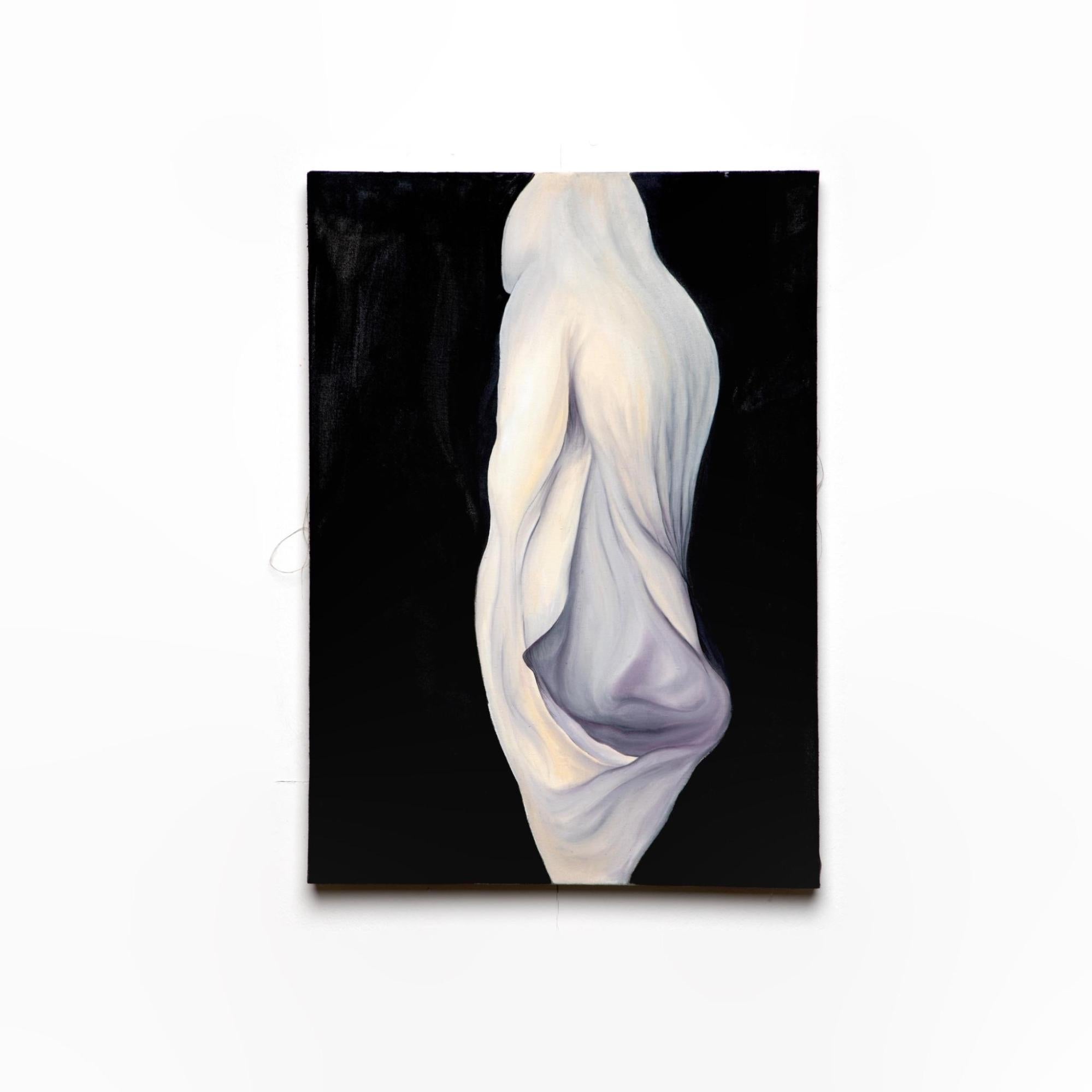
Rather than asking whether machines can make art, the work exposes how meaning shifts when authorship is distributed across systems of translation. Algorithmic logic flattens nuance, categorizes difference, and fails to recognize ambiguity; the painted surface records those failures. Authorship, here, is redefined not as mastery or control, but as responsibility for how images are interpreted, mediated, and returned to view.
This emphasis on translation rather than automation distinguishes much of the most compelling computational art being produced today. In the UK, where conversations around AI and the creative industries are increasingly framed through economic and legal concerns, artists are offering a more nuanced perspective. They ask how systems of vision—whether human, mechanical, or hybrid—shape what can be seen and valued in the first place.
Observers of contemporary painting have noted how this approach aligns with a broader return to materially driven responses to digital systems. Edie Jones, Director of Marketing and Communications at Saatchi Yates Gallery, has described Ridgers’ practice as existing “in the in-between,” where “the fluid figure is in conversation between human and machine influence—existing in a space pulled in tandem in opposite directions.” For Jones, the significance lies not only in the aesthetic outcome but in what it suggests about painting’s future: “the continued superiority of the human hand in fine art.”
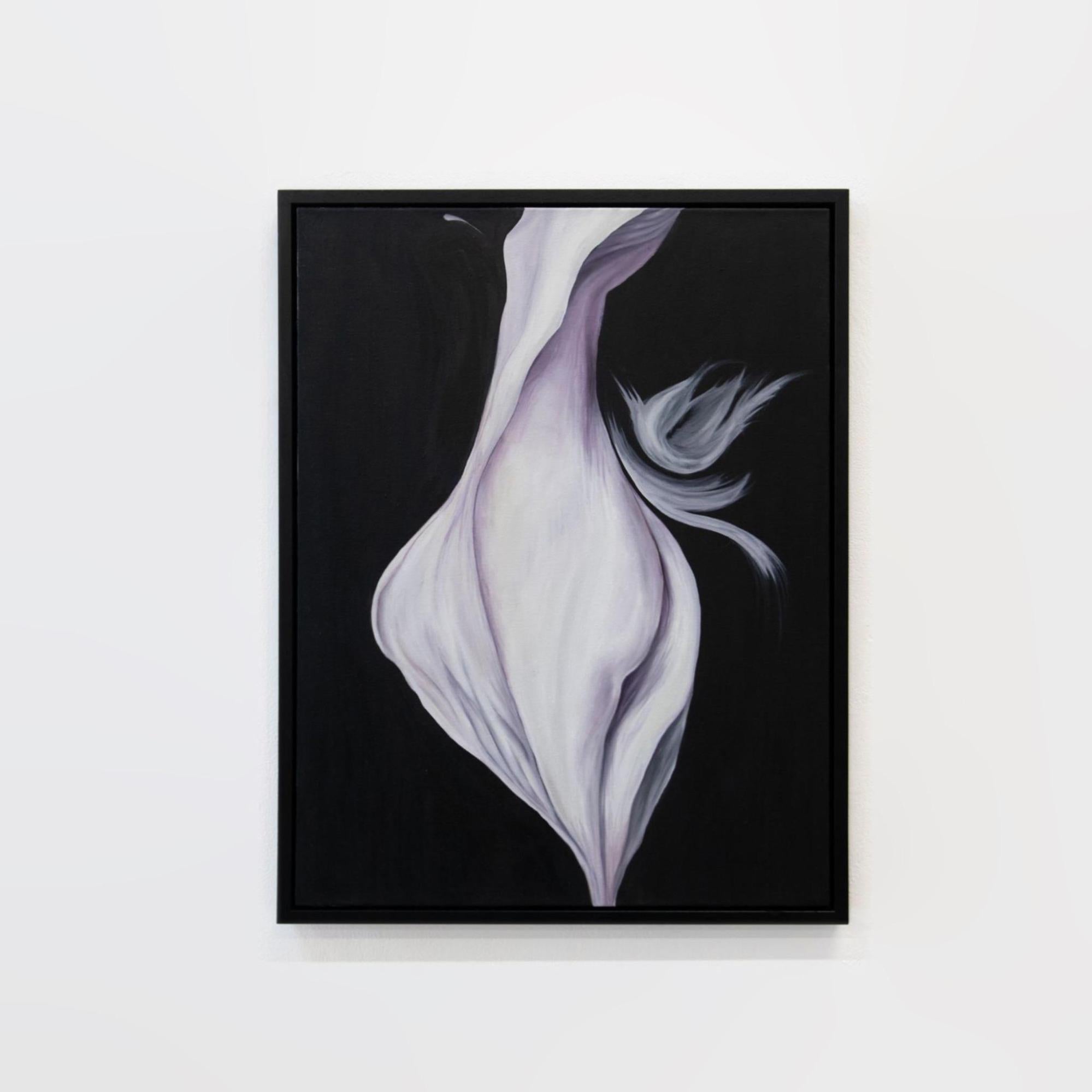
That tension between sensitivity and system is also evident in In Between Subjects II, currently exhibited in the 16th East Wing Biennial: RE:VISION at The Courtauld Institute of Art. Positioned within an institutional context concerned with perception, transformation, and technological mediation, the work foregrounds how subjectivity itself is reshaped through computational processes. The title gestures toward a space neither fully human nor fully machinic, where images are perpetually negotiated rather than resolved. In this setting, authorship becomes relational: produced through interaction, interpretation, and context.
Ridgers’ curatorial work further extends these concerns beyond the studio. An earlier exhibition she curated, Uncensored, involved a live-streamed, multi-camera installation documenting visitors as they entered the space. Here, audiences became both subjects and data, raising uncomfortable questions about surveillance, consent, and visibility—issues that resonate far beyond the gallery. The project anticipated many of the ethical debates now surrounding image capture and algorithmic profiling, underscoring how curatorial practice can itself function as a form of critical authorship.
The international dimension of this research is set to expand with Ridgers’ forthcoming presentation during Mexico City Art Week as part of Fundación Maceta × Salomon. Rather than marking a departure, this moment reads as a continuation of an inquiry into how images circulate across cultural, technological, and geographic systems. Authorship, in this sense, is never fixed to a single site but emerges through networks of production and reception.
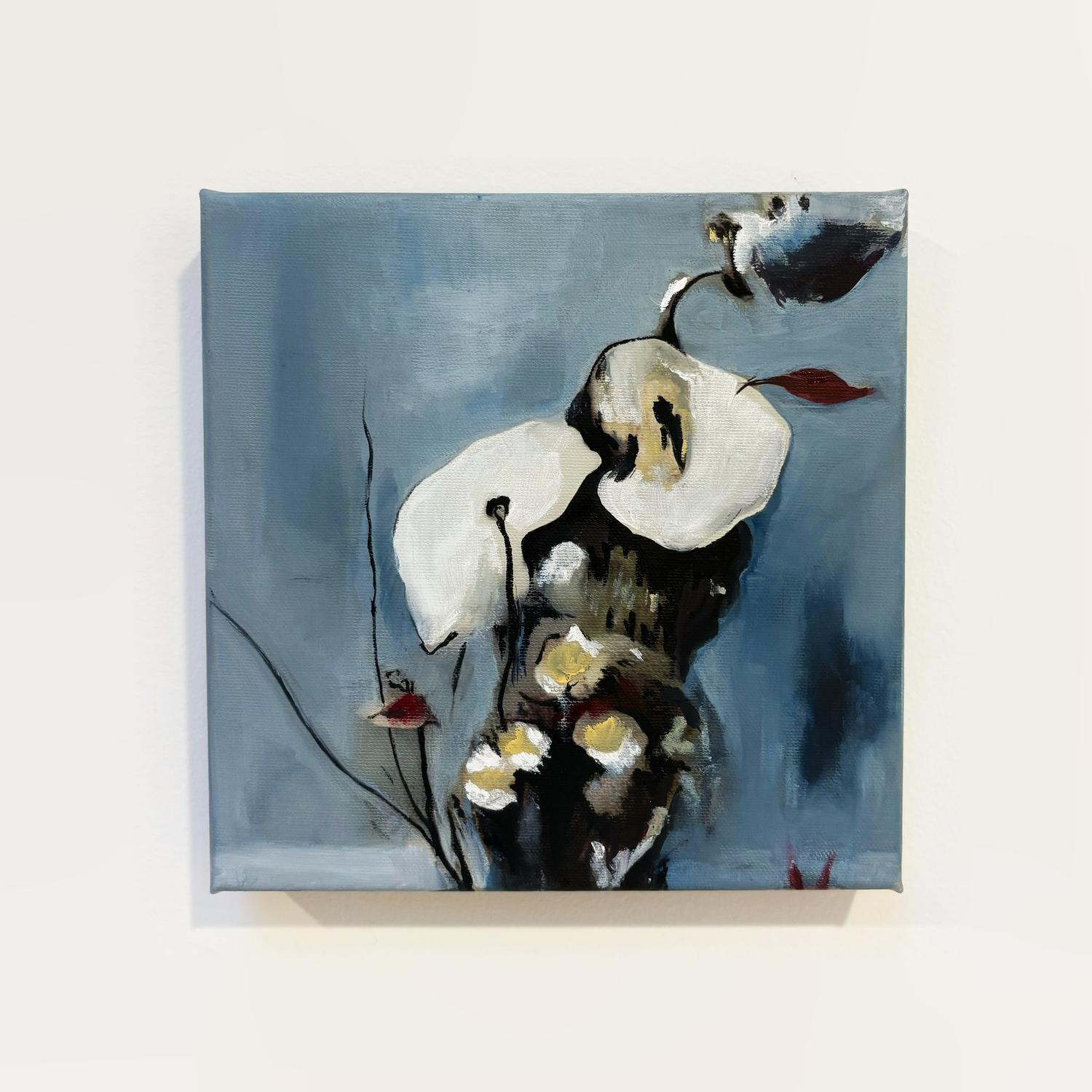
What emerges from these perspectives is a model of digital authorship that resists both technological determinism and nostalgic craft. Instead, it acknowledges computation as a powerful but limited participant in image-making. By insisting on translation, error, and material engagement, artists like Ridgers expose the myth of machine objectivity and remind people that systems always carry the values of those who design and deploy them.
As computational systems become ever more embedded in cultural production, the question is no longer whether artists will work with them, but how critically they will do so. The most compelling practices do not ask machines to speak for humans; they ask what our (human’s) reliance on them reveals. In slowing down the algorithm and returning it to the surface of paint, contemporary artists are not surrendering authorship. They are redefining it for an era in which images are always already shared.