[ad_1]
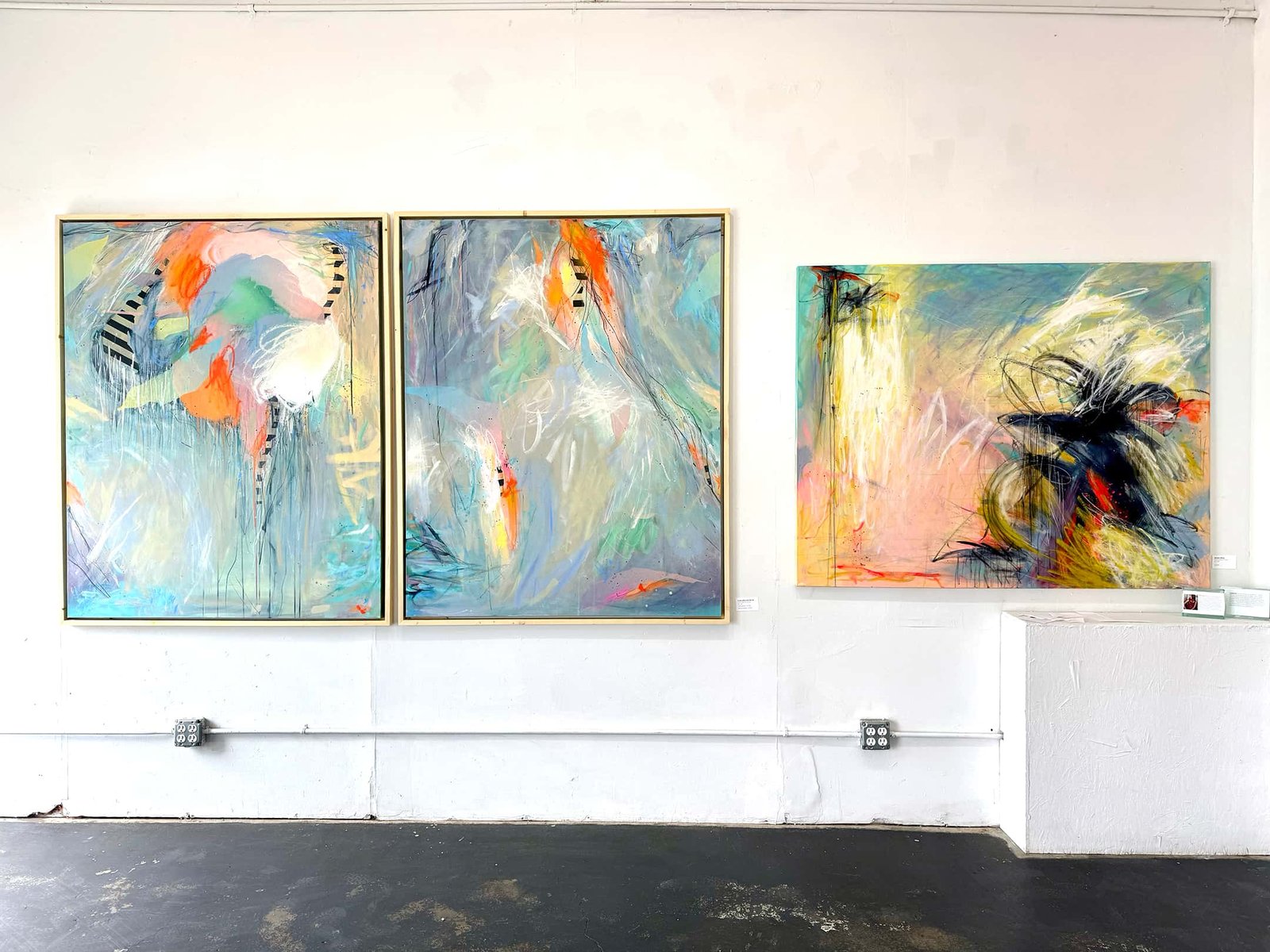
Abstract artist Mollie Jackson will be featured at the NoBo Art Center in the commissioned display Catharsis, which runs through May 23. NoBo will also host a special workshop, Making Emotions Visible, in the exhibition on May 16. We recently sat down (virtually) with Jackson, who will also be the summer 2026 artist-in-residence at the Firehouse Art Center, to talk about the show and her process.
Jamie Lammers: Can you tell us about this exhibition?
Mollie Jackson: It’s a series of large-scale, abstract paintings. They’re really big, they’re expressive and emotive, so my hope is when people come into the space, it feels immersive. Painting is really cathartic for me, hence the name of the show. It’s always been easier for me to express things visually than in words. I think that’s really what people connect with when they see my artwork, the energy behind it. Art can be this tool to help you move through things and grow.

Jamie: Was there a general idea behind what you wanted the paintings to convey?
Mollie: No, I’m a process painter, so I really don’t have a clear idea of what exactly I’m going to paint when I go into my studio. It’s really responding to the materials and whatever I’m feeling in the moment or the music or whatever. I wanted the whole thing to be cohesive, but I didn’t have a set, like, “I’m gonna paint these exact paintings for the show.”
Jamie: How long have you been painting in general?
Mollie: My mom was an abstract artist, so I grew up going to her studio, and she just let me experiment with all of her supplies and materials. In high school, I was painting murals around the school, and had a little portrait business and such. I went to college to study art and got to try everything there, but I went into graphic design. It’s really been the last 3 years or so that I really got back into a painting practice. I opened my business because I wanted to enter an art fair, and it really just took off.

Jamie: What has been so cathartic about the process for you?
Mollie: When I paint, it feels similar to… meditation, maybe? It’s hard to describe. It’s not like I’m in my studio sad or mad or any of these emotions. It’s just there’s this feeling of release, you feel so great after the process is through. People are always thinking, “You need to be good at art.” I don’t look at it that way at all. It’s just this way of expressing yourself. I don’t get connected to any of the pieces when I’m done. Once they sell, that’s great, and if they don’t, eventually, I’ll give them to a friend. It’s more about the process, that flow state that I’m chasing, always, to feel something.
Jamie: There is clearly something that people connect with. Is there anything you hope people take away?
Mollie: Yeah, I mean, that’s why I do it. I just love that people have a connection. It’s like a different language, almost. I just want people to feel something, especially before they even try to understand it. I don’t think I need to explain what it’s about to anybody. It’s more like, “What does that experience feel like for them?”

Jamie: Have you gotten direct feedback from people about those connections?
Mollie: I know that people connect emotionally to it. You’ll just see somebody stare at a painting for a long time, and then they come and want to talk to you about it, but it’s like, “Why are they staring at it for so long? What are they connecting to?” Maybe I’m inferring, but I think people are connecting to the emotion behind the painting. That’s what I think with all abstract art. There’s so much up for interpretation, but when people are drawn to a piece, they’re drawn to the emotional side. It’s not a representative piece where you’re depicting something perfectly. I think a picture can do that. Abstract artwork is appealing to people’s emotional side.
Like journalism like this? Consider becoming a sustaining supporter — and get our print edition delivered to your home each month.
Democracy needs journalism more than ever. For 25 years, we’ve told the truth — your support helps us keep doing it for the next four and beyond. Administrations come and go. Our team stays ready to lead, no matter who’s in charge.

[ad_2]
Source link