
[ad_1]
At the Palazzo delle Esposizioni in Rome, the Mario Schifano retrospective curated by Daniela Lancioni reconstructs the parable of an omnivorous artist, illuminating the historical scope of his research, ahead of Arte Povera and beyond. Carlo Alberto Bucci’s review.
History, including art history, is not made with “what ifs.” The uchrony leads us, however, to imagine what idea we would have today of the fabulous Italian Sixties – a decade encompassed and compressed at the antipodes between the arrival of Pop Art and the start of Arte Povera – in the event that Mario Schifano, in 1968, working for the Rome home of Marella and Gianni Agnelli, had been able to create the hypothesized “room filled with sand and with a large pyramid in one corner,” in addition to the famous dining room filled in every corner and wall by his paintings. The news, unpublished, was provided by Ettore Rosboch, a film producer and friend of the Roman painter, to Daniela Lancioni during a conversation on November 12, 2025. And now it’s in the scholar’s text and in a note in the catalog (Electa, 343 pages, 45 euros) of the retrospective that opened four months later, titled simply Mario Schifano and open until July 12, which she curated at the Palazzo delle Esposizioni in Rome, where she is “senior curator.”
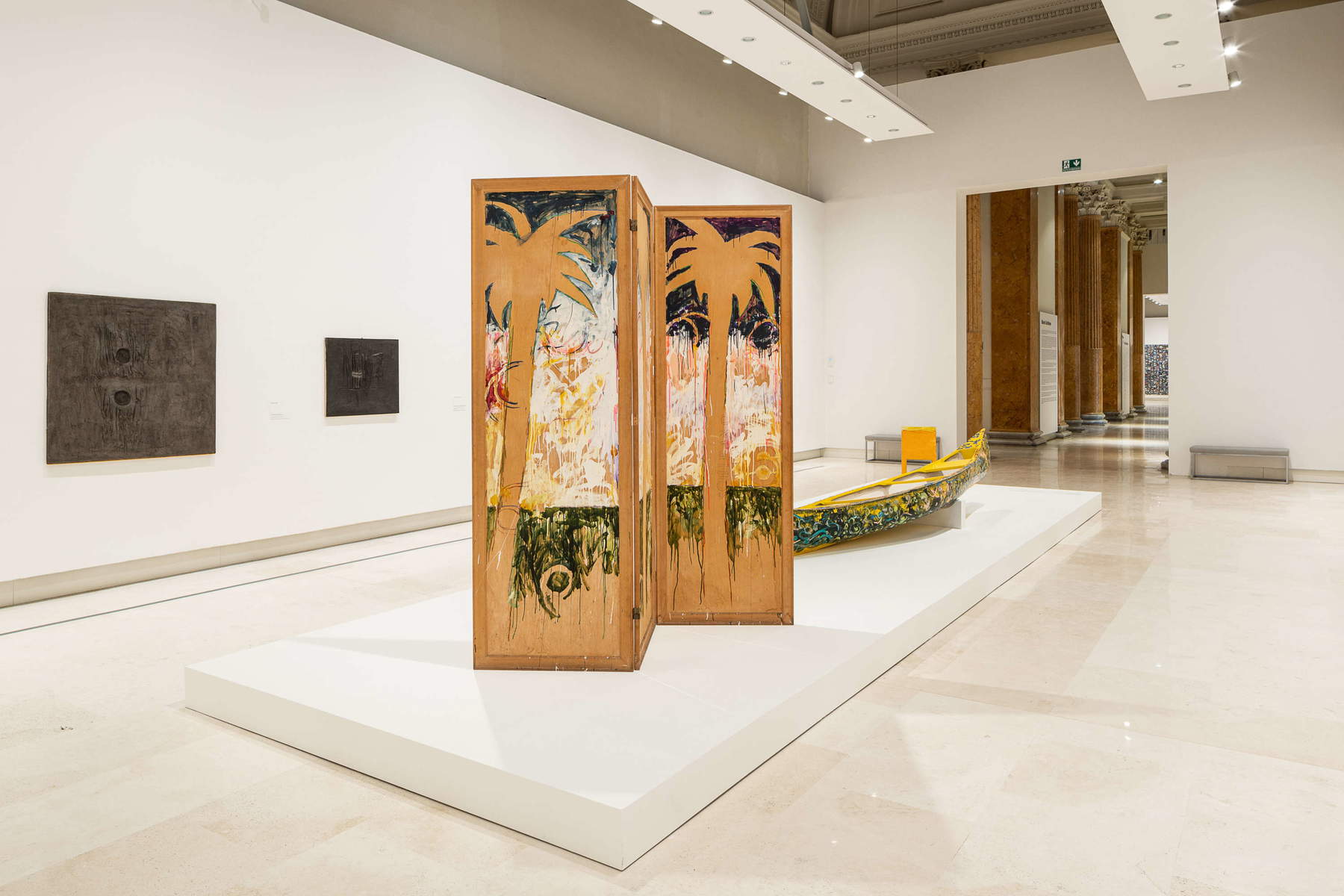
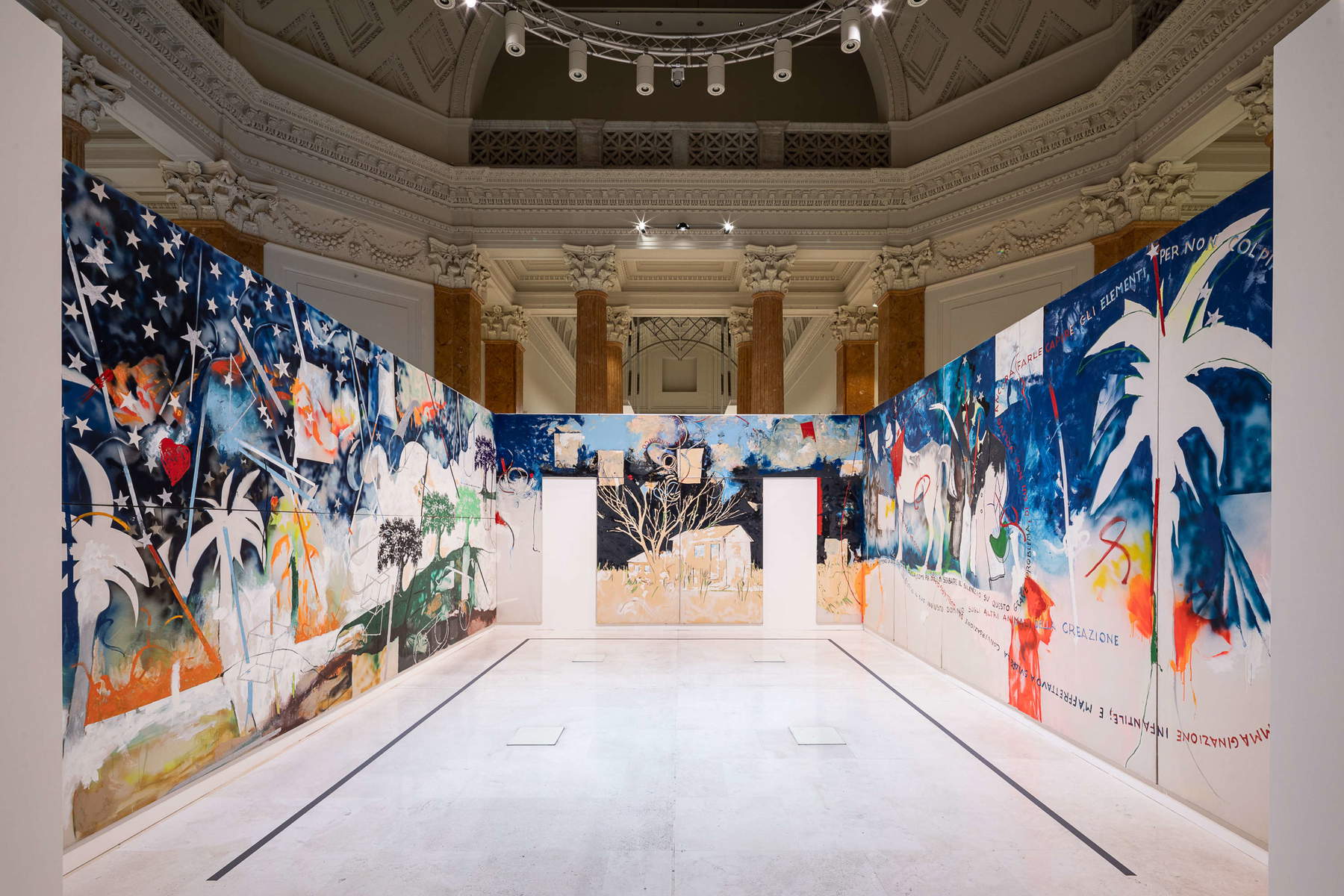
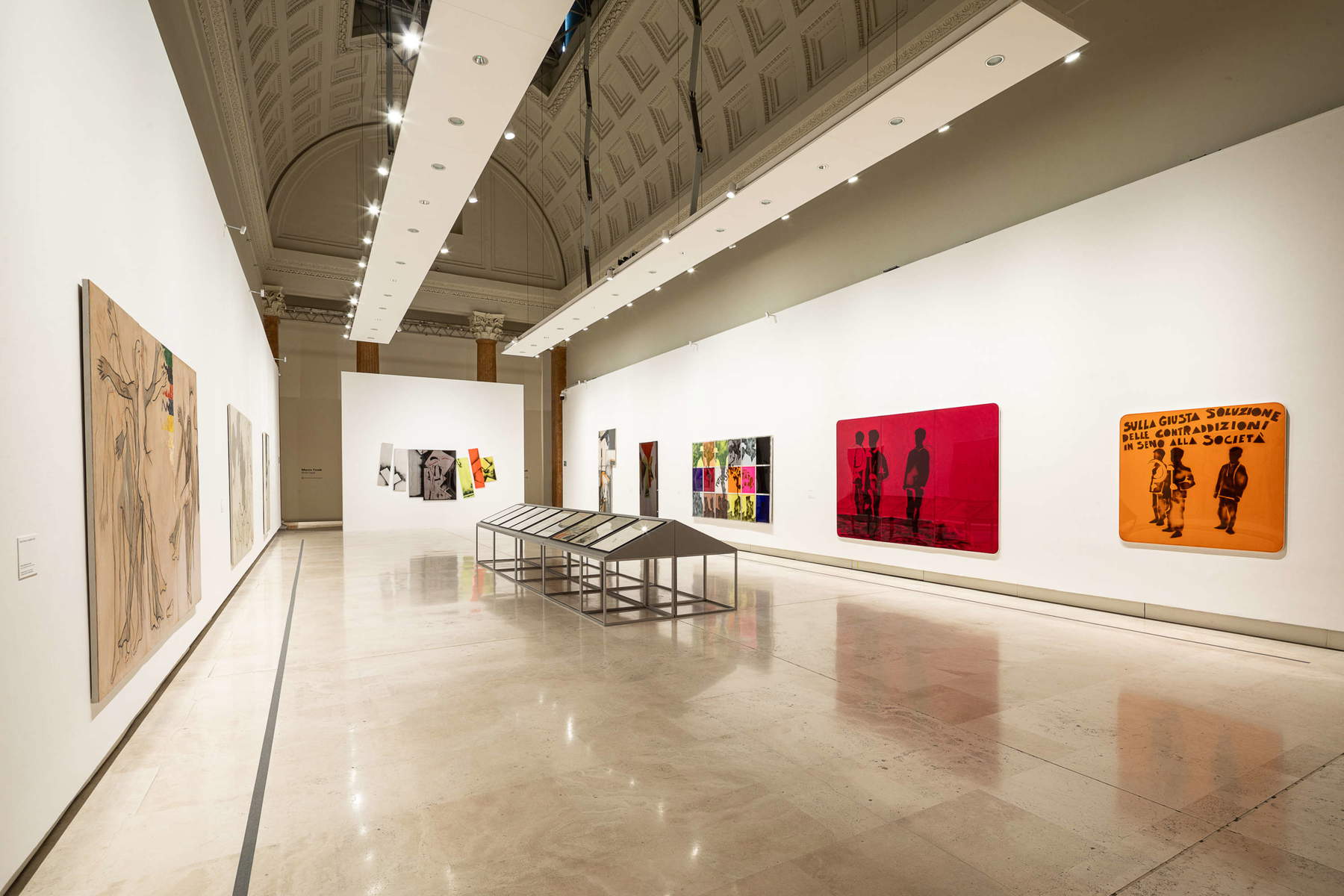
The “camera picta” for Casa Agnelli is a central work in the path of the artist known, even to the general public, for the palms and stars, the homages to Futurism, the anemic landscapes, the rulers of dechirican memory, the human figure and animal presences rendered through emptied silhouettes, the writings and the title that run like ant biches across the expanse of rapid, gestural, imprint painting. And it is themes, subjects and styles all present in the 14 canvases that, made in the same year leaning on the studio of the painter and friend Franco Sarnari, went to decorate the dining room in the house of the lawyer and his wife, after the immense canvas of the Chinese Feast, explosion of red flags and parade of communist protesters, had been rejected (although it had been placed in the luxurious home) by the owner of the house and Fiat, the country’s largest industry. These days, the Agnelli’s pictorial environment is installed, in its original size, in the central hall of the Palace on Via Nazionale. It welcomes visitors and ideally shunts them to the side rooms where one can retrace, in brief, salient terms, the activity of the multifaceted artist (film director and musician, of course, but first and foremost a painter) who, the son of an archaeologist, was born in Homs, Libya, in 1934, and died in Rome in 1998.
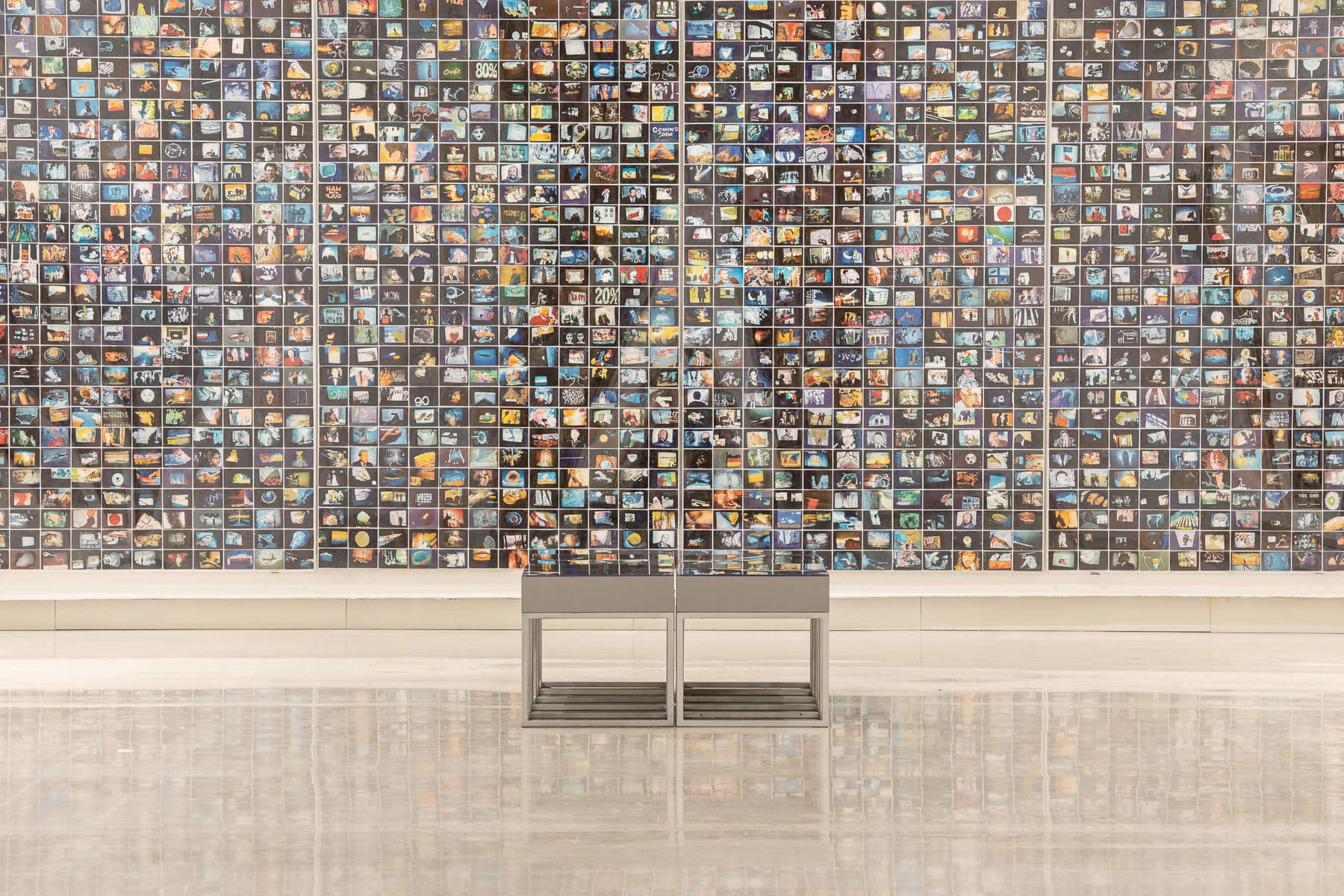
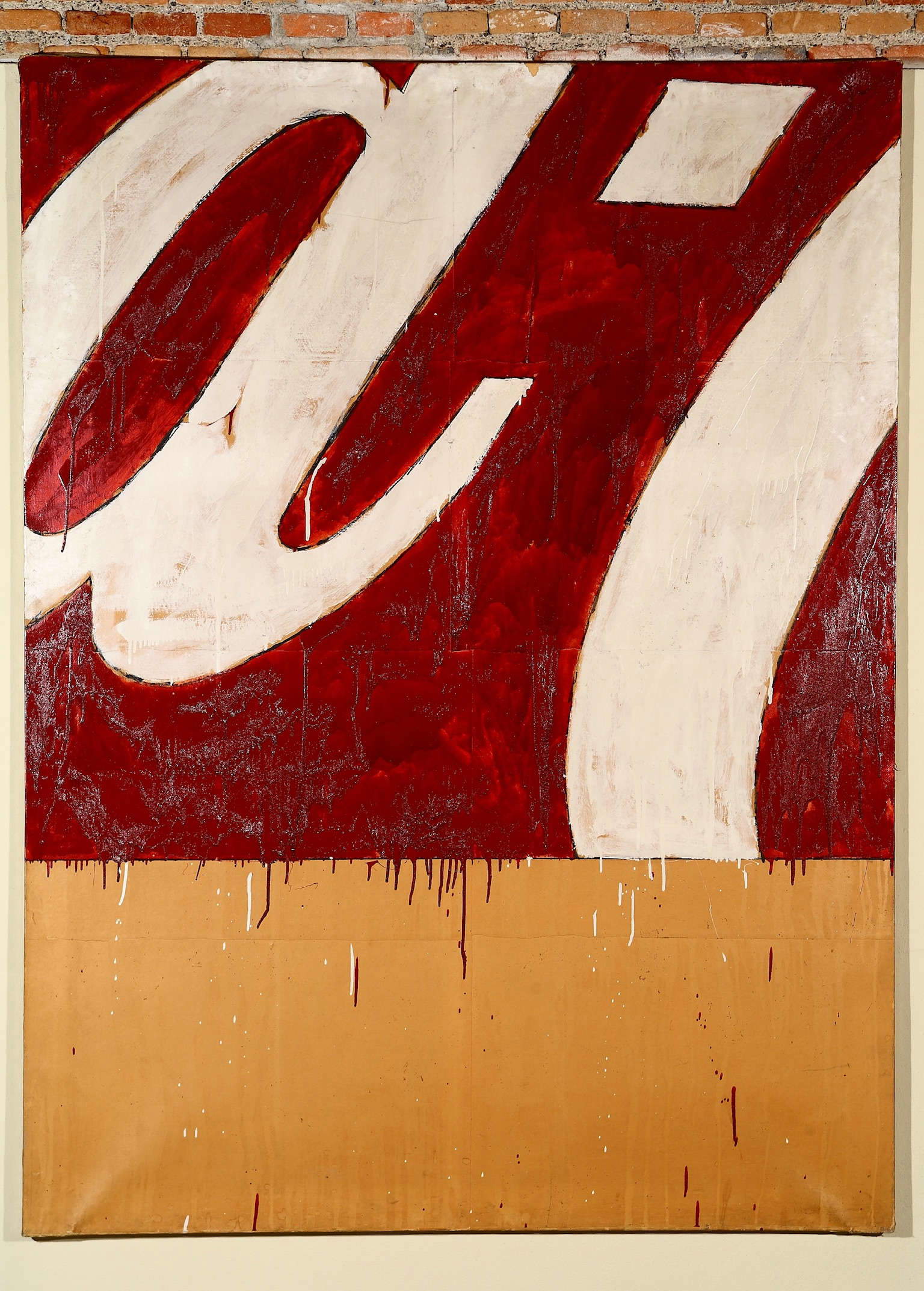
Ettore Rosboch’s recollection-although not substantiated by preparatory studies and testimonies by the painter himself, otherwise they would have been published-is important because it demonstrates on Schifano’s part the ability, on the one hand predatory, on the other precursor-like, to move nimbly among the novelties of contemporary art, on both sides of the Atlantic, within and beyond the neo-avant-garde. Indeed, in 1967, a year before the Agnelli commission, Schifano exhibited paintings from 1962 at Bertesca in Genoa. The gallery, founded in 1966 by two twenty-somethings, Francesco Masnata and Nicola Trentalance, had opened its doors with the exhibition American Pop Artists (Lichtenstein and Warhol, among others), and so the idea of proposing the painter reinterpreting advertising signs in his own way, such as the Coca Cola brand in the 1962 Large Propaganda Detail, a work from a private collection now on display in Rome, was in line with that choice. In September 1967, however, the Genoese space on Via Santi Giacomo e Filippo renewed its wardrobe and hosted, by now it is history, the first Arte Povera exhibition: in addition to Boetti, Paolini and Fabro, the “Roman” Kounellis and Pascali appear in that debut, as well as, in the “Im Spazio” section, other protagonists of the Capitoline scene such as the “pop” Ceroli, Mambor and Tacchi, among others.
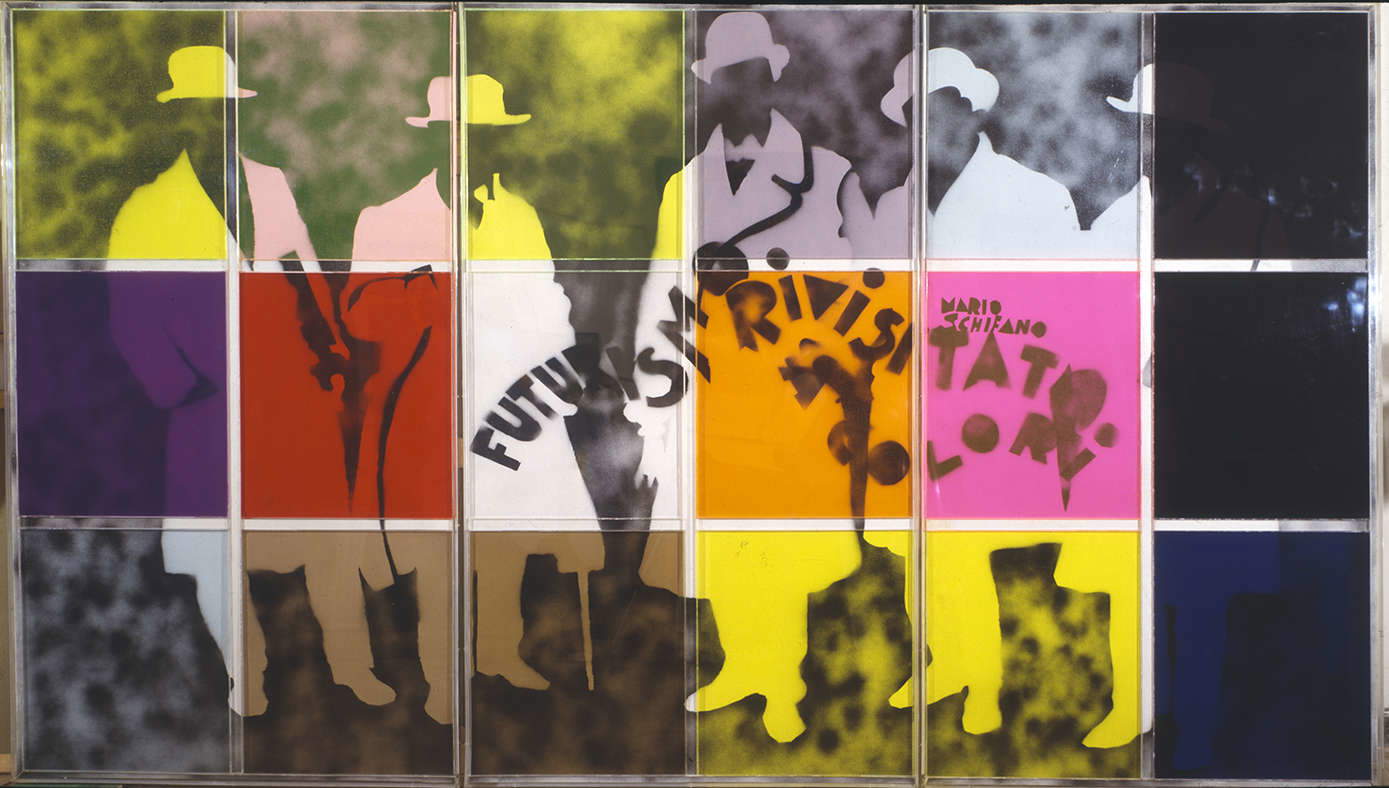
Schifano does not: he is not among the Bertesca poverists. His whimsical, luxuriant, generous painting was not nor is it traceable and reducible certainly to the impoverishment and deculture of art theorized in Germano Celant’s poetics. Yet it was in his chords to use materials foreign to easel painting, moreover in an environmental and monumental scale that, if Rosboch’s memory is not mistaken, would have led to filling a room in the Agnelli house with sand to place a pyramid on top of it, perhaps transparent as was the 1966 Scultura controversa (known through a photo by Ugo Mulas), but as were also the perspex surfaces covering his paintings on canvas such as Futurismo rivisitato a colori, exhibited at Plinio De Martiis’ Tartaruga romana in 1967, or Compagni compagni, in the versions proposed thefollowing year by Giò Marconi in Milan (the works, from a private collection, are part of the selection made by Lancioni).
Sand, as well as earth, can be found in the palette of the nascent parabola poverista, as in the coeval experience of American Land Art, and it will suffice to recall as evidence of this the installation/performance of March 1969 at Fabio Sargentini’s Attico, a leading space in Rome of the international neo-avant-garde, with Eliseo Mattiacci entering the former garage on the Flaminia driving a steamroller to transform the gallery into a plowed field.
The history of art, and of the market, then took another course. The protagonists of Celantian Arte Povera ended up in major international museums, while Schifano’s works – highly appreciated and copied in his homeland, but also super-counterfeited by expert or improvised forgers – can be found exclusively in (a few) domestic public collections, such as the Galleria d’Arte Moderna in Turin (lender of the important 1964 triptych Io non amo la natura) or the Museo del Novecento in Milan, which sent Particolare di esterno (Coca cola) of 1962, as well as in a great harvest of private collections, large and small. And suffice it to say that to find an exhibition of his work in a public museum in Germany, just to name one of the leading countries in the art system, one has to go as far back as 2025, last year, with the retrospective at the Schauwerk Museum in Sindelfingen.
The same can be said for the 1980s and 1990s, to which the last rooms of the Palazzo delle Esposizioni are devoted, in the rigorous, old-fashioned and very useful chronological progression, given by the curator to the exhibition, ranging from the cements of the beginnings to the televised and very topical Refugee Fields of 1991. In the years of the return to painting and quotation, with the paladins of the Transavanguardia depopulating abroad, Schifano, who of painting and quotation was a master, sets aside for a moment his own emulsions on canvas of photographic images, stolen from magazines and TV. And he churns out paintings of great size and impact, such as the rarefied, dripping, Monetian Botanical Garden of 1982 (in a private collection in Turin after being exhibited that year in the Tucci Russo gallery) or, at the opposite end of the spectrum, the excessive, redundant, pictorially full Incident of 1985, owned of Emilio Mazzoli, the Modena gallery owner who also followed the artists of Achille Bonito Oliva’s Transavanguardia, and who is among the major lenders, with the Luigi and Peppino Agrati – Intesa San Paolo collection, the Giò Marconi gallery or the private Valsecchi, Calabresi, D’Ercole, Jacorossi, among others, of the Roman anthological exhibition on Schifano.
Few public collections are involved in the Palaexpo retrospective, where, however, the extensive loan of the Csas of the University of Parma, holder of the complete series of photos made in the U.S. in 1970 with a view to a film, Human Lab, which was never shot (an essay by Stefano Chiodi is dedicated to Schifano’s cinema in the catalog), but remained imprinted in numerous black-and-white prints on silver baryta paper, stands out. Missing from the list, for example, is the Galleria Nazionale d’Arte Moderna e Contemporanea in Rome, which hosted a retrospective on the artist in 2008 and has, among other things, aamong other things, a beautiful Landscape, anemic version with enamel and soul from 1965 (on Schifano’s titling in the 1960s, read Flavio Fergonzi’s catalog essay), while the coeval, similar and equally valid Anemic Landscape II (arrived through Giò Marconi Gallery) was chosen: we do not know the reasons for the choice that excludes Gnamc, but given the very high figure (100,000 euros) requested by the Valle Giulia museum’s management for its Klimt granted in 2024 to the Galleria Nazionale dell’Umbria, it is understandable that Palaexpo preferred a private lender rather than, as would always be desirable with equal quality and importance, a public entity.
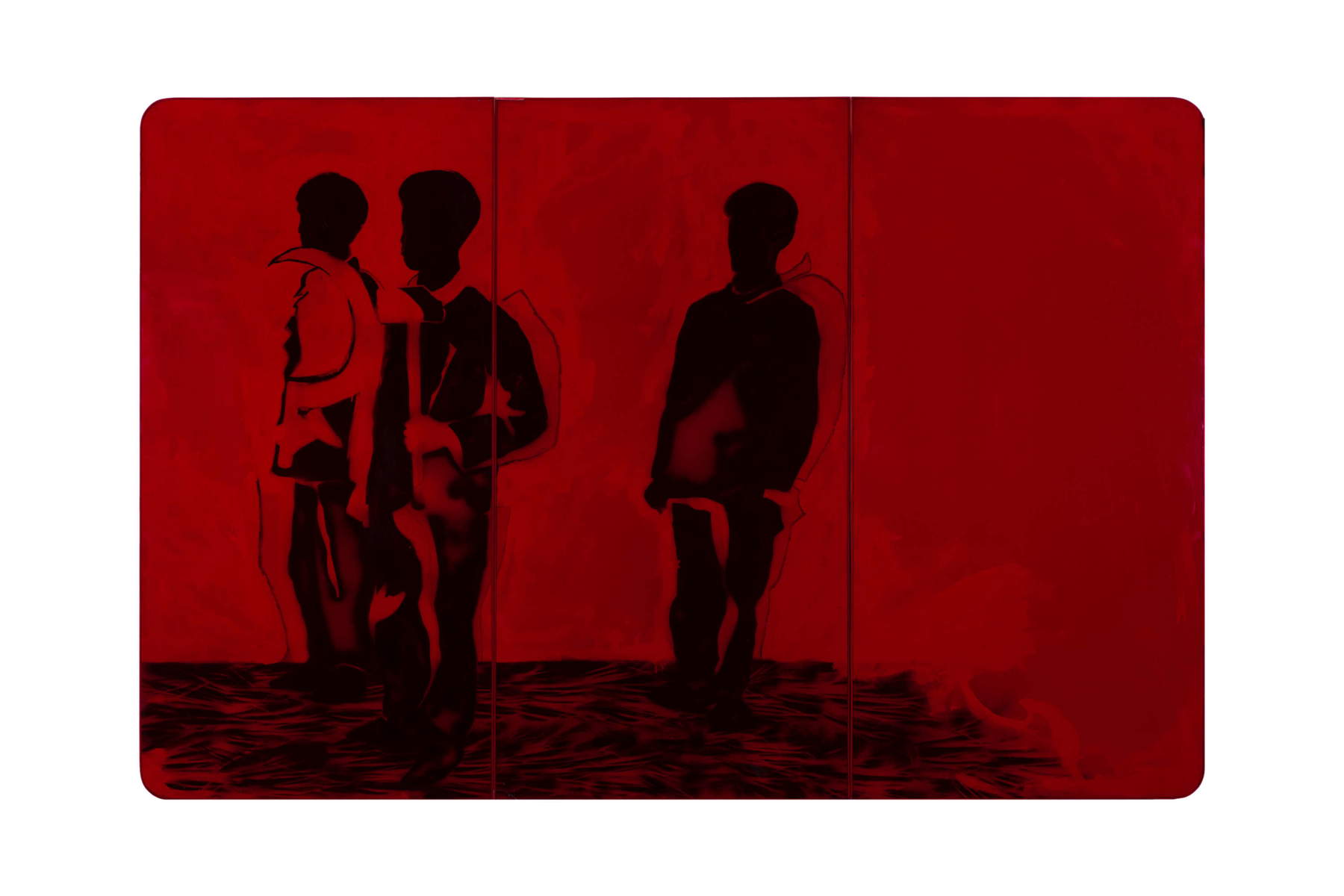
Among other things, the exhibition in Via Nazionale has the merit of proposing in the first room, the one of the tatzebaos with the detailed human and artistic story of the painter, the Landscapes of 1956, the Studies or Informal Matrix Painting of 1959, works from a period (analyzed in the catalog by Manuel Barrese) expunged from the very recent general catalog of theoeuvre of Mario Schifano, which, compiled by his widow, Monica De Bei, and Marco Meneguzzo, adheres to the master’s stipulations of starting his artistic parabola in 1960, considering the youthful trials unworthy of memory. Instead, they are indeed interesting, since already in the early days one can sense the painter’s flair and his omnivorous curiosity, for example towards the concrete of his friend Giuseppe Uncini. But it is certain that the room of monochromes from 1960 (Giorgia Gastaldon’s essay is dedicated to this phase) leave the audience open-mouthed for the rigor of the choice of minimalist matrix, but animated by a handcrafted manipulation of the frames (which become, a bit à la Enrico Castellani, plastic, sculptural surfaces) as also by the very calibrated and elegant choice of minimal drips(Something Else, 1960; Claudio Costamagna collection) that give the sense and sign of a fresh painting, still in fieri and in movement; that movement that becomes blatant, physical, filmic, in the return to the figure (but mail to the body: the ovals of the faces are almost always empty, without features) of mid-1960s works such as Body in Motion and Balance or Walking, canvases clearly indebted to Balla’s 1912 Bambina x balcone (the same year, moreover, as Duchamp’s Nu descendant un escalier ).
Francesco Guzzetti – in the catalog essay on the period immediately following the tabula rasa of monochromes, and the relationship with Pop art before and after the artist’s stay in New York for five months in 1963-1964, but then again in 1965 – also cites Merce Cunningham’s Choreographies as a possible source of Schifano’s movement studies and paintings. Who in Words and Drawings of 1964 – 17 sheets made in four hands with the poet Frank O’Hara and granted by the Quenza Collection (USA) – writes: When I remember Giacomo Balla. It is the explicit homage to the Futurist master repeated, moreover, in the title of one of the works exhibited in the same year at the Venice Biennale, the 1964 edition that went down in history for the award to Robert Rauschemberg and for the exploit of Pop Art that broke the hegemony of Abstract Expressionism and Informalism.
The relationship with the art of the U.S. is important for the phase of Schifano’s monochromes (the canvases of Frank Stella, Newman, Rotko), but, even more so, for the contemporary and following one that reckons with the mass media iconosphere and, therefore, with Pop art in the stars and stripes: with Warhol, known and frequented in the Big Apple, above all. For example, in the painting now in Milan Particular of Exterior (Coca cola) from 1962 appears – painted in enamel on sheets of paper applied to canvas, according to a surface treatment dear to Schifano, known as an experimenter with traditional and contemporary media, including the computer – the famous brand of the carbonated soft drink, present below and at the edges of a dark, tarry painting, agitated and animated by drips that exceed the boundaries of the painting. Drips of color appear in Warhol’s 1960 paintings as Coca-Cola or, moving from the world of brands to that of comics and cartoons, in the coeval Dick Tracy or in 1961’s Popeye. It is clear that on the part of both of them there is a love of painting that both tints and at the same time discolors the image taken from reality-and for Warhol, too, this is true of the works in which he imprints photos on canvas, remaining profoundly a painter even though in 1965 he had announced, “I am retiring from painting.”
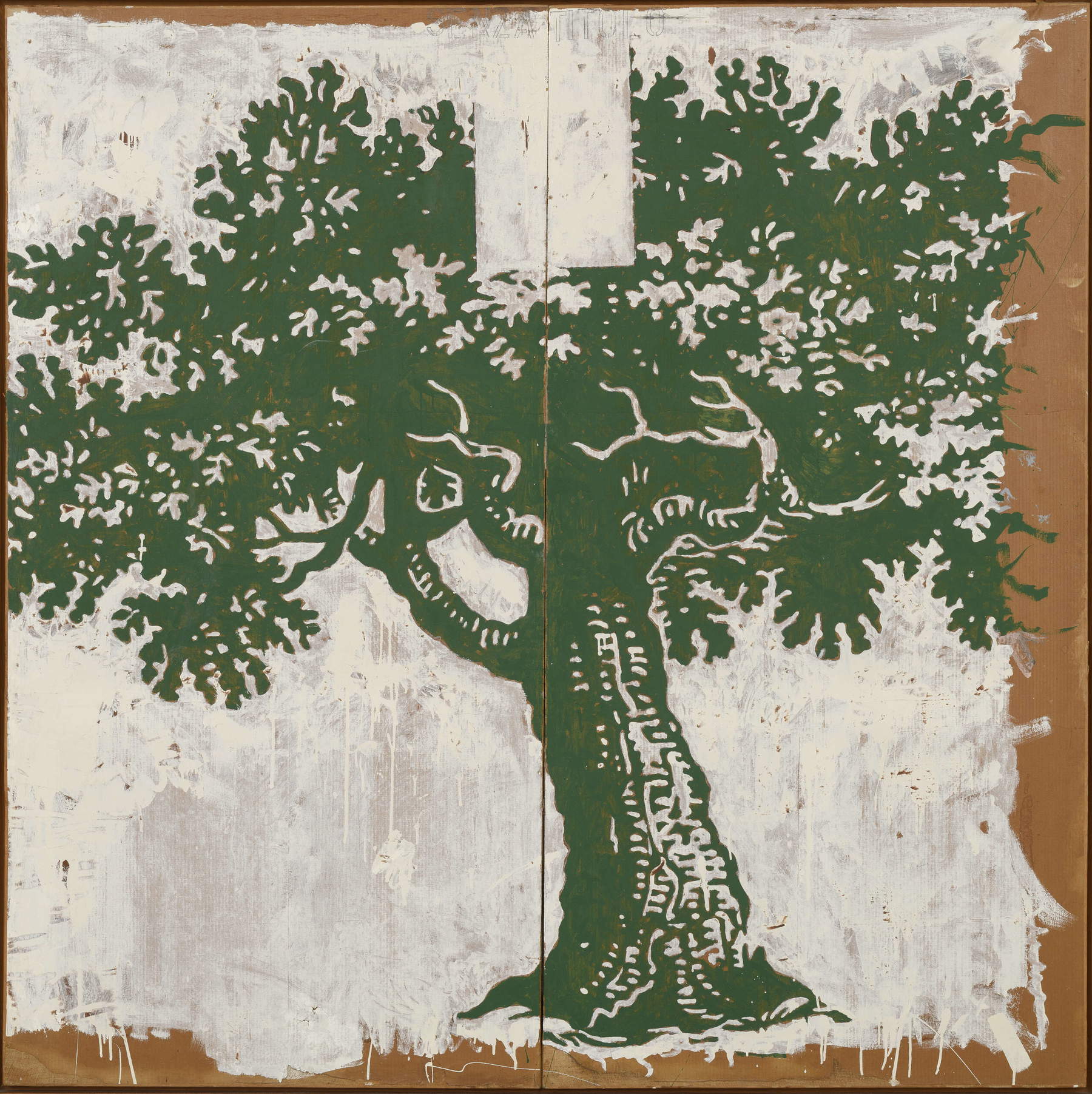
On the Rome-New York axis ideas and themes ran autonomously without having to think about peeks into other people’s ateliers or rapacious glances in trade magazines. I am referring to Incidente of 1963, exhibited that year in the Roman solo show entitled Tutto set up at the Odyssia Gallery, which, the following year, in its New York venue, would propose Schifano and his diptych Beebe’s tree, lent to the Palaexpo by a private collection, without meeting with critical favor (the bad press of gallery owner Ileana Sonnabend, with whom the artist had broken off relations, would play its part in this failure). And 1963 is the year when death enters powerfully into Warhol’s body of work through masterpieces such as Ambulance Disaster or the repeated, truculent images of White Car Crash 19 Times. Schifano’sAccident – a theme as we have seen other times tackled by the painter – however, has an entirely different matrix, excludes the victims and involves the letters of the title as an additional “body” on the homogeneous surface of the background, on which the graphic and pictorial line of a reiterated, poignant “unfinished” stands out, faint, light, powerful.
This superb work by Schifano — the painter quick in execution (he is assigned about 20,000 works in his 40 years of activity) and in deflecting from labels, a sort of “Mario fa presto” of the 20th century as Luca Giordano was in the 17th century — was lent by the Goffredo Parise House of Culture in Ponte di Piave, Treviso. It was the great writer from Vicenza who transplanted to Rome, the poet of the Syllabaries, who offered the most effective and fortunate simile to portray Mario Schifano: “A small puma whose musculature and jerkiness are not suspected, leaving behind the sharp and mysterious imprint of elegance.”

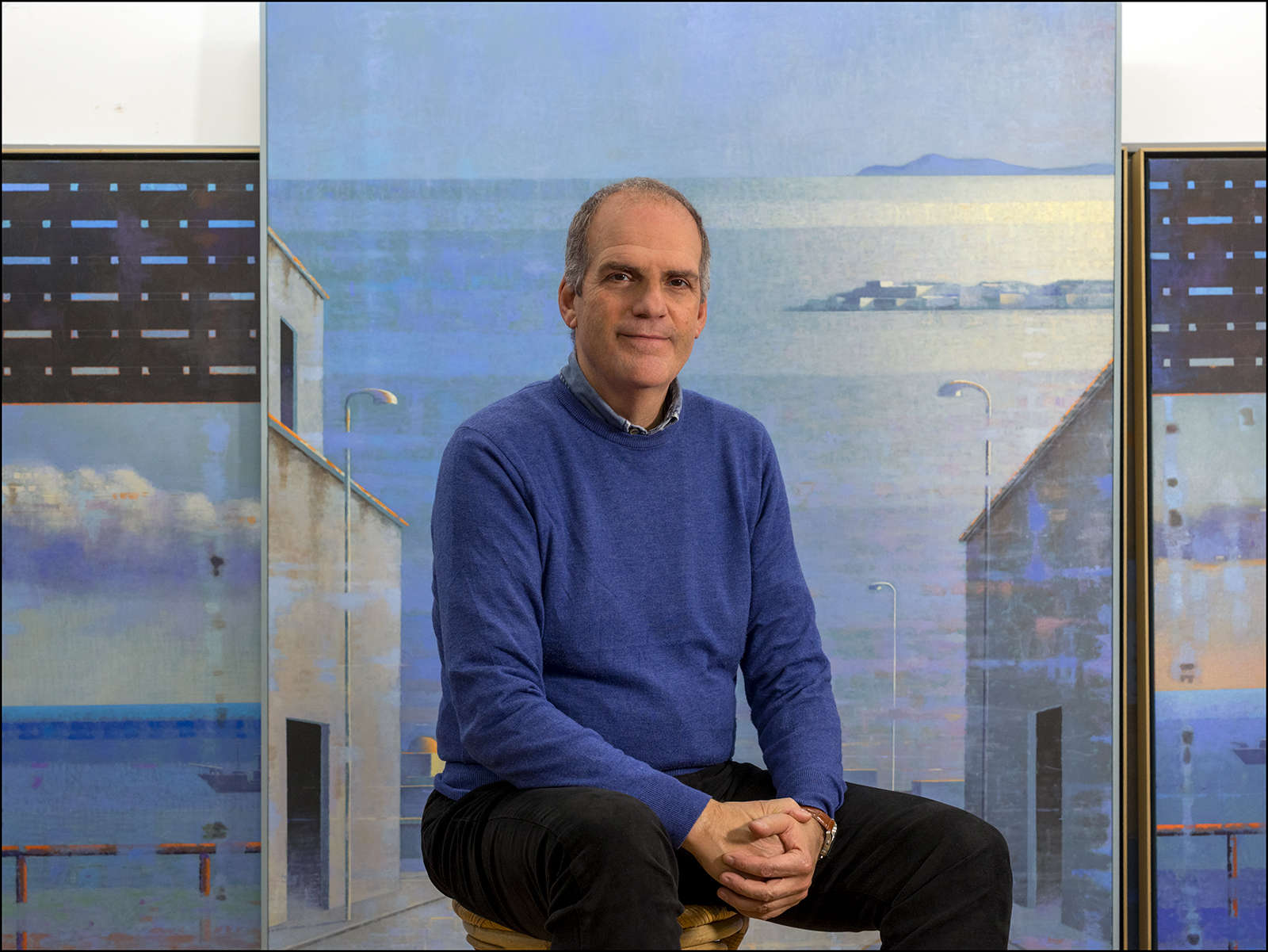
The author of this article: Carlo Alberto Bucci
Nato a Roma nel 1962, Carlo Alberto Bucci si è laureato nel 1989 alla Sapienza con Augusto Gentili. Dalla tesi, dedicata all’opera di “Bartolomeo Montagna per la chiesa di San Bartolomeo a Vicenza”, sono stati estratti i saggi sulla “Pala Porto” e sulla “Presentazione al Tempio”, pubblicati da “Venezia ‘500”, rispettivamente, nel 1991 e nel 1993. È stato redattore a contratto del Dizionario biografico degli italiani dell’Istituto dell’Enciclopedia italiana, per il quale ha redatto alcune voci occupandosi dell’assegnazione e della revisione di quelle degli artisti. Ha lavorato alla schedatura dell’opera di Francesco Di Cocco con Enrico Crispolti, accanto al quale ha lavorato, tra l’altro, alla grande antologica romana del 1992 su Enrico Prampolini. Nel 2000 è stato assunto come redattore del sito Kataweb Arte, diretto da Paolo Vagheggi, quindi nel 2002 è passato al quotidiano La Repubblica dove è rimasto fino al 2024 lavorando per l’Ufficio centrale, per la Cronaca di Roma e per quella nazionale con la qualifica di capo servizio. Ha scritto numerosi articoli e recensioni per gli inserti “Robinson” e “il Venerdì” del quotidiano fondato da Eugenio Scalfari. Si occupa di critica e di divulgazione dell’arte, in particolare moderna e contemporanea (nella foto del 2024 di Dino Ignani è stato ritratto davanti a un dipinto di Giuseppe Modica).
Warning: the translation into English of the original Italian article was created using automatic tools.
We undertake to review all articles, but we do not guarantee the total absence of inaccuracies in the translation due to the program. You can
find the original by clicking on the ITA button. If you find any mistake,please contact us.
[ad_2]
Source link