
Bodalbhai points out that circumstantial evidence is the way Old Masters tend to be authenticated, because “it’s rare that you have a provenance trail going back hundreds of years directly to when it was painted” and that the same should apply to the apparent Churchill.
“I would have been happy to have sold that painting as, at the very least, attributed to Churchill,” he adds. “Obviously it wasn’t signed, but signatures aren’t the be-all and end-all.”
A bizarre situation
Membership of the Churchill Paintings Group includes Allen Packwood, the director of the Churchill Archives Centre at Churchill College, Cambridge, and Barry Phipps, an art historian and fellow of Churchill College, as well as Churchill’s own descendants.
Paul Rafferty, an artist and adviser to the group who is an expert on Churchill’s work, told Mould on BBC One that “if I were to stand up and give my opinion I would feel very confident in being positive about this painting”.
Packwood tells me that, despite the widespread frustration many feel on behalf of James, the remit of the paintings group is misunderstood.
“The Churchill Paintings Group is an informal working group to consider issues relating to paintings by the late Sir Winston Churchill (1874–1965), to maintain the accuracy of the catalogue and to coordinate activity where possible,” he says in a statement. “… The group does not authenticate Churchill paintings.”
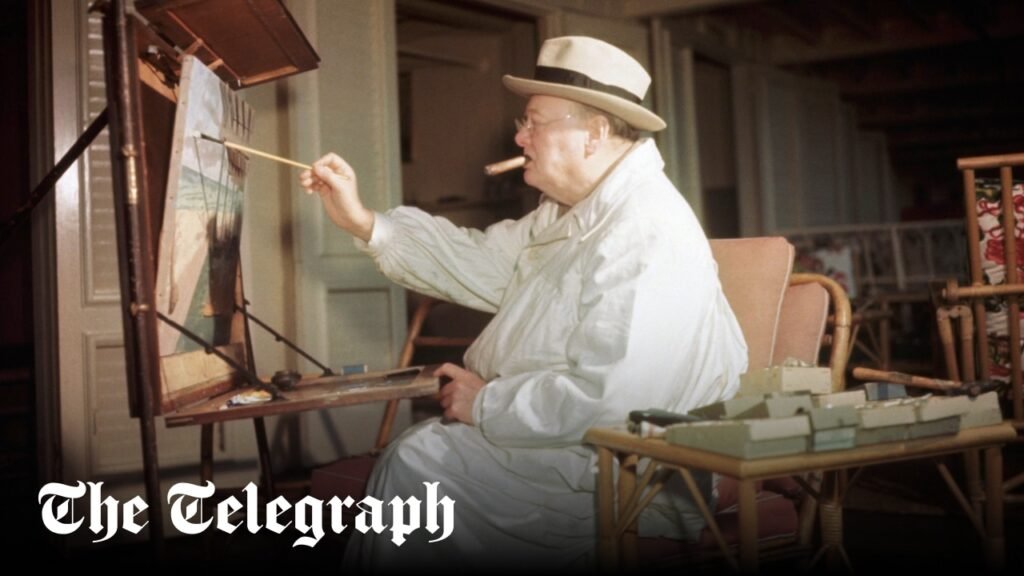
According to the official Churchill catalogue, compiled by the now-retired art historian David Coombs, the statesman produced more than 500 paintings. There are no current plans to expand it further and, in the absence of Coombs, there appears to be no mechanism by which a Churchill painting might be authenticated in future.
Thus we are in a bizarre situation. The Churchill Paintings Group claims not to be the appropriate expert body to authenticate pictures he may have painted – though it is hard to think of any collection of people more clued-up on his work – while experts elsewhere defer to the authority of the Churchill Paintings Group. It all feels a bit wimpy for a market running into the many millions, where the sale of a single painting could transform an owner’s life.
James told Mould he would “reluctantly” sell the painting if it was confirmed as a Churchill, and he would use some of the money to take his disabled son on holiday to Niagara Falls. But he should not totally despair.
In 2015, another apparent Churchill painting surfaced on Fake or Fortune? but there was not enough proof at the time for it to pass muster. The work, of a sun-drenched village square on the French Riviera, was only authenticated as a Churchill five years later.
Rafferty had discovered a photograph of the scene at Chartwell, the Churchill family home in Kent, which was enough evidence to force Coombs to accept it as genuine.
James will have to hope something similar turns up to help him.
Fake or Fortune? The Mystery of Churchill’s Garden is on BBC iplayer