
[ad_1]
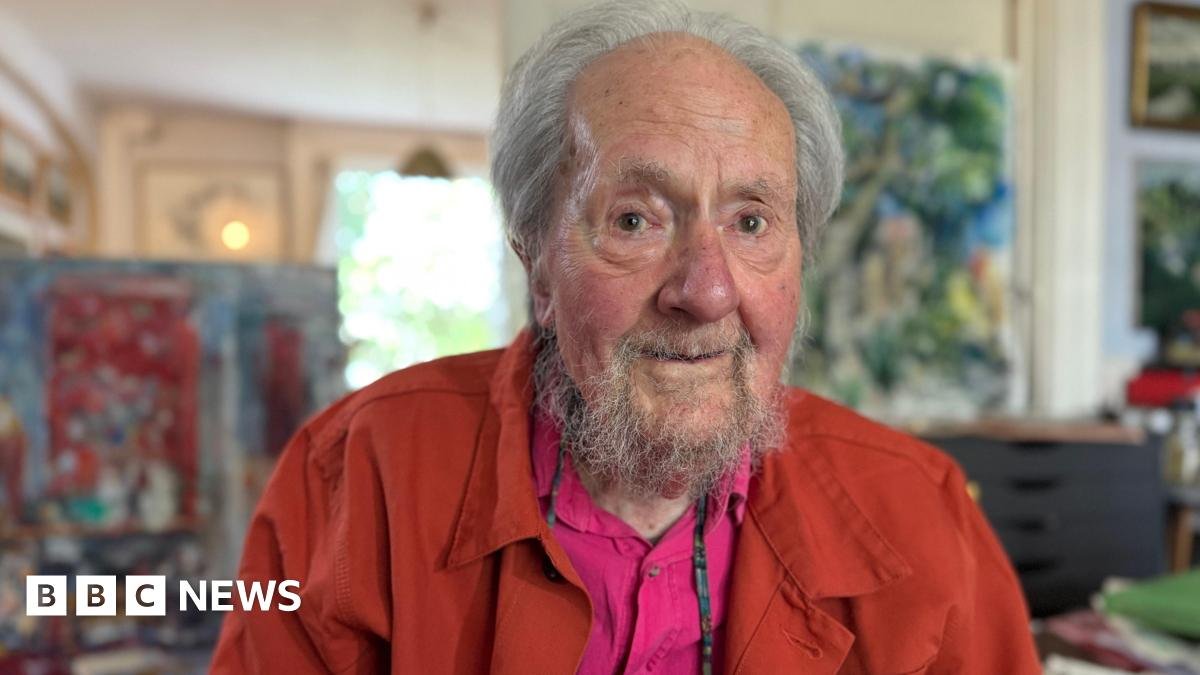
Karl Rudziak is fascinated by people. Through conversation, he creates powerful, emotive portraits that explore community, identity and social issues.
He believes when pictures are created, they need to say something. He says: ‘The best subjects are people and people are forever changing.’
The 61-year-old studied visual communications at the University of Portsmouth in his early 30s. ‘I attended Portsmouth College of Art but then spent my 20s in the back of a transit van thinking I was going to be a rock star. When I hit 30, I thought I’d better start doing something with my life.
‘It was at the start of a big digital revolution. I ended up being a Photoshop artist thinking graphic design was my way forward. The course was very much about history, critical engagement and the relationship between imagery and typography; that’s what really engaged me.’

Karl began portrait painting on the side, finding he relished the engagement rather than a pragmatic way of working. When we talk, he is surrounded by artworks and I find myself drawn to the different faces.
Most of us judge people on how they look or dress and Karl’s paintings challenge these knee-jerk judgments; who is the person behind the canvas?
‘One of the most enjoyable aspects of art is observing a subject, taking in detail and nuances,’ he says. It’s not just people’s perceptions, it’s about how people see themselves. When you paint somebody, you are seeing them as a human being, you’re not seeing them as a rough sleeper or an alcoholic.’

It has allowed him to explore a depth of subjects, including social issues, through community engagement, arts education and workshops. For a Portsmouth City Council project, We don’t need culture, he painted ordinary people in Somerstown to prove that art was for everyone. He captured his father in his hospital bed. It wasn’t planned, ‘but the light was shining in and it was a really good composition,’ he says. His rough sleeper project challenged the public perceptions of homelessness, and he is planning a similar project with asylum seekers.
The thought-provoking artist layers the paint like the layers of a person’s personality. When drawing and watching someone’s movements, he will see certain qualities or a look and it’s that essence of the person he is aiming to capture. ‘I think about the relationship with colours and the brushstrokes and how I turn that into a kind of narrative, that exploration is constant as I am painting,’ he says.
Although photos are taken as he works, referring to them from the tangible experience of interacting with the subject.
‘Painting a portrait can be quite intrusive, you are scrutinising in an intimate way. When people first sit they freeze and drawing is a very good way of getting people to relax. When you ask a question, they stop being self-conscious and come out of themselves; find out what they love to talk about, they become animated.’
His portraits always begin with the eyes, referencing the cliché, eyes are the windows to the soul.

‘Once you have got the eyes you have a lot of leeway with expressive brush strokes. Often people will do the eyes last because they are so frightened of engaging with them; it’s almost like people don’t like the eye contact.’
He favours large canvases and works in oils, charcoal and water-based acrylic inks. ‘Oils are the most adaptable, malleable medium – it’s far easier than watercolour, there are so many ways you can work it. It enables you to establish a brush stoke signature; the brush work adds to the narrative.’
Karl considers it a privilege to listen to people talk about their lives and is happy his work creates conversation and perhaps sparks debate about our own values.
‘Drawing is the most fundamental way of communicating. When you create that tangible mark people can connect with; that’s the power of communication,’ he explains.

Karl lives in Portsmouth with his wife Lou but works from a studio in Southsea and encourages people to pop in. He still enjoys playing in a band, the Electric Junkfish, but realises his talents as a painter have perhaps eclipsed his guitar playing.
For the past three years he has been President of the Portsmouth and Hampshire Art Society started by marine artist William Lionel Wylie.
‘We want to get the message out that it is for all abilities and not just people who are good at art’, he shares. ‘There’s a great art community in Portsmouth; I would like to see it raise its profile a bit more as an arts hub.’
His art has been exhibited at prestigious venues including the National Portrait Gallery, National Gallery of Scotland, Royal Academy, Royal Institute of Oil Painters and featured in the book 500 Portraits: BP Portrait Award by Sandy Nairn. His work is also part of the Portsmouth city art collection, Portsmouth Football Club, and the Royal Navy.
The idea of painting famous people doesn’t attract him; he questions whether they would they reveal their true selves.

‘I respond more to the world around me, interacting with the community.’
One of the most iconic images in Karl’s portfolio is of John Anthony Portsmouth Football Club – yes, that is his name, the Pompey superfan changed his name by deed poll. Sittings were before games but to capture his many tattoos required close ups. The canvas was so big, Karl had to paint it in the front room as he couldn’t get it up the stairs to his home studio. It was exhibited at the National Portrait Gallery in 2009 as part of the BP Awards – now the Herbert Smith Freehills Kramer Portrait Award. Karl is rightly proud and compares it to getting an Oscar nomination.
‘It has toured the country but had to be insured for an exhibition in Southampton – due to the rivalry of the two teams. John found that most amusing.’
His experiences have made him question who people are under their layers and also made him question himself. ‘I am forever looking at the world and discovering things about myself. If you want to be an artist you need to realign those values and then you’ll create really good art. I’m being questioned constantly by meeting people, and my own values are still being challenged. I find that exciting.’
rudziak.co.uk

[ad_2]
Source link