
(Credits: Far Out / Alamy)
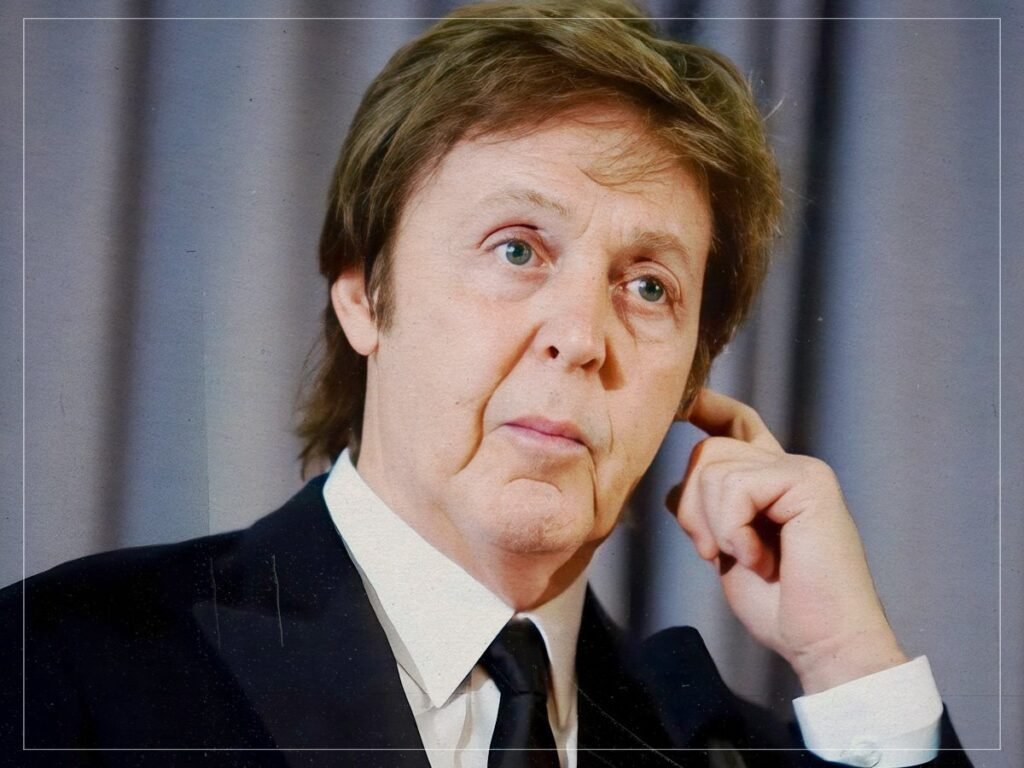
The seismic reach Paul McCartney has across the epoch of popular music is little rivalled by anyone else today.
With the original rock and rollers all but gone, it’s the remaining Beatles that stand as the farthest back one goes for the artist that most bands lead to. First landing in 1962 and breaking America, then the world, two years later, Beatlemania and the ensuing British invasion would shape and inspire countless future music heavyweights.
Michael Jackson eagerly sought multiple McCartney collaborations on the road to pop stardom, Dave Grohl, Krist Novoselic, and Pat Smear honoured Nirvana frontman Kurt Cobain’s Beatles reverence with the McCartney-fronted ‘Cut Me Some Slack’, and Bruce Springsteen looks positively giddy when sharing the stage with his boyhood hero over the years. From Brian Wilson to Alice Cooper, McCartney’s songbook draws a fascination from some of rock and pop’s biggest names.
So it can be easy to forget that, once upon a time, there were figures that shaped McCartney’s future road to The Beatles and beyond. Spending his formative years in Liverpool’s Allerton estate, the budding songwriter first absorbed music from his father Jim’s jazz background, making an impression with his routine thump on the family piano in the evenings.
Blowing across the Atlantic were the intoxicating sounds of Elvis Presley, Little Richard, and Chuck Berry, taking prized possession of most teen record collections, but equal love was held for the Tin Pan Alley tradition, the old music hall, and the popular Broadway standards penned by the Rodgers and Hammerstein team.
Karlheinz Stockhausen, Bob Dylan, and Dr Robert Moog’s synthesisers would follow, among a myriad of evolving influences McCartney would keep his eye on for the next 60-odd years, but as The Beatles had first signed their record deal and entered the EMI Studio for the first time, the fledgling group would meet the most consequential figure of their careers.
It was EMI producer and bigwig George Martin who took The Beatles on, shaped them up to a radio-ready unit, and ultimately deployed his studio expertise to realise the evolving creative pace of the band’s artistic ambitions. The consummate professional who’d dabbled with classical music as much as beat rock or the avant-garde, Martin stood as the perfect collaborator to meet any Fab Four idea, no matter how unorthodox, without prejudice.
Martin and McCartney would carry on their creative relationship through the years, producing Wings’s ‘Live and Let Die’ and 1983’s Pipes of Peace, and Martin was nearly roped in to produce 2005’s Chaos and Creation in the Backyard until he suggested Radiohead’s ‘sixth’ member, Nigel Godrich. Cutting part of the album in Martin’s AIR recording facility, the old EMI professional and Beatle still managed to enjoy some time together in the studio.
“We meet up quite a bit, actually,” McCartney told Rolling Stone in 2005, concluding, “George always pops in, especially if he knows I’m there. He’s one of the most important men in my life, and that’s including my father, my brother, The Beatles – George Martin is right up there in the top five. Really, I would like to work with him forever. That would be my dream.”
Related Topics
The Far Out Beatles Newsletter
All the latest stories about The Beatles from the independent voice of culture.
Straight to your inbox.