[ad_1]
As Art Basel fans descend on Miami Beach, the City of basking in the glow of an experiment in art and ocean conservation: a new underwater sculpture park called ReefLine, which is being installed just off the coast, with the goal of rebuilding coral habitat while offering a unique public art experience.
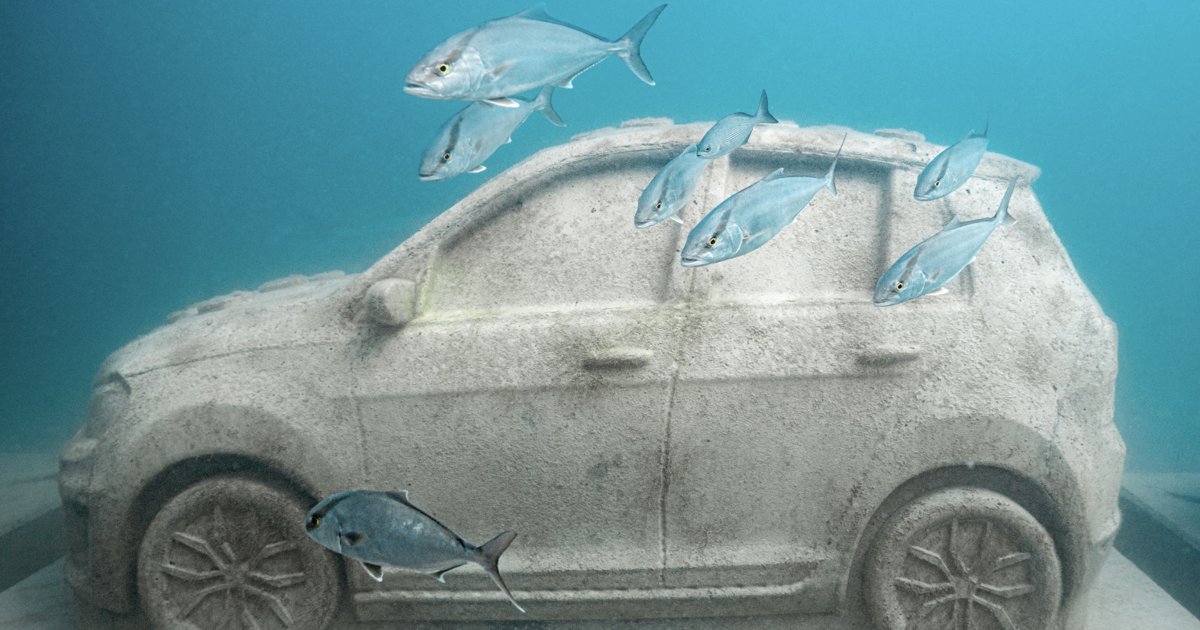
The project’s debut installation — Concrete Coral by artist Leandro Erlich — consists of 22 life-size concrete cars arranged underwater like, what else, an Art Basel traffic jam. Sunk about 780 feet off South Beach, roughly 20–25 feet below the surface, the cars were lowered over several days in October.
The concrete sculptures are built from marine-grade, pH-neutral concrete designed to host coral growth. Scientists plan to seed the cars with corals cultivated in a nearby lab, specifically strains that survived 2023’s bleaching event. The project uses a technology called “Coral Lok.” Over time, the sculptures should become a hybrid reef, support marine life and helping rebuild a portion of Florida’s damaged reef system.
When complete, ReefLine aims to stretch roughly seven miles along the coastline, a underwater corridor that would combine public art, marine habitat and snorkeling/diving opportunities.
Future installations are already planned under the broader master plan developed by the architecture firm OMA
Project backers and City of Miami Beach officials describe ReefLine as both a cultural experiment and ecological intervention. By using art to draw attention, and marine-grade engineering to support life, ReefLine hopes to offset some of the damage caused by decades of coastal development, pollution and warming oceans.
Still, experts caution that while artificial reefs can aid marine biodiversity and raise awareness, they cannot fully replace natural reefs, especially in the face of larger environmental threats such as climate change, ocean warming and pollution. Regeneration efforts like ReefLine may offer pockets of hope, but long-term reef survival depends on broader global changes.
For now, the underwater sculpture park offers a new kind of destination, one where snorkelers, divers and conscious ocean lovers can explore submerged art and, maybe, help a reef find new life.
[ad_2]
Source link