[ad_1]
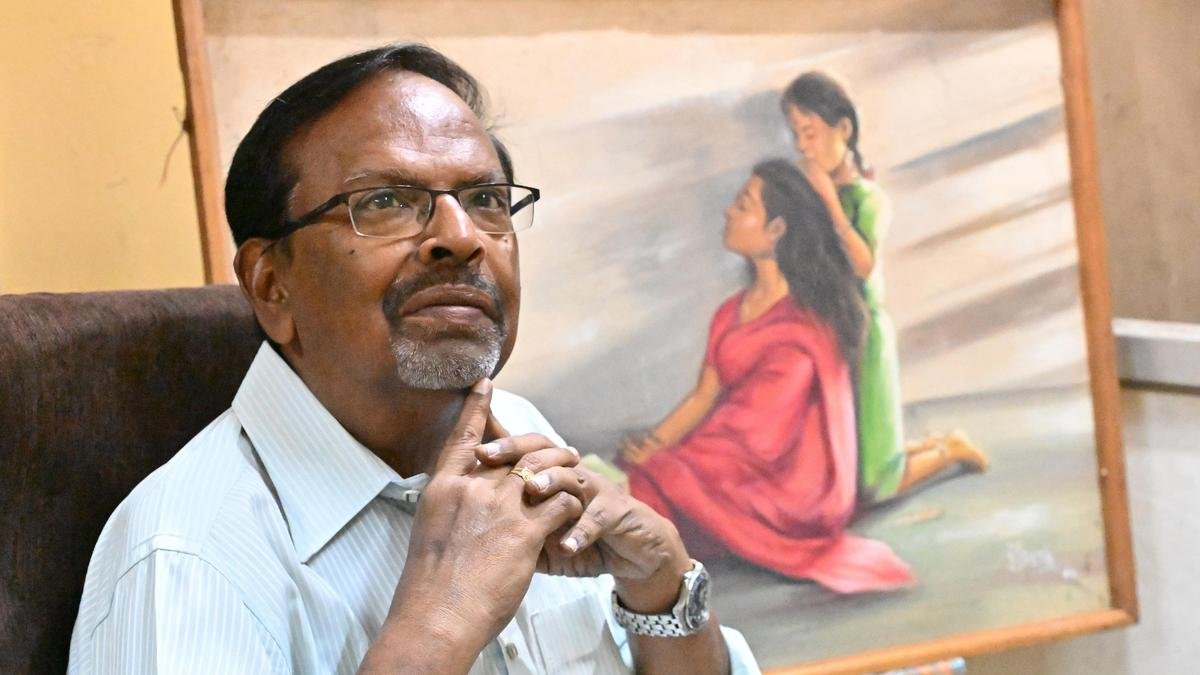
A narrow flight of stairs in an old building in Coimbatore’s Five Corner neighbourhood leads into a tiny studio stuffed with paints, brushes, bundles of canvas, a wooden easel and finished and unfinished portraits arranged in boxes along the wall. “I don’t like cleaning up,” mutters artist V Jeevananthan. The splotches of paint on drop sheets on his table look like works of art themselves. If given the chance, the 69-year-old artist, who was recently conferred the Kalaimamani award by the Tamil Nadu Government, would prefer to spend his days cooped up in the room doing abstract art.
But life has other plans for Jeeva.
“I hardly have time to work on paintings that I conceive,” he says. “These days, I mostly work on assignments.” These are sketches for magazines, newspapers, and book wrappers, and portraits that are commissioned. Jeeva is known for realistic paintings. He started out as a cinema banner artist after his father N Velayutham, who founded Cine Arts in Coimbatore in the early 1950s. “Appa trained at the Chitra Drawing School in Nagercoil, our hometown,” he says, adding that the school, that is over 100 years old, continues to train artists even today.
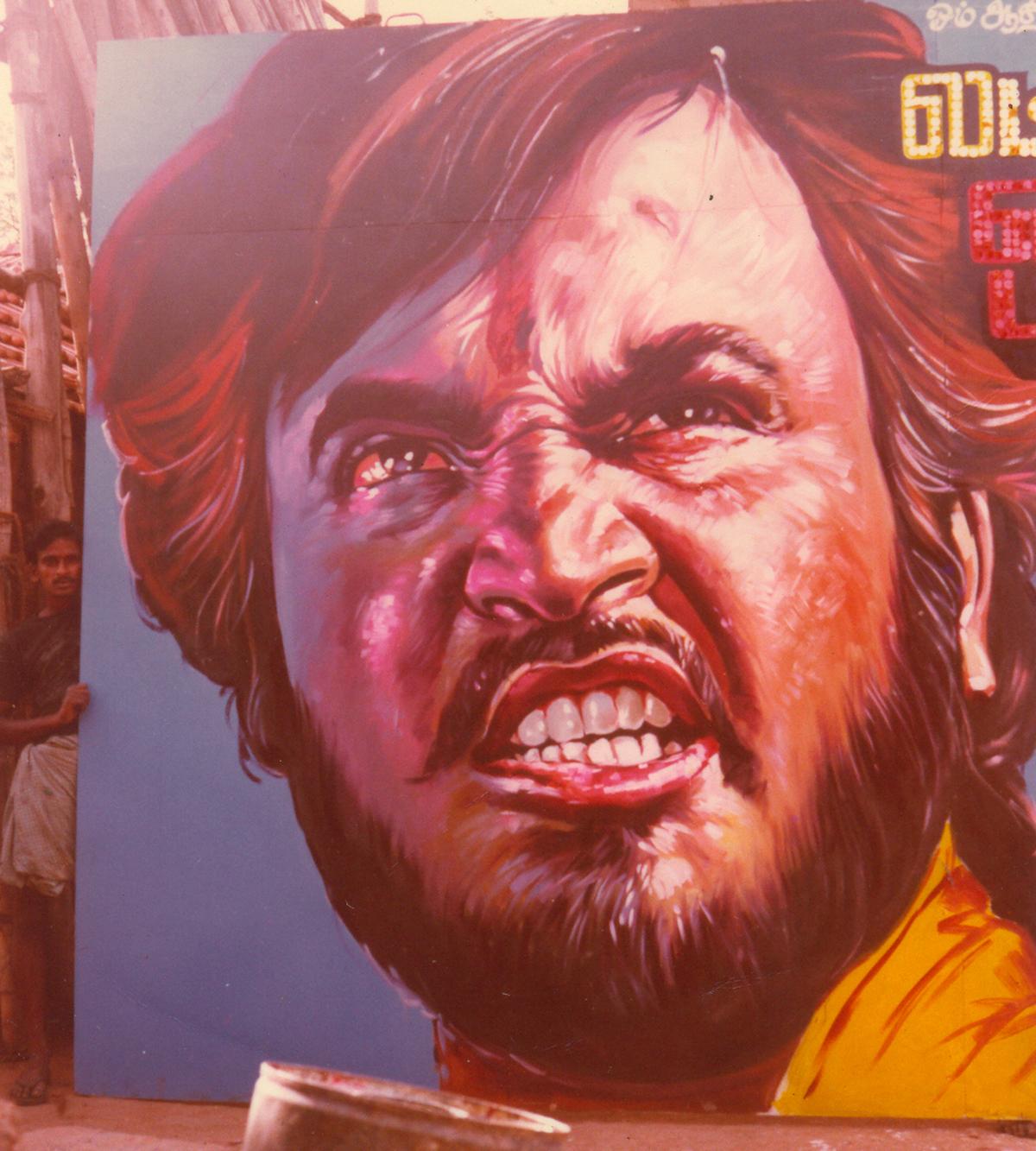
“I made Rajini dark like he was in real life, adding blues and browns to his face,” he says.
| Photo Credit:
Special arrangement
Velayutham was offered space inside Coimbatore’s Royal Theatre, from where he painted cinema banners that were as large as 10 x 25 feet. Jeeva, named after the Communist leader, would watch him at work in awe. The way he deftly moved the brush across the banner, bringing alive the faces of popular actors in just minutes as though he knew their features by-rote…Jeeva took it all in.
When his father passed away, the company naturally fell on Jeeva’s shoulders. He had no formal art training — he studied Political Science and trained to be a lawyer. Jeeva simply took his father’s brushes and paints and got down to it. Painting came to him naturally, much like walking or riding a bicycle. Soon, Jeeva found himself drawn into his father’s world — working on up to 10 large film banners a day with tight deadlines. But he enjoyed it. “It was like a bodhai,” he says: an addiction.
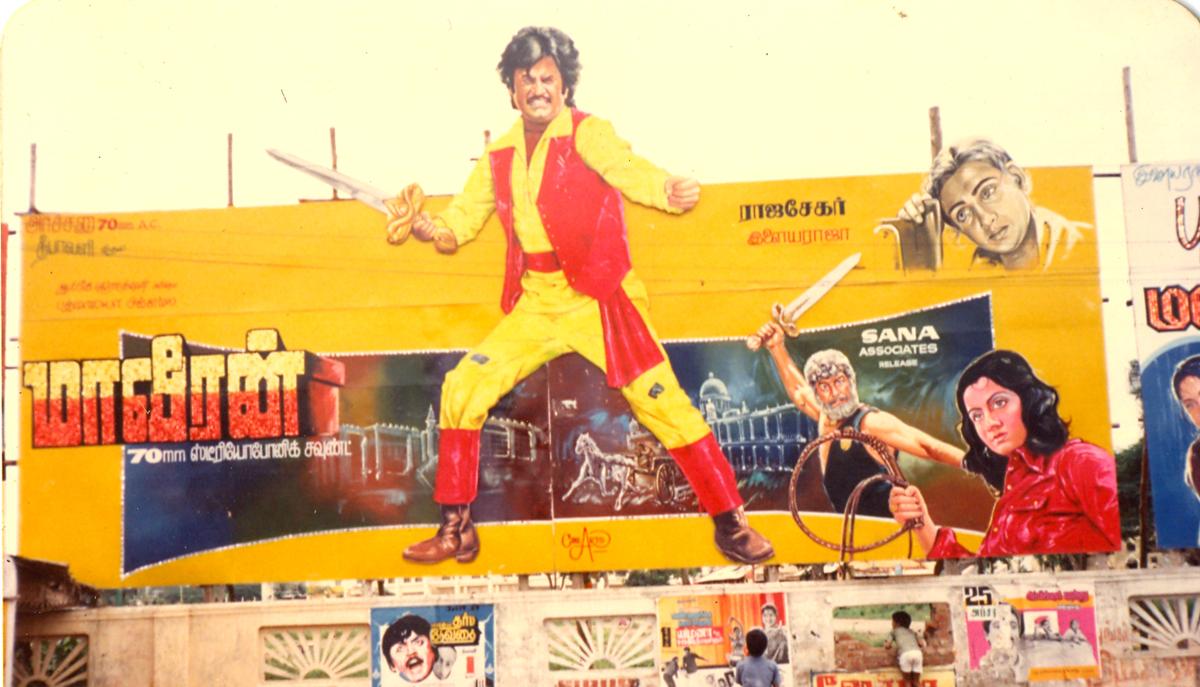
Jeeva broke his father’s traditional, straightforward style incorporating modern colours
| Photo Credit:
Special arrangement
He broke his father’s traditional, straightforward style incorporating modern colours. “I made Rajini dark like he was in real life, adding blues and browns to his face,” he says. He would sign his name below in his trademark style. Soon, people noticed the new artist in town. He grew in popularity with people coming to watch him paint at a workspace in the same neighbourhood.
But one day, everything was gone.
“Digital flex boards arrived in 2005 and our lives changed overnight,” he recalls. For six months, he waited, finally taking the plunge into digital. For someone who gave up pursuing a stable career for the love of the arts, digital work was like “forcing a sculptor to tap holes into an ammikkal”. But he had to do it.
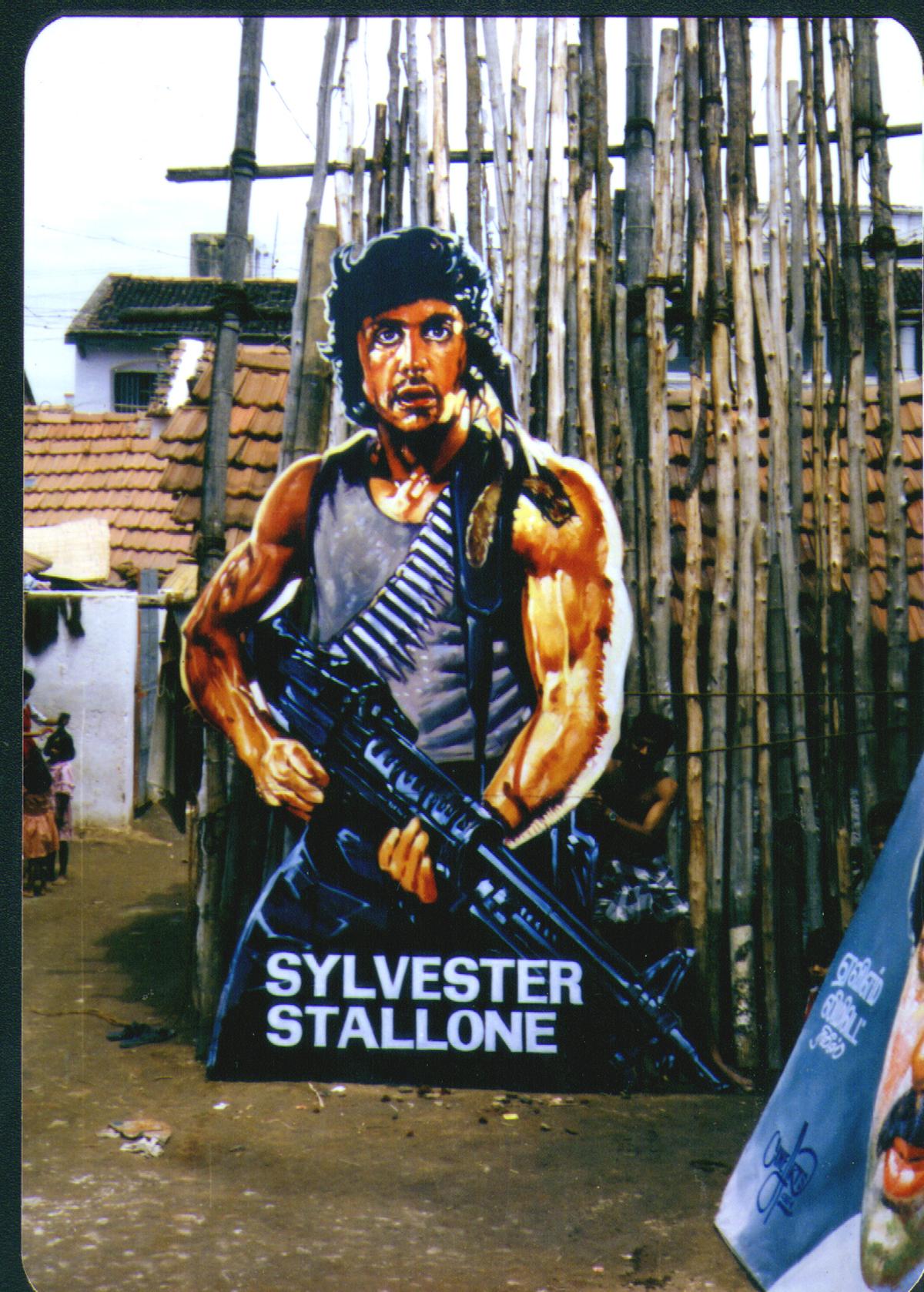
A cinema banner by artist Jeeva
| Photo Credit:
Special arrangement
He continued doing portraits and taking up work for books on the side, and even wrote film reviews for magazines such as Kalki, and contributes to magazines even today. His book Thiraiseelai, a collection of essays on cinema that he wrote for the magazine Rasanai, won him the National Award in 2011.
Jeeva considers his 47 years as part of Coimbatore’s Chitrakala Academy, that held art exhibitions and free Sunday art classes, a defining part of his life. “We were the first people to hold art exhibitions in the city when such a concept was unheard of,” he recalls. “We went on even when we had no visitors.” Their Sunday art classes gave rise to a generation of artists who are now doing well in fields such as art direction and design. “The Kalaimanani recognition was probably for my work with the academy,” he says.
He is a lover of the city that gave him everything. “I have walked every by-lane in Five Corner, have ridden pillion with my father on his bicycle across the city as a little boy,” he says, adding that he knows the city like the back of his hand. He regularly posts photos of the city on social media. “I have over 5,000 of them,” he says. He has seen Coimbatore transform; its roads widen, flyovers rising over once quaint streets.
Minutes before our meeting, he is sitting in front of the computer below his studio, working on a sketch. “Was it a boon or bane to have been pulled into the arts?” he wonders, adding with a laugh, “I don’t know.” He has fame and success, but wouldn’t call himself commercially stable. “Art rarely offers one everything,” he says.
Working alone inside a dusty building in a commercial neighbourhood in the city, his heart in the studio upstairs, but mind on the computer in front of him, Jeeva perfectly fits the ‘melancholic, brooding art genius’ label. Is he happy? “I’m not,” he laughs. “But I’ll keep painting.”
Published – November 05, 2025 03:38 pm IST
[ad_2]
Source link