[ad_1]
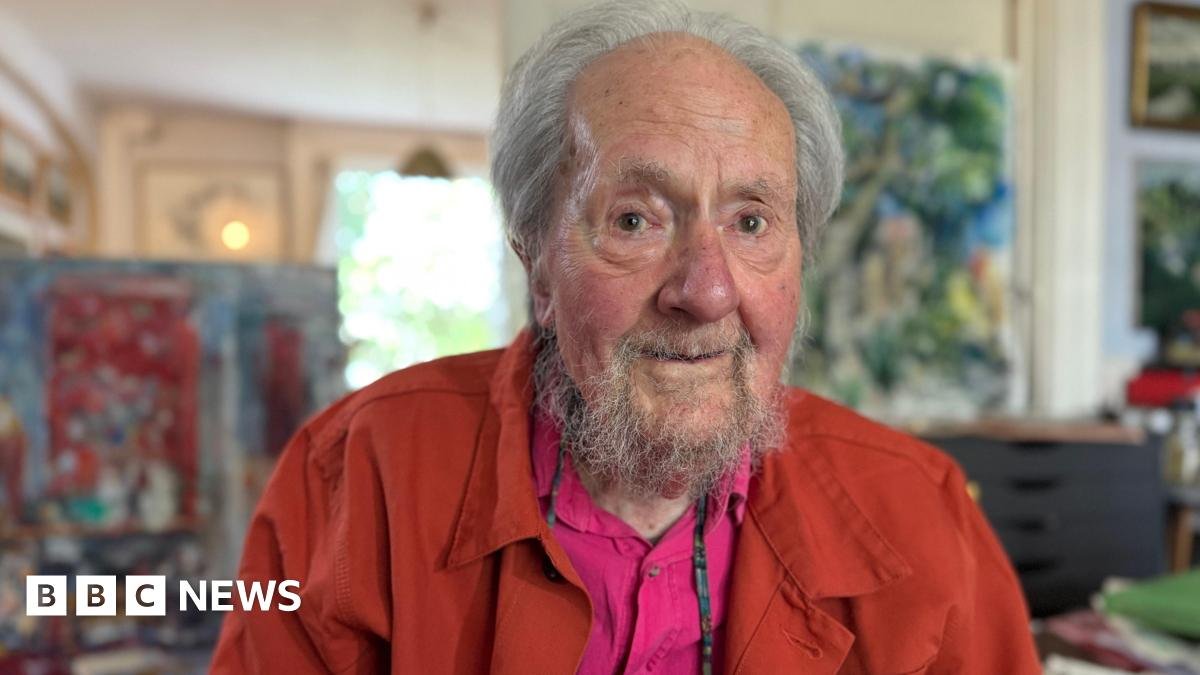
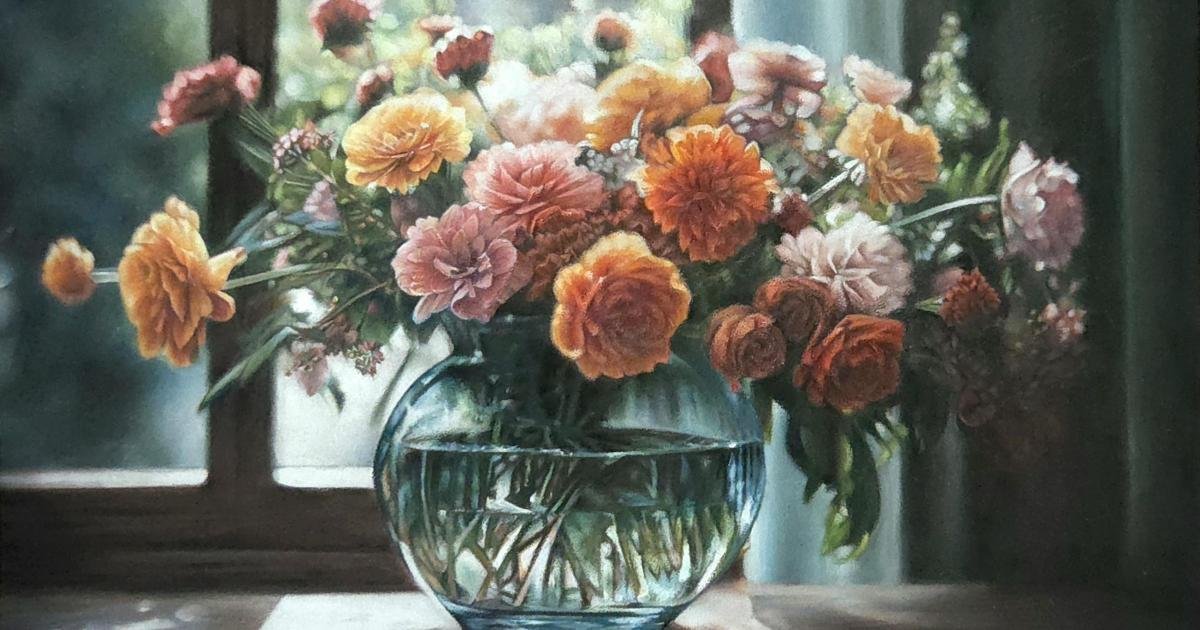
‘I am a colour pencil realism specialist, but don’t let that put you off!’ announces Winchester artist, Helen Carter of her work. ‘Realism isn’t for everyone, either you like it or you don’t – it’s a bit like Marmite,’ she adds. At first glance, Helen’s artwork could be mistaken for a photo but look more closely and there’s the hint of pencil work.
The 55-year-old’s journey is a story of reconnection, discovery and ultimately healing. Having worked at Hampshire County Council for many years, most recently as capital programme manager for roadworks in an ‘incredibly challenging environment’, Helen found herself with an even greater challenge when her husband George was diagnosed with late-stage bowel cancer in 2016. ‘We knew that it was inevitable that he would not live very long and the treatment was just kicking the can down the road,’ she says. Following his diagnosis, Helen decided to leave her job after 27 years and care for George.
After mentioning to colleagues that she ‘used to draw a bit’, she was presented with drawing materials, including pencils, a sketchbook and carry case. It was just enough to get going. Although Helen had a creative background, she had not picked a pencil up in years.

At 16 she had gained a scholarship to Portsmouth College of Art and Design and Further Education, completing a one-year foundation course. It gave her skills in a range of media, including woodwork, stained glass and technical illustration; it was the latter that she found the most interesting. ‘If you can imagine the old Haynes manuals with illustrations of engines, I was absolutely fascinated. I really enjoyed the details, making the drawings look understandable.’
It led to a four-year technical illustration degree, but Helen left just before the final term of the course. ‘I just wasn’t as much into it as I thought, but it was the only thing that I was really good at.’
Her mother said you can quit but you have to get a job. She found a job at an insurance broker and loved the office life. Then in a serendipitous turn of events, she was told Hampshire County Council was looking for someone with drawing experience, drawing 3D cutaway views of road construction. Many artists would have walked in the other direction but it suited Helen’s technical experience. ‘Machines would X-ray the road, I would then have to draw it on to film on a huge scale with each layer of the road construction showing the different texture, material used and the depth.’
It is this attention to detail that she has transferred to her drawings, creating incredibly detailed works of art.

After years of only doing a ‘few doodles’, she began to draw again first using graphite and ink and then transitioning to coloured pencils in 2018, reigniting a long-forgotten skill.
‘The first thing I drew was a portrait of a girl,’ she says. ‘It wasn’t great but it wasn’t bad – I surprised myself. I used to draw people; I loved drawing faces. Not that you would know that now, but my first love was portraits. I work from photographs now and love exploring the relationship between all the different elements.’
However, she says it’s the process of drawing that she loves and not the final piece. ‘I don’t get attached to it; it’s the journey, the process of making the art,’ she explains.
By this time her husband George was attending chemotherapy sessions every three weeks at Sarum Road Hospital in Winchester and Helen would accompany him.
Treatment would take five or six hours, so she would take her coloured pencils and paraphernalia and sit and draw. ‘The nurses would kindly wheel me in a rickety trolley and I would work on that, however the locks often didn’t work and it would roll away from me quite regularly.’

Helen uses a range of paper ranging from thick smooth watercolour paper to Pastelmat for its grainy surface; each has an effect on the finished artwork. ‘I enjoy doing flowers on drafting film because of the precision you get. You can produce all the detail on the front with some of the additional contrast and vibrancy, adding pops of colour through the back. It’s effectively doing two pictures in one and I really enjoy that. There’s so many different surfaces out there, you can draw on pretty much anything with colour pencils, even wood.’
In contrast to many artists who will work with one colour over the canvas, Helen works in small sections almost to completion, which allows her to focus without getting overwhelmed by the details. ‘If I like the colours and textures, I then move to the section next to it. They are not perfect squares, more like colour-blocks that all fit together like a jigsaw. This method works well for coloured pencils as it’s a very slow medium.
‘I knew one hyper-realism artist who used to cut a 2in square window in a sheet of black paper and only work inside that; there’s no distraction and all he has to do is shape work.’
Helen likes the subtle nuances of light and colour and tiny details that coloured pencils can capture. ‘With coloured pencils being a transparent medium, I can lay down the basic colour shape and then on top of that, glaze in many more colours.’

Her art was to give her some respite from George’s illness and became her sanctuary when she began to care for him. ‘I never switched off, he was always on my mind, but it allowed me to cope with the stresses of caregiving, offering solace and a means of expression when words were not enough,’ she remembers.
‘I used to work in complete silence when George was alive because I didn’t want to disturb him. Since his passing, I have found music and listen to everything. At the moment, I’m into K-pop, it’s absolutely joyful to listen to.’
Helen is drawn to vibrant, unusual subjects, often with a playful element. The whimsical portrait of a girl picking daisies in Seren contrasting with Freddo, a frog looking up from the water. ‘I’m led by what I feel like drawing at the time and recently finished a page of chilli peppers, a fun piece with alcohol markers. I am enjoying learning how to use these in my realistic style; they seem to have a lot of cross-over techniques with pencils.
Although she describes her style as realism it’s not hyper-realistic. ‘You can definitely see my artwork, my hand across the page, but it has a realistic style.’
She rarely exhibits but participates in Hampshire Open Studios and enjoys sharing her skills, teaching in person and sharing tutorials online. ‘I don’t want to gatekeep any of my knowledge so if anyone ever asks me a question, I’ll always answer it.’ She also writes for Leisure Painter & The Artist magazine and represents Derwent – her butterfly artwork appears on its Inktense pencil tins.

Her award-winning piece Fallen won the SAA Artist of the Year – Woodland and Landscape category in 2020. And in 2021 she was awarded International Guild of Realism Best Floral for Spring in the Abbey Garden. This year she hopes to launch the Coloured Pencil Collective, an online community where coloured pencil artists can come together.
The couple relocated to the Philippines in 2023 to be with George’s family; he sadly passed away the same year. Helen returned to the UK with a renewed sense of purpose and began to draw flowers that he liked. It is the intricate beauty of florals that has become her passion. ‘There is a quiet serenity in their complex structures, mirroring my own journey toward finding peace and purpose,’ she says.
‘My art is a reflection of the profound experiences that have shaped my life in recent years. George’s philosophy was do what you love with all your heart.
‘We had 11 unexpected and incredible years together. He was joyful and generous, and I returned to art because of him. It has become a way to honour his memory offering a bridge between loss and healing.’.
helencarterartist.com
[ad_2]
Source link