[ad_1]
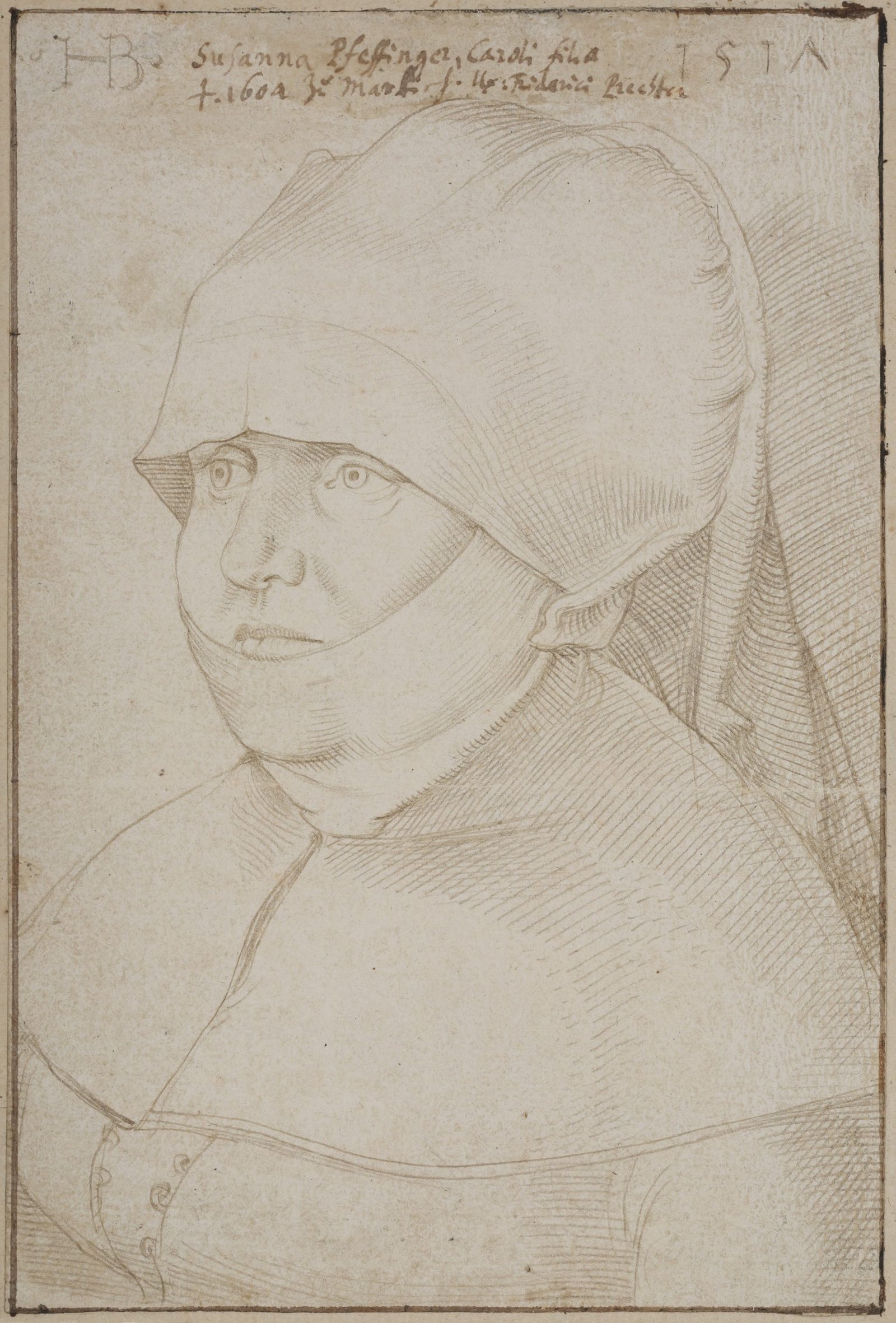
After waiting until nearly the last possible moment, French authorities have pressured Beaussant Lefèvre & Associés auction house and Cabinet de Bayser gallery—both based in Paris—to pause their joint sale of a newly discovered drawing by German Renaissance master Hans Baldung Griend. The live, public auction had been scheduled to take place at Paris’s historic Hôtel Drouot this afternoon. Alas, on Friday, France’s Ministry of Culture declared the work a National Treasure, placing it under export ban for 30 months.
As a result, Beaussant Lefèvre & Associés announced this morning that they’ve postponed today’s auction, since the eleventh-hour ruling “compromises the possibility of conducting the sale under normal conditions.”
Experts expected the postcard-sized portrait in question to fetch $3.5 million. After all, its Strasbourg-based creator was once the star pupil of renowned painter Albrecht Durer. But this isn’t just any Baldung example. The artist’s many depictions of witches have indeed earned him cache amongst contemporary art stars like Cecily Brown. Here, however, Baldung immortalizes the decidedly pious Susanna Pfeffering, a well-to-do Strasbourg woman—in the high-stakes silverpoint technique.
This previously unknown portrait surfaced last year, while Beaussant Lefèvre auctioneer Arthur De Moras was cataloging the Pfeffering family art collection, which has unwittingly held this relic for five centuries. Family lore said it was perhaps the work of another Northern Renaissance talent, Hans Holbein the Younger. Upon closer inspection, though, Cabinet de Bayser co-founder Patrick de Bayser attributed the work to Baldung—an assessment since confirmed by the Albertina’s chief curator of graphic arts Christof Metzger, in Vienna, as well as Dorit Schäfer, the head of prints and drawings at the Staatliche Kunsthalle Karlsruhe, which hosted a critical Baldung exhibition in 2019.

Hans Baldung, Youthful Self-Portrait (c. 1502). Image courtesy the Kunstmuseum Basel.
Baldung only made 250 drawings, as far as art historians know. Very few belong to private collectors. Meanwhile, only twelve known silverpoint artworks by the artist exist. None are in private hands—or in a French museum, for that matter. Thus, when it came time last week to address the export license that the portrait’s sellers had requested last November, the French Advisory Commission on National Treasures recommended classifying it as such. The Ministry of Culture concurred soon after.
“Given the strong interest expressed by the French Ministry of Culture in its acquisition, and despite the interest shown by several institutions and international collectors, the sellers wish to take the necessary time to pursue negotiations in a private context,” De Moras has since remarked.
[ad_2]
Source link