I wasn’t expecting Drawing Blood #9 to hit as hard as it did. While I’ve been loving this series, it’s only in the back half that the creative team has been throwing the emotional curveballs. This issue, appropriately titled “Mad House”, finds Shane “Books” Bookman in therapy. More specifically, he’s in a recovery clinic, which gives him time to reflect on the path that brought him here.

David Avallone deserves a gold medal for the deft balance he brings to this script. While there’s still plenty of humor, particularly with Books rooming with a guy who believes he’s on the International Space Station, there’s also a tremendous amount of sadness. In sessions with his therapist, Books unloads about his father leaving his family, how he feels separated from his brother, and how the success of the Radically Rearranged Ronin Ragdolls led to him transforming into a different person. Avallone doesn’t leave one emotional stone unturned, making for a great story.
Another way Drawing Blood #9 stands out is that for a good chunk of the issue, Books’ hallucinations don’t follow him. This lets Ben Bishop dig into the emotional meet of Avallone’s script, especially in a sequence where Books goes to art therapy. Instead of taking paints or pencils, he asks for a big lump of modeling clay and shapes into one of the Ragdolls, begging it to talk to him. Bishop clearly outlines the despair in Books’ face, but also shows how the Ragdolls are a part of his life whether he likes it or not. It also leads to what therapists call a “breakthrough” about why he doesn’t draw anymore.

Image
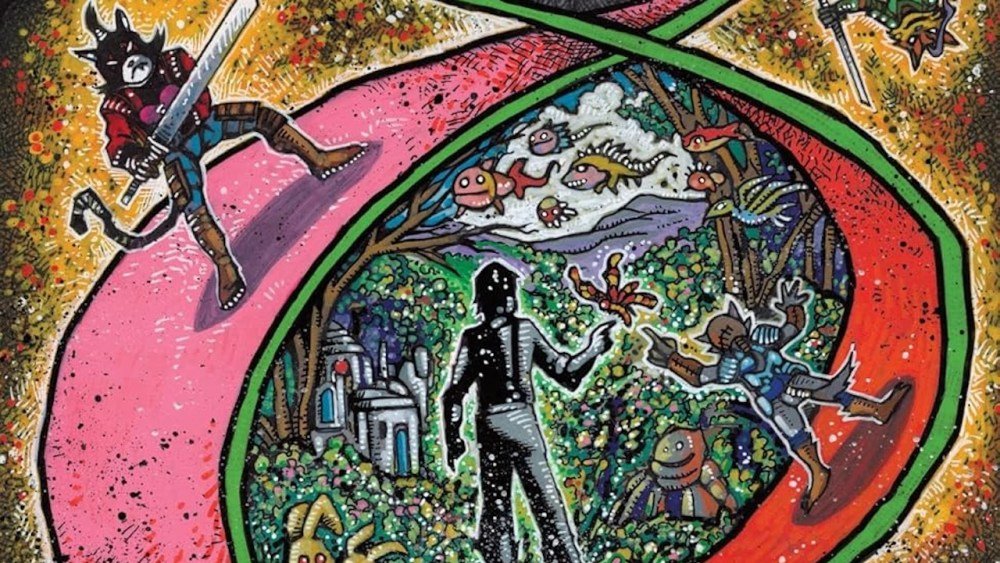
Troy Little eventually returns to draw the hallucination sequences, but this time they depict either somber or joyful moments. The somber moments feature Books’s absent father in a World War III-era tank (trust me, it makes sense in context). The joyful moments feature the Ragdolls themselves, in a sequence that feels absurd yet also feels very uplifting, especially considering all the crap that Books has been put through during this series’s run.
Finally, Kevin Eastman returns for the flashback sequences. While they still hold his signature roughened edges and dynamic movements, there’s an underlying sadness within. A key moment is overlaid with Books talking about what led him to stop drawing, punctuated by his past self yelling on a phone. This moment is punctuated by the snapping of a pencil, all but signaling the break between who Books was and who he is.
It all builds to a finale that’s a bit of a double-edged sword. On the one hand, Books is creatively re-energized and pursues a new project that pays homage to his past. On the other hand, with the way Drawing Blood opens, tragedy is waiting for the right moment to pop out and punch him in the face. Regardless of how this series might end, Drawing Blood #9 is a reminder that art can save us when we least expect it, if we let it.

‘Drawing Blood’ #9 shows how art can save our lives
Drawing Blood #9
Drawing Blood #9 is a reminder that art can save us when we least expect it, as it brings its protagonist to an emotional crossroads.
Avallone doesn’t hold back with the emotional curveballs.
Bishop, Eastman and Little bring a somber energy to their artwork.
A finale that’s laced with bittersweetness, mainly because we know how this story ends but also how it’s laced with hope.
A reminder that art will save your life, if you let it.