Drake, who just dropped three albums on a single day for some reason, has plenty of fans compared to Salieri, who never attained Mozart’s notoriety. At the end of his life, which is where “Amadeus” begins, Salieri views that as God’s great joke.
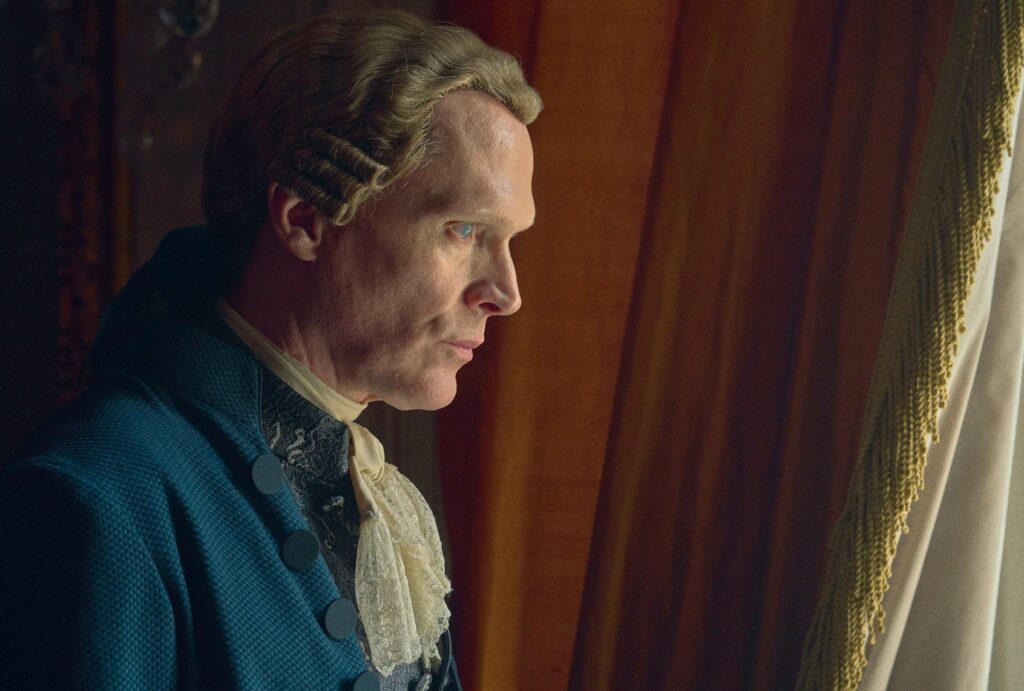
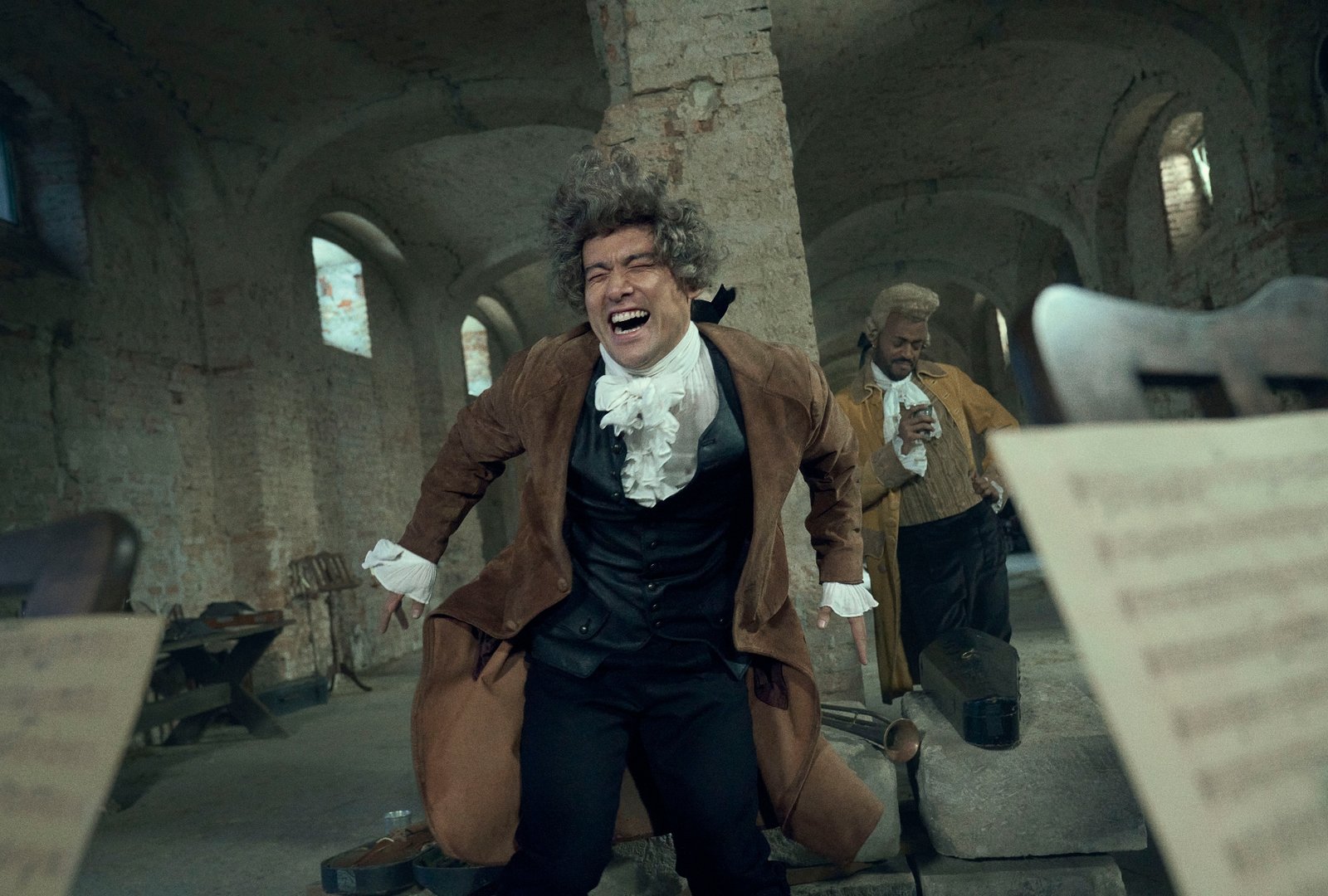
(Starz) Paul Bettany in “Amadeus.”
In his prime, Salieri was a solid songsmith, popular enough to secure a gig as court composer to Emperor Joseph II in Vienna. But Mozart’s genius obliterates Salieri’s limited talent so utterly that the elder musician is bewitched by it. Following Mozart’s successful debut at court, Salieri cozies up to him and pretends to aid his cause. Quietly, though, Salieri sets about destroying him.
What most people don’t realize about the “Amadeus” version of Mozart’s story is that historians posit it is almost entirely fictional. Shaffer’s script was inspired by Alexander Pushkin’s 1830 drama, “Mozart and Salieri,” which Pushkin spun from rumors circulating in the wake of Mozart’s death. Pushkin’s text eventually became the libretto that Nikolai Rimsky-Korsakov employed in his opera of the same name.
Besides, few would argue Shaffer’s mythmaking lacks representational accuracy. Some of the finest art in the world was inspired by spite-offs, as last year’s PBS documentary series “Renaissance: The Blood and The Beauty” showcased via the three-way cold war between Michelangelo, Leonardo da Vinci and Raphael. Michelangelo’s burning resentment of Da Vinci kept him warm at night, and his hostility toward Raphael fueled his years-long dedication to tagging up the Sistine Chapel’s ceiling. We know this because Charles Dance recites Michelangelo’s snidest journal passages throughout, bringing a welcome pettiness to an otherwise staid chapter of art history.
Two reasons Michelangelo shunned Raphael were his youth and good looks. In that vein, every version of “Amadeus” casts a younger heartthrob as Mozart against whoever plays the crusty Salieri. I mean no offense to Bettany or Michael Sheen, who recently signed on to reprise the role for a West End production set for spring of 2027.
But Sharpe’s roles in “The White Lotus” and “Too Much” make him an appropriate vessel for the lascivious vitality that throbs through Shaffer’s imagined version of Mozart, sharpening the story’s implication that Salieri is losing not only his relevance but his potency.
Yet Salieri is the role that tends to draw the most critical praise and award notices. While both F. Murray Abraham, who played Salieri, and Tom Hulce, who portrayed Mozart, earned nominations for the 1984 Oscars, Abraham went home with the prize.
Want more from culture than just the latest trend? The Swell highlights art made to last.
Sign up here
Regardless, parallels between contemporary artists and Mozart diverge when commercial success figures into the picture. Performers of Prince and Lamar’s caliber enjoy the spoils of their popularity. Both also knew their rivals. In Shaffer’s play and its adaptations, Mozart never knew that Salieri was undermining him while he was alive, and his music only achieved massive popularity after he died.
Meanwhile, Salieri’s invisible seething paralyzes him, turning into the punishment he believes God inflicted on him. “You put into me the perception of the incomparable,” Bettany version says in a bitterly mournful prayer at the end of the second episode, “and then ensured that I would know myself forever mediocre.”
Poor man. But that teaches another more cautionary lesson about collecting nemeses: Salieri never figured out how to channel his gnawing envy into motivation. His mistake was to try to destroy a man whose greatest nemesis was himself, and that singular, burning focus of Mozart’s earned him immortality regardless of what his haters threw at him. Just about anybody can rock with that – including a modern hip-hop artist who transformed a beef into awards gold.
New episodes of “Amadeus” air Fridays on Starz.
Read more
from Salon’s culture newsletter, The Swell