[ad_1]
Looking back over a long career, artists often end up regretting certain works or periods. Gerhard Richter disliked the works from his early West German period so much that he excluded them from his catalogue raisonné. Madonna, decades after its release, said she regretted recording “Material Girl”. Tolstoy, in the twilight of his life, repudiated much of his earlier fiction, including War and Peace. But not American painter Henry Taylor, whose new exhibition, Where Thoughts Provoke, opens at the Musée Picasso in Paris next week.
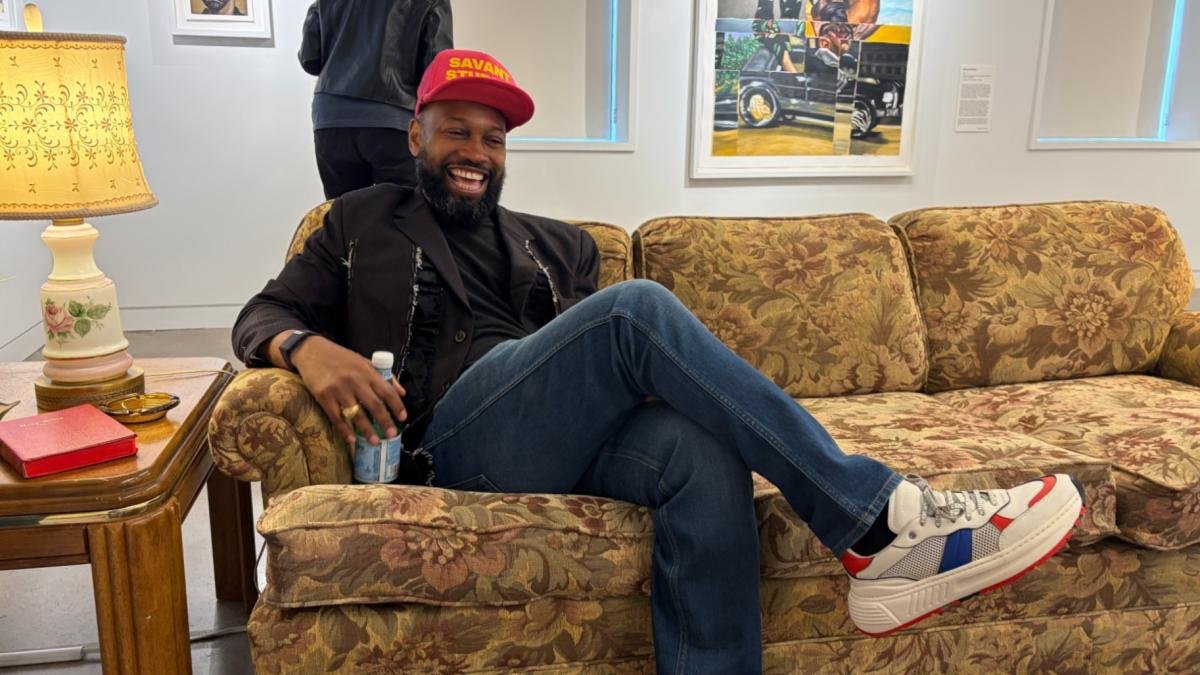
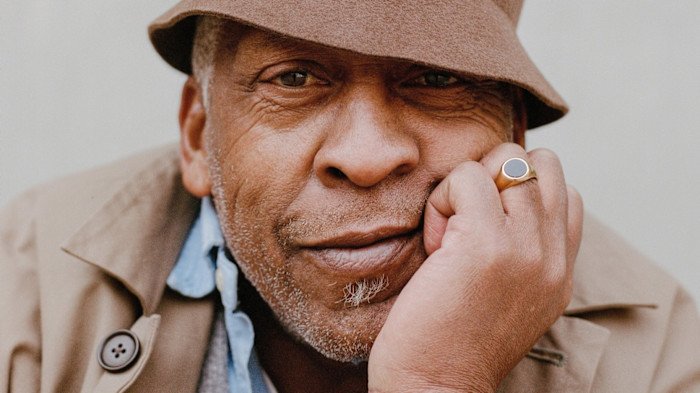
“I gotta love it all, maybe somebody might like it,” says Taylor, 67, sitting back in a chair in the courtyard of the American Academy in Rome, where his partner, the artist Liz Glynn, is receiving a prize. “It’s like being an ugly child. I’m saying, somebody might love him, hopefully. I just got to own it. You play soccer, you go, I didn’t score that day, but I’m still good.”
One of today’s most influential contemporary painters, Taylor has built a body of work that spans paintings, sculptures and installations, about 100 of which appear in the show. His subjects are multifarious — his family, famous figures, poverty, social inequality, Black experience — and yet only in their cumulation does the defining characteristics of Taylor’s artistic impulse come into view: that of observation, seeking out, bearing witness.


It’s in this way that Taylor defies the conventional narrative of artistic progression. We tend to view an artist’s work through time, measuring growth or arrival at a “truest” vision. But here, such thinking seems misplaced. You cannot, for example, look at the painting “Screaming Head” (1990), a visceral portrait that captures raw, almost aggressive human emotion, and an untitled work executed between 2016 and 2022 depicting Martin Luther King Jr playing ball with children, and discern a conventional sense of evolution. From one to the other — both works are in the exhibition — the same vibrant, improvisational style is evident, although they have grown larger and more confident.
“I approach the work the same way [as before], I think,” Taylor reflects, “I’m always present. I’m always sort of spontaneous, and I’m not really planning. I don’t sit down and plan . . . It’s sincere and that’s the consistency. Being sincere and being present, and being inspired by the place.”

One of Taylor’s most famous works is “The Times Thay Aint A Changing, Fast Enough!” (2017), a 6ft by 8ft painting depicting the moment 32-year old Philando Castile, an African-American nutritionist, was shot dead in his car by traffic police in Minneapolis in 2016. In the painting, Castile is lifeless, lying back in the car seat, while through the window, we see a hand holding a gun. There is no blood (“I didn’t need to be that graphic”); instead, the locus of the scene’s horror is depicted elsewhere: Castile’s eye. Wide open, bloated, stupefied, the open eye of the murdered man seems to reflect our horror back to us.
The Castile painting was “like the blurring of the line between a political piece and something else,” says Taylor, who doesn’t see himself as a political artist. “I don’t ever feel like that, I just have moments. I might be a political person, but I think that’s because of the history, because of how I grew up,” he says. “My brother went to Vietnam. Another brother was in the [Black] Panthers. I lived in Oakland. You might be less political if you grew up in Beverly Hills, you know what I’m saying?”
Taylor began his artistic career relatively late. In the 1990s, when he was in his thirties, Taylor enrolled at California Institute of the Arts on the suggestion of his teacher and mentor, the California modernist painter James Jarvaise. He paid for his studies by working at Camarillo State Mental Hospital. It was during this time that Taylor began painting portraits of patients, developing his particular, expressive style of figuration that came to define his work.

To look across Taylor’s oeuvre, as this exhibition does, is to see an artist break free of realism by juxtaposing place and time. In “Trail” (2005), activist George Jackson, who was imprisoned at San Quentin for armed robbery in 1961 and later killed in an escape attempt, is conjured through his inmate number, a sheriff and an image of Bob Dylan, all within a flattened field where cultural reference and institutional violence circulate without hierarchy.
In “Go Next Door and Ask Michelle’s Momma Mrs Robinson if I Can Borrow 20 Dollars Til Next Week?” (2017), a figure in a Colin Kaepernick jersey peers through bars at the White House, here depicted next to the Marcy Projects, the Brooklyn social housing project where Jay-Z grew up. The painting compresses structures of power and urban marginalisation in a classic expression of Taylor’s multiplicity: of time, hope and social realities. The result is a series of inferrals rather than statements, nudges to meaning through associations.
Although much of Taylor’s work depicts the life and experience of African-Americans, he rejects the notion that he does or should represent any particular group. “I don’t have that sort of agenda,” he says. “I have solidarity and I have a lot of empathy. I might talk about things in conversation, but I don’t always paint it. I can’t do everything.”

Talking to Taylor, who is quick to laugh and has a relaxed demeanour, it’s easy to assume that the painting comes easily, when in fact the spontaneity that undergirds so much of his work was made possible by a dogged determination and commitment to the craft. “I gave up things to do this. [The hospital] offered me my job back and I said no,” he says. “I’d rather just be homeless and do what I want to do. Sometimes, you gotta keep chiselling away . . . it’s gonna be there, if you just stay in there.”
The impulse to create seems to have been with Taylor from a young age. He tried being a writer (“I wasn’t good enough”, he says), and dabbled in theatre before settling on painting. The youngest of eight siblings, Taylor credits high-achieving brothers for pushing him to find something he could excel at. “I had brothers who were like track stars, they were real good at things,” he says. “I said, damn, what am I going to do? I wanted to be good at something.”


That something is looking and, often, subverting. One of the most powerful pieces in the exhibition is the sculpture “It’s Like A Jungle” (2011), in which discarded containers, broken furniture and stacked debris become a forest-like form which, playing off the verticality of totems often associated with African art, subverts the western fantasy of the “primitive”.
It’s perhaps ironic that an artist who never set out to follow the conventional path to artistic success is enjoying precisely that. Taylor has now had exhibitions all over the world, including a retrospective that opened at Los Angeles’s Museum of Contemporary Art in 2022 and later travelled to New York’s Whitney Museum. This summer, an exhibition of Taylor’s work in dialogue with Jarvaise’s will open at Hauser & Wirth in Zurich.
“All this is extra and it all came late,” Taylor says. “My mom used to say, ‘put your best foot forward’. And I said, probably the best thing I can do is draw. I may not be the best at it, but I keep working at it.”
April 8 to September 6, museepicassoparis.fr

Find out about our latest stories first — follow FT Weekend on Instagram, Bluesky and X, and sign up to receive the FT Weekend newsletter every Saturday morning
[ad_2]
Source link