
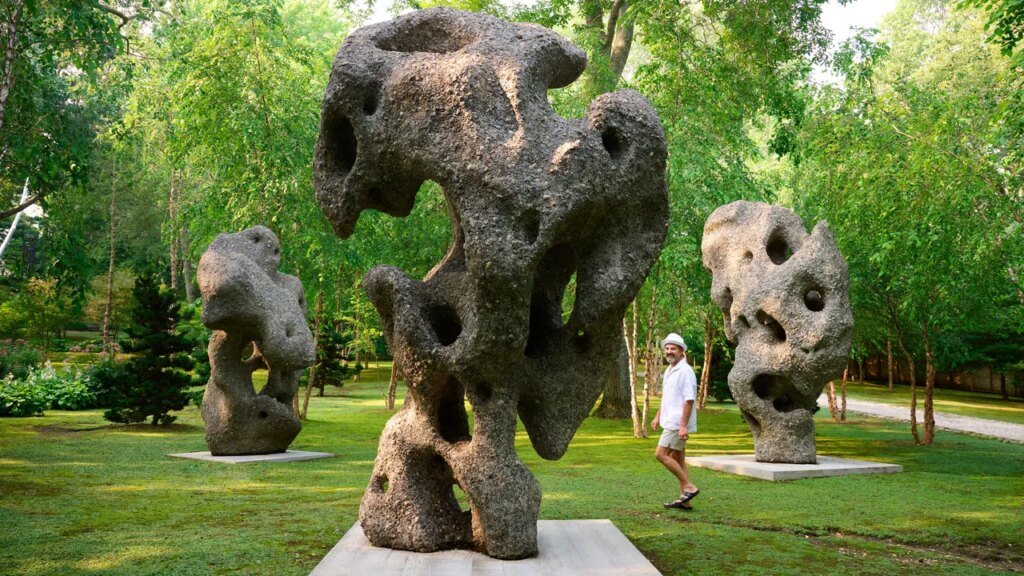
The through line for the various garden zones is, of course, moss, one of Earth’s oldest plants, redolent of nature’s fragility and resilience, its slow rhythms, and the beauty of quiet, simple things. “We planted several horizontally arranged fern barriers to keep the moss from washing down the slope. Drip irrigation is very helpful because it delivers water directly to the soil without runoff,” the artist advises, adding, “It takes time to get it right, but once a moss garden is established, it is famously low maintenance.”


Rondinone is far from finished. Last year, he acquired an adjacent five-acre property, where he plans to expand his garden, install more sculptures, and renovate two existing farmhouses to host a summer residency for artists and poets. The residency will be part of a namesake foundation the artist is currently establishing. For now, he’s simply enjoying the multi-seasonal pleasures of his Long Island Shangri-la. “When temperatures and light levels plummet in the fall and winter, most plants stop growing. But moss does the exact opposite. It bursts into life just as other plants slip into dormancy,” he explains. “Moss provides you with a horticultural happy pill just when you need it most.”
This story appears in AD’s December issue. Never miss a story when you subscribe to AD.