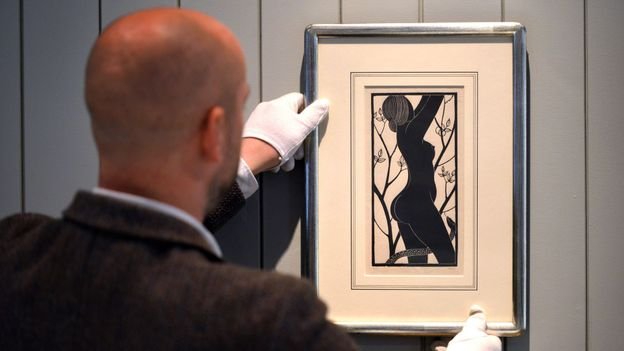
When the Ditchling Museum re-opened in 2013 after a major refurbishment, none of Gill’s abuses were addressed, though of course anyone who knew about them couldn’t help but be reminded when confronted by, for instance, a sensual and intimate drawing of his young daughter Petra in the bath. What you saw was altered by what you knew.
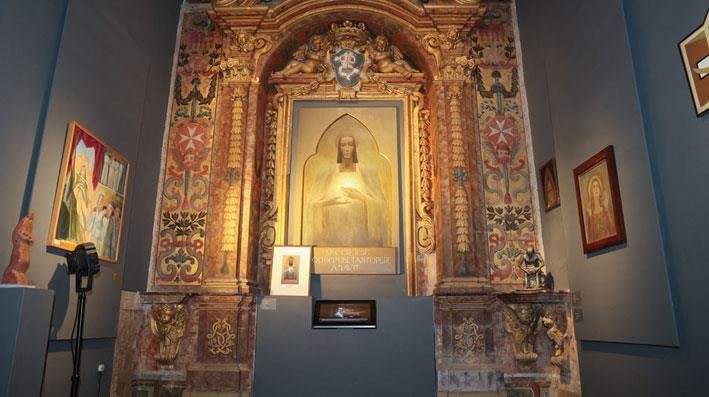
None of that demands that the work be censored. But context probably does matter. Gill carved many monuments and relief sculptures throughout his life, including the figures of Prospero and Ariel on the exterior of the BBC’s old Broadcasting House headquarters. He was also a practicing Catholic, and carved religious icons and altarpieces for churches and cathedrals throughout the UK, including his impressive Stations of the Cross for Westminster Cathedral. When MacCarthy’s book came out, there was a concerted campaign to rid the cathedral of this celebrated work. One might imagine the mixed feelings of some worshippers when confronted with these ‘inappropriate’ holy images, which are there, after all, to offer moral guidance, sustenance and solace. But it seems most have now come to terms with these works.

 Wikipedia
The Ditchling museum itself has now had a radical rethink: central to their current exhibition, Eric Gill: The Body, is the question of how knowledge of Gill’s abusive behaviour affects our impressions of his work, some of which is sexually and anatomically explicit. When organising the exhibition, the museum took advice from several charities who work with sexual abuse survivors.
Gill died in 1940, but we think today of others in the public eye and the continued controversy that surrounds them. Film directors Roman Polanski and Woody Allen come to mind and the utterly polarised reactions they both elicit, though both continue to work as productively as ever.