
The supply of art for auction has long relied on what are known as the three Ds: debt, divorce and death. In recent years, the latter has dominated as a certain breed of collector — notably the self-made millionaires who bought art during the US golden age of the 1950s and 60s — reached the end.
“What is new is the scale, in volume and value,” says Caroline Sayan, president and CEO of the art advisers Cadell North America. Previously at Christie’s for 25 years, she oversaw estate sales including the $835mn collection of Peggy and David Rockefeller in 2018, the year after the industrialist heir died. “Think of it as like planes landing. Before this time, there were smaller jets, individual planes, and it was easy to manoeuvre. Then, all of a sudden, these jumbo jets started coming in,” she says.
Statistics from the analysis firm ArtTactic show that in 2018, single-owner collections — predominantly estates — accounted for $2.1bn (17 per cent) of auction totals, up from $820mn (7 per cent) in 2017. Since then, totals and percentages have surpassed this, with single-owner collections averaging $2.6bn in value and accounting for 23 per cent of auction sales in 2021-2025.
The impact on the market and its all-important mood is notable. In 2022, the year of the record-breaking $1.6bn sale of works from the collection of Microsoft co-founder Paul Allen, art sales as a whole, including from the private dealer sector, were at their highest level for eight years, according to the Art Basel & UBS Art Market report. Last year’s bounce into the black was helped by the $527mn sale of art from the cosmetics heir Leonard Lauder.

When such collections come to market, buyers tend to pay a premium for the pull of the previous owner — and the auction houses have proved adept at the storytelling that boosts this. The halo effect of provenance can be seen on a broader and more pronounced scale at celebrity sales, such as the 2023 auction of Queen frontman Freddie Mercury. It included items such as a silver moustache comb from Tiffany, estimated between £400 and £600, which sold for £152,400. At the other end of the scale, at the Rockefeller auction, a late Monet water lily painting, estimated at $50mn, sold for $85mn.
Such inbuilt inflation, and the tendency for such auctions to sell out, arguably masks the real, and sometimes declining, value of art. Sayan says that, for those in the know, “one major sale by Claude Monet, doesn’t lift all his work; Monet isn’t a stock.” But, she says, “it can give confidence about the overall market, whether that is right or wrong.”

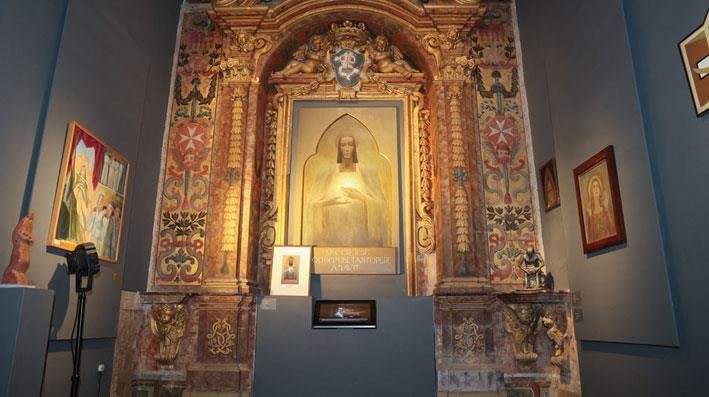
The latest collection to boost the block comes courtesy of the late Belgian couple, Roger and Josette Vanthournout, whose 200-plus works will be offered at Christie’s in London in March, valued at about £40mn. Their names may not be as familiar as Rockefeller or Allen but, says Olivier Camu, Christie’s deputy chairman of impressionist and modern art, “they were very serious collectors and very well known in the art market. When they approached a gallery stand at, say, Art Basel, art dealers paid attention.”
Works that the Vanthournouts once owned have already made a splash. Part of their collection came to auction at Sotheby’s, after Roger Vanthournout died in 2005. This included Francis Bacon’s ominous and fleshy “Version No. 2 of lying figure with hypodermic syringe” (1968), which sold for $15mn, then a record price for the artist. Josette Vanthournout kept the bulk of the collection, to live with in their Flanders home, which Camu describes as a “treasure trove”. She died last year and now their family is “selling it to the world,” Camu says.

Highlights include René Magritte’s supersized leaf in a lonely mountainscape, “La plaine de l’air” (1940), estimated at £3.5mn-£5.5mn, and Max Ernst’s similarly barren “Seestück” (1921), estimated at £1.5mn-£2.5mn. About a third of the collection is in such surrealist and Dada works, Camu says, though there is also a cubist double portrait of Dora Maar by Pablo Picasso (“Nu debout et femmes assises”, 1939, £3mn-£5mn) and plenty of modern British art, including sculptures by Henry Moore, Barbara Hepworth and Lynn Chadwick.
Estate sales are not without their challenges, Sayan says: “It isn’t so much that collections distort demand, but they can absorb it . . . They take up the calendar slots, marketing and so on.” Hence, estate sales with hundreds of items are rarely all live auctions — the Vanthournout sale will have about half of its works offered online for a couple of weeks, as well as in dedicated evening and day sales (March 5-6).
The overflow of lower and mid-value collections can benefit auction centres outside of dominant New York — the Vanthournout sale is a boost for London — as well as the regional auction houses. Next month, London’s Olympia Auctions has more than 300 items, including art books, which belonged to the cultural critic and author John Russell Taylor, who died last year. The live auction has a combined estimate of about £200,000.

The challenges of an estate auction are exacerbated by a need for speed in what can be a slow-moving market. In the US, for example, “estate taxes are often due nine months after the date of death,” Sayan notes. Familial disagreements can add to the hastening, and estimates can be set relatively low when the aim is simply to sell. “Auctions resolve any problems of liquidity and prices are transparent, so the IRS [the US tax authority] can’t argue,” Sayan says. Estate lawyers are likely also attracted by the price gains of some of the art that was bought in the postwar period. The Vanthournouts’s £5.5mn Magritte was bought privately in the late 1960s, a time when such works “would cost less than £30,000”, Camu says.
While there are only so many such estates, there seem to be enough to keep the market moving. The Great Wealth Transfer of trillions of dollars from the wealth creation generations has only just begun, Sayan notes. Josh Baer, an industry observer and private dealer, predicts that this year “at least four collections worth over $200mn will come to the auction market”. The recent deaths of respected collectors such as the New York banker-turned-gallerist Robert Mnuchin and the patron and philanthropist Agnes Gund are among those expected to keep the auction houses busy, while debt and divorce are not going away fast. Sayan says the specialists are primed to compete for the goods, in a still-hesitant market: “Strategic intent has moved from a game of chequers to a game of chess.”