

If you’re one of the many who are still trying to pick apart the reality from the tabloid controversy surrounding “Mad Trace from Margate”, as Britain’s leading woman artist has cheerfully styled herself, Tate’s major retrospective – her biggest to date – is the best possible place to start.
Don’t be misled by the show’s subtitle, A Second Life. Referring to the period following Emin’s recovery from cancer in 2020, and the lease of life she feels it unleashed, it gives the impression we’re in for one of those “career surveys” that are substantially made up of very recent work and light on the greatest hits. But fear not, a good 90 per cent of the exhibits are very much from Emin’s first life.
And what a life it was, one of the most extensively documented in the history of art, when Emin turned the British art world on its head with works such as the infamous My Bed and Everyone I’ve Ever Slept With, while garnering more outraged tabloid spreads than the Renaissance and Impressionists combined.
The emphasis here, however, is squarely on the art. The curatorial team led by Tate’s outgoing director Maria Balshaw opt for a slightly austere scholarly discretion, with most of the well-known works, plus a few surprises, strikingly presented against deep teal backgrounds, with negligible context: no Sun newspaper covers and barely a mention of the YBAs with whom she found fame.
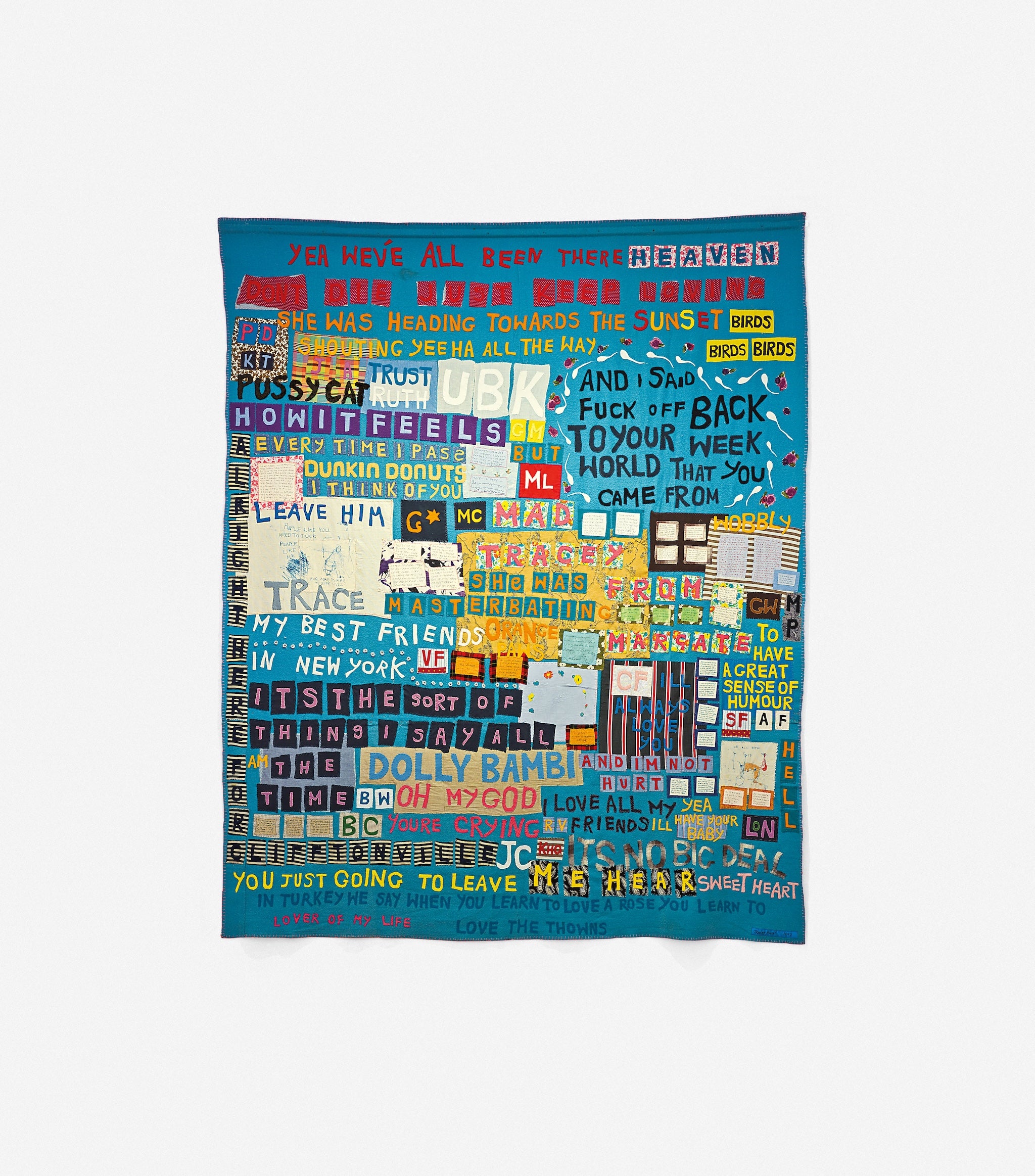
Hotel International (1993), one of Emin’s classic hand-embroidered blankets, appears like an innocuous celebration of her childhood family life with shoutouts to close relatives, but reveals masses about her endlessly disrupted upbringing as you home in on her hand-scrawled additions. The well-known video, Why I Never Became a Dancer (1995) gets a new lease of life in this “high art” context. Recounting the story of how a group of louts chanted “slag-slag” as Emin took to a dance floor in a nightclub in her hometown, Margate, it closes with Emin rising above it all, grooving to Sylvester’s “You Make Me Feel Mighty Real”. I felt like cheering her right there in the gallery for getting this tale of small-town nastiness out into a snooty art world that is probably more dominated by privilege now than it was when she made the film.
Among the lesser-known works, handwritten texts, such as Exploration of the Soul (1994) give us Emin’s backstory in even greater depth: racial abuse (on account of her part-Turkish heritage), rape, rejection by her school friends and their families, a botched abortion which continued during her taxi ride home. And that’s not the half of it.
The Emin represented here could have been a lost cause with a very different fate. Her ability to create her own chances from a deep-seated belief in her own talent and value comes over as frankly heroic. And anyone who can sew the words “Every time I pass Dunkin Donuts I think of you” onto one of their major works – Mad Tracey from Margate (1997), her again – without it feeling unbearably arch gets my vote every time.
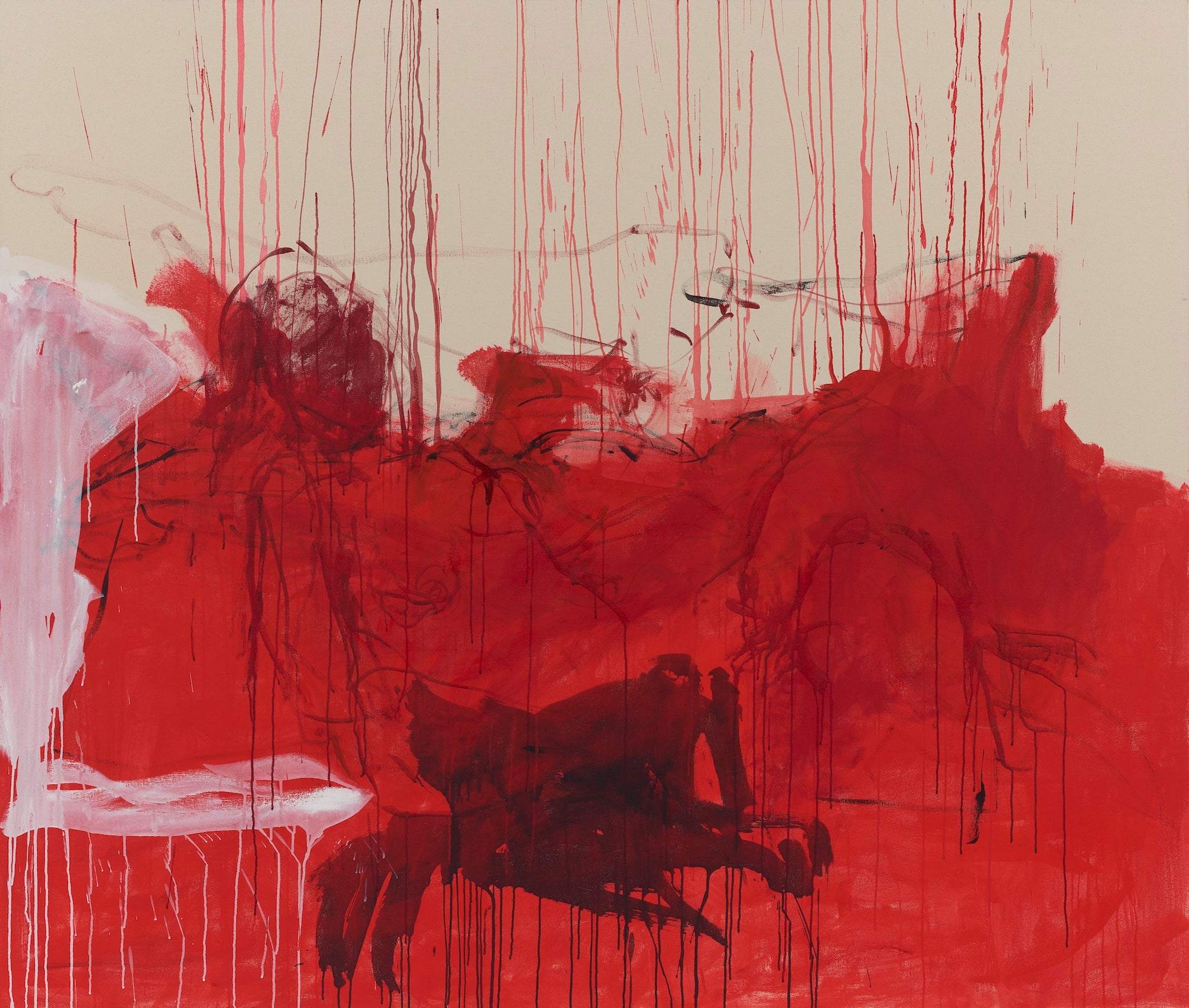
Even early student paintings, which Emin destroyed after her first abortion (they loom large in the show), exhibited here as tiny photographs, show a feel for expressive painting that many mature artists would envy. That instinctive feeling for pain feeds into the large figurative canvases that have dominated her recent exhibitions, with their veils of dripping paint, sexually explicit postures and raw, unfinished look. The sudden appearance of a group of these works early in the exhibition disrupts its chronology. If the intention is to give a sense of continuity of Emin’s work, with similar themes emerging over decades, it dulls the sense of standing by the art as it develops that you tend to want from a retrospective exhibition.
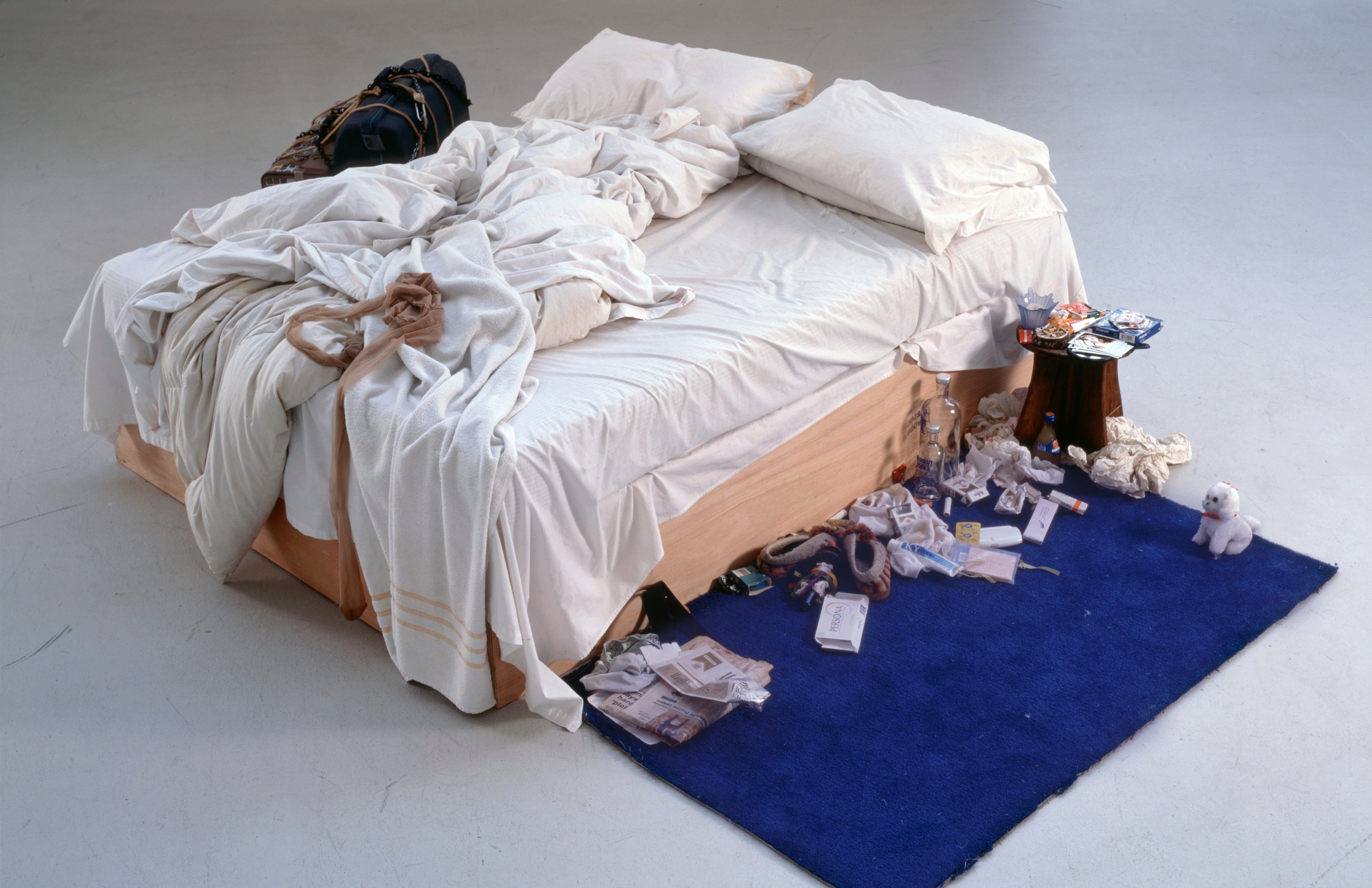
After passing down a corridor, lined with wistful photographic self-portraits from 2001 along one wall, and brutally graphic naked post-surgery selfies from 2020 along the other, we find ourselves confronting her most famous work, My Bed (1998). A recreation of Emin’s unmade bed after a serious depressive episode, all shambolic duvets, full ashtrays and contraceptive packets, this once notorious work just gets more popular. Met by incredulity at the time, it feels now prophetic, of our current age where mental health is less stigmatised and people routinely reveal their intimate lives online. Emin was ahead of the game in making art that was almost entirely about herself, and sufficiently consistently that it doesn’t – contrary to everything you might expect – feel self-indulgent.
Yet while it’s lit for maximum impact, framing My Bed with recent works makes it feel something of an afterthought in Emin’s development, rather than the high point of her early career.
While the later paintings are often highly seductive, with their beautifully fluent lines and visceral colour – I particularly enjoyed the poster image I Never Asked to Fall in Love, with its field of dripping red – the narrowness of the colour palette, dominated by red and blue, becomes monotonous, and the once refreshing unfinished look now feels like an affectation. Nearly 20 years into this “new” way of painting, I’m still waiting for it to be taken to the next level.
After a room devoted entirely to paintings from Emin’s post-cancer “second life”, which differ from earlier works only in that the figures tend to be single rather than in couples, the exhibition ends all too soon. I was left wanting a lot more. The work has never looked better, though a shade more on the way her art emerged – all that fame undoubtedly impacted on Emin’s art – and a bit more humour would have given us a fuller experience. But of Emin herself, I was entirely convinced. In contrast to just about everything else being produced in art today, every detail of the work here is genuinely and deeply felt. Britain’s greatest living woman artist? Oh, I think definitely.
‘Tracey Emin: A Second Life’ is at Tate Modern from 27 February until 31 August