


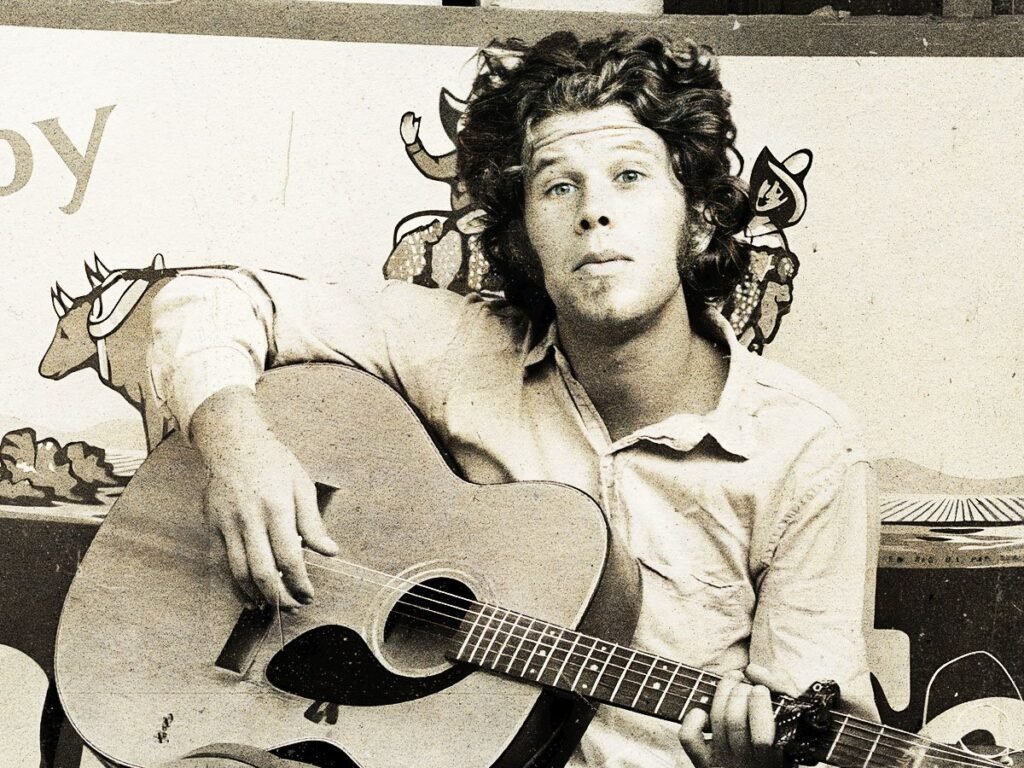

(Credits: Far Out / Tidal)
When it comes to the track that changed everything for a legend, most of the time you can make a solid guess about what song, what artist or at least what genre it might be, but when it comes to Tom Waits, thinking that you can predict anything is foolish.
For the most part, artists become easy to understand once you know enough, such that if Paul McCartney is talking about a song that changed everything in his life, chances are it’ll be a classic rock and roll tune, maybe from Elvis Presley or Chuck Berry. If it’s Mick Jagger or Keith Richards talking, it’ll likely be a song more from the blues world.
Artists typically pick their poison and mostly stick to it, and even if they do experiment throughout their career, bringing in the influence of other genres as they move through the records, the heart generally stays the same, or at least stays recognisable, but Waits couldn’t be further from that fact.
Throughout his career, the man has been about five completely different people, making it clear at every turn that there is no predicting him, nor is there any understanding him; instead, to be a Waits fan is simply to strap in and go along for the ride.
At first, though, he did seem like the type of artist who knew what they liked and what they did, with his 1973 debut album, Closing Time, and even his follow up The Heart of Saturday Night, being more genre-constrained. Waits was the piano player in a smoky bar, and his music sounded like that, taking cues from rock, folk and classic ballads as he weaved them into his storytelling tunes.
However, anyone who liked that and that alone would have got a harsh shock when by 1985, he was delivering a record like Rain Dogs, where I dread to even think what on earth those early fans of ‘Martha’ thought by the early 1990s when he was offering them up Bone Machine or Mule Variations.
From the man by the piano to a man out to scare you on ‘What’s He Building’, Waits has evolved a long way from where he started, and so, for a man so unexpected, the song that changed his life seems to follow suit, being not a rock song, a ballad, nor a pop tune but a classical aria.
“I heard ‘Nessun Dorma’ in the kitchen at Coppola’s with Raul Julia one night, and it changed my life, that particular aria,” Waits told The Guardian. Working in a restaurant with a future Emmy-winning actor, the man was already on a killer anecdote, but to him, this moment was all about the soundtrack, where hearing that one operatic track switched a light on for him: “It was like giving a cigar to a five-year-old. I turned blue, and I cried,” he said.
Julia, realising that something was shifting for Waits, simply left him there to dive deeper. “He asked me if I had ever heard it, and I said no, and he was like, as if I said I’ve never had spaghetti and meatballs, ‘Oh my God, oh my God!’, and he grabbed me and he brought me into the jukebox (there was a jukebox in the kitchen), and he put that on and he just kind of left me there,” Waits recalled, and suddenly, classical music found an important place in his world of influences and references.
Related Topics