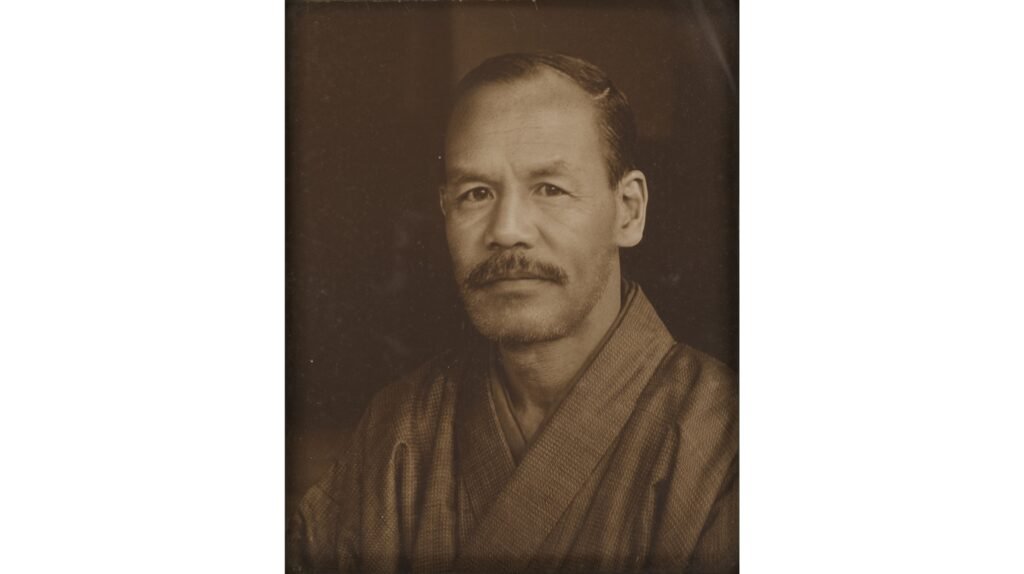
Kanzan Shimomura (1873–1930) was a pivotal figure in the development of modern Japanese painting. Born into a family of Noh performers who served the Kii Tokugawa samurai family for generations, he inherited a deep sensitivity to classical aesthetics from an early age.
He entered the newly established Tokyo Bijutsu Gakko (now Tokyo University of the Arts) as part of its inaugural class. Later teaching there himself, Kanzan, as he was known, resigned alongside fellow luminary Tenshin Okakura and helped found the Nihon Bijutsuin (Japan Art Institute), positioning himself at the forefront of efforts to redefine Japanese painting in the modern era.
‘Life, Art and Society’ at the National Museum of Modern Art, Tokyo brings together some 150 of Kanzan’s works, tracing his artistic evolution from his mastery of classical techniques and yamato-e traditions to the broadened perspective he gained during two formative years in Britain.
Working closely with contemporaries such as Taikan Yokoyama and Shunso Hishida, Kanzan sought a pictorial language suited to a modernising Japan during the Meiji era (1868–1912). The exhibition examines his research into classical Japanese and Chinese painting, his Noh-inspired works, and his connections with political and financial elites. Together, these facets reveal an artist striving to create paintings that would live in dialogue with individuals and society, going beyond mere self-expression.