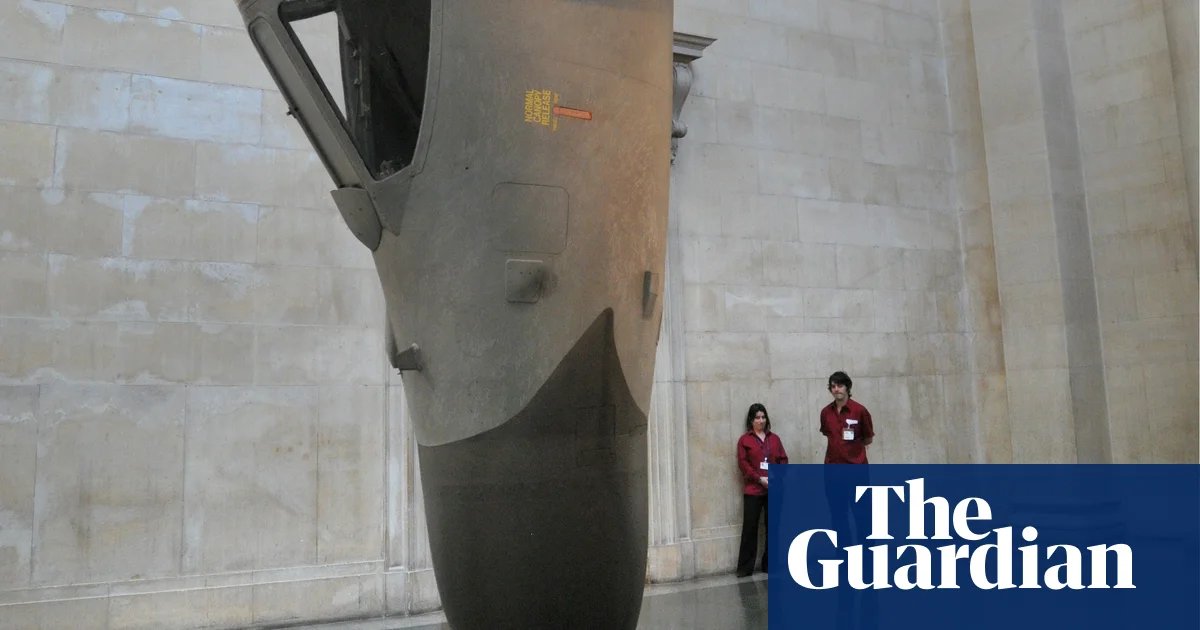
A recent visit to the Tate gallery in London underlined how paintings can give great insight into the era in which the artist lived. Each room offers an excellent summary of the international historical context, which influenced both the subject matter and the style of the paintings, from the 1500s to the present day.
One particular trend was the rise of international artists’ colonies from the 1830s onwards. Escaping increasing urban industrialisation and the expectations of art academies, many artists moved to rural towns and villages in France, the Netherlands, Denmark, England and Germany.
Cheaper accommodation and simpler lifestyles were other attractions to places such as Pont-Aven in Brittany and Grez-sur-Loing, on the edge of Fontainebleau forest, south of Paris. Another advantage was the opportunity to be with other artists painting “en plein air”, and to socialise with poets and writers also seeking meaning in rural life.
While the outbreak of the first World War disrupted many artists’ colonies across Europe, the places they lived have since become tourist attractions. The following generations of artists – often also seeking out rural retreats in places such as France and Spain – continue to be inspired by the work of artists such as Paul Gauguin, Roderic O’Conor, William John Leech and many others.
Take for example, Louis le Brocquy’s Study After Manet (€10,000) in the upcoming Important Irish Art auction at Adam’s. This work, which pays homage to the French painter, Édouard Manet (1832-1883), was painted in the studio le Brocquy shared with his wife, Anne Madden, at their home in the south of France.

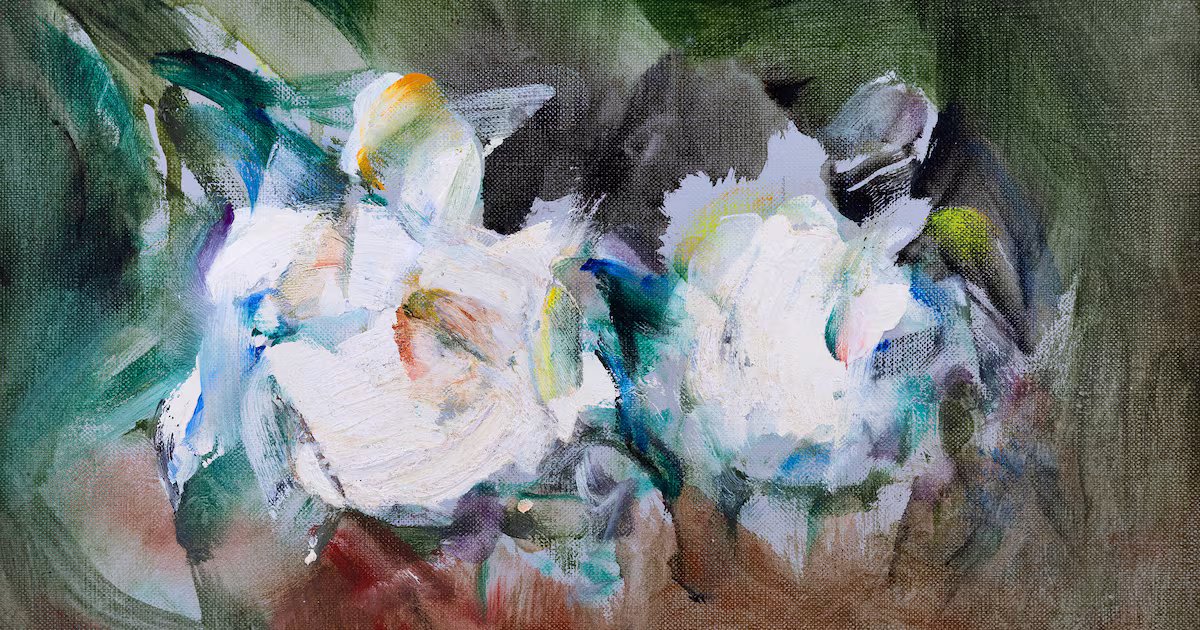
Mary Swanzy (1882-1978), sometimes described as Ireland’s first modernist painter, has works for sale in both Adam’s auction on March 25th, and DeVere’s Irish Art auction on March 24th. Swanzy lived abroad – in both France and England – for much of her life. Her painting, Cathedral Semur (€20,000-€30,000) at Adam’s auction, is a semiabstract composition of Semur-en-Auxois, a medieval city encircled by the Armançon river in eastern France.
A Mediterranean Coastal View by Nathaniel Hone (1831-1917), with an estimate of €10,000-€15,000, is an earlier example of artists working outdoors. The painting, for sale at Adam’s auction, is believed to have been painted in about 1890.
And the semiabstract painting, Memory of Candeleria, Tenerife by George Campbell (€6,000-€8,000) is eloquently described in Adam’s catalogue as a “palimpsest of recollection”, as it eschews obvious representational view of this city in eastern part of the largest of seven main Canary Islands. Wicklow-born Campbell (1991-1979) spent extended periods of time in Spain.

By contrast, Hughie O’Donoghue’s painting, Cherbourg (study) no. II (€5,000-€7,000), is charged with the dread and uncertainty of war. Part of a series of works inspired by his father Daniel’s experiences of the second World War, it was first shown in an exhibition entitled, A Line of Retreat in galleries in the UK and Germany. It is for sale at DeVere’s auction.
The photorealist acrylic paintings of old fuel pumps by John Doherty may spark nostalgia in some – or fear in others as the war in the Gulf region continues to threaten higher energy costs across the world. The Maxol family (€7,000-€10,000) and Abandoned in Bantry (€1,500-€2,000) are for sale at Adam’s. Prospective buyers of Irish art can view works at both Adam’s (March 20th-25th) and DeVeres (March 20th-24th) in their auction rooms in Dublin city centre.
Meanwhile, Christie’s in London has some significant paintings by Irish artists in its auction of Modern British and Irish Art on March 18th and 19th. Beatrice Boatto from Christie’s says that Sir John Lavery’s After Breakfast, Tangier (£180,000-£250,000/€207,800-€288,000), is for sale at auction for the first time. As are Jack B Yeats, A Storm/Gaillshíon (£100,000-150,000) and The Grain Ship (£7,000-£10,000).

Finally, auction houses in Dublin and Waterford are hoping to attract new collectors to the art market, with sales of works on paper later this month.
Bill Hughes, head of modern and contemporary art at Herman’s online auction rooms in Rathmines, Dublin says their first sale of works on paper will include drawings in pencil and ink, watercolours, gouaches, photographs and editioned prints.
“These works, which mainly come from private collectors, are a mix of landscapes, portraits, still life and nude studies in pencil,” explains Hughes. Thirty of the 175 lots come from the now closed Apollo Gallery on Dawson St, Dublin.

The works on paper by Irish artists, including Barbara Warren, Colin Middleton and Leslie MacWeeney (including Portrait Study €200-€300), will be on view in Herman’s renovated gallery space today/tomorrow from 1pm-5pm, and during business hours from March 16th-30th.
Lot 100’s spring online art sale, which ends on March 24th, has a mix of paintings, sculpture, prints, vintage posters and photography by both Irish and international artists. Highlights include a digital print by Diane Copperwhite entitled, Remote Time Lapse (€250-€350), and Lake Constance, a watercolour on paper by Sophia Rosamund Praegar (€300-€500). Viewing at Lot 100 gallery on Chapel Street, Lismore, Co Waterford is from Friday, March 20th to Tuesday, March 24th, from noon to 4pm each day.
Adams.ie; deveres.ie; christies.com; herman.ie; Lot100.ie
What did it sell for?

Le Loing at Sundown, Roderic O’Conor
- Estimate: €150,000-€200,000
- Hammer price: €245,000
- Auction house: Whyte’s
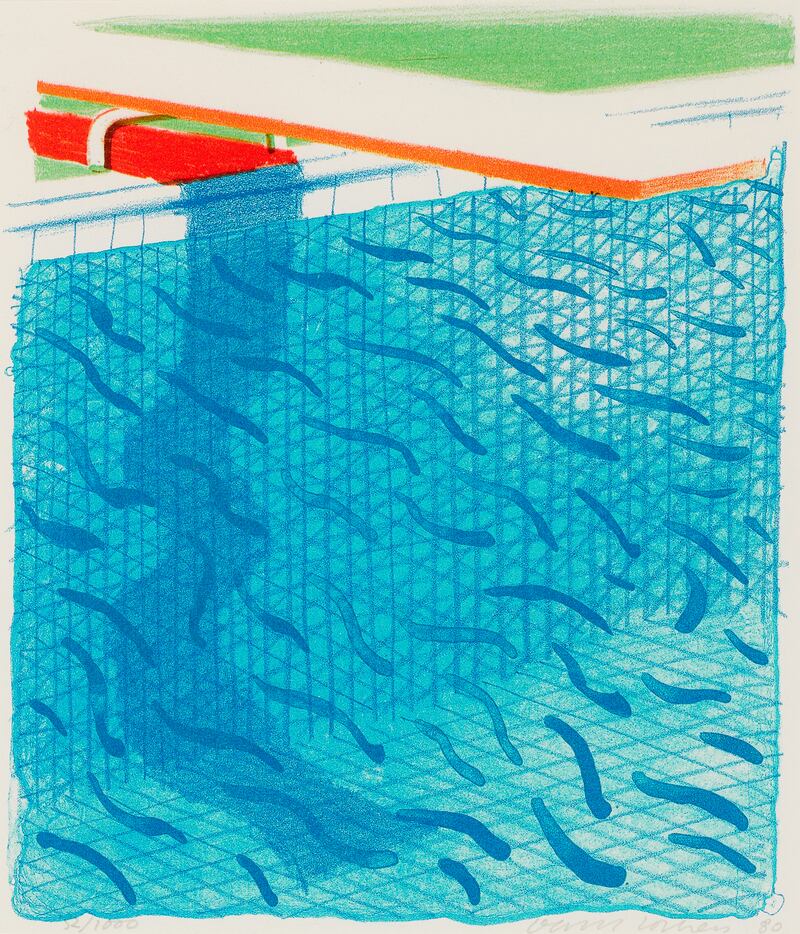
Pool Made with Paper and Blue Ink for Book, David Hockney
- Estimate: €25,000-€35,000
- Hammer price: €38,000
- Auction house: Whyte’s

Cartier Panthère lady’s wristwatch
- Hammer price: €5,172
- Auction house: Adam’s Blackrock

Regency bronze and ormolu mantle clock
- Estimate: £500-600 (€577-€700)
- Hammer price: £700
- Auction house: Ross’s