[ad_1]
Arts & Entertainment
Artist Nathaniel Mary Quinn, Who Grew Up in the Robert Taylor Homes, Returns to Chicago for New Exhibit
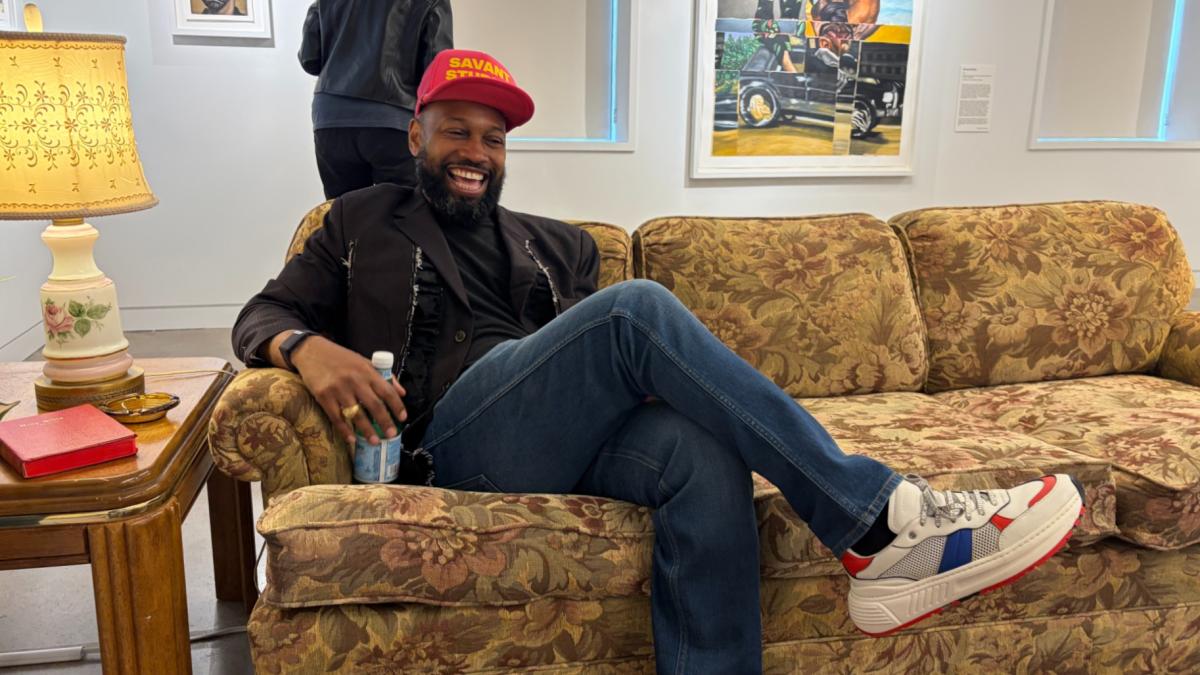
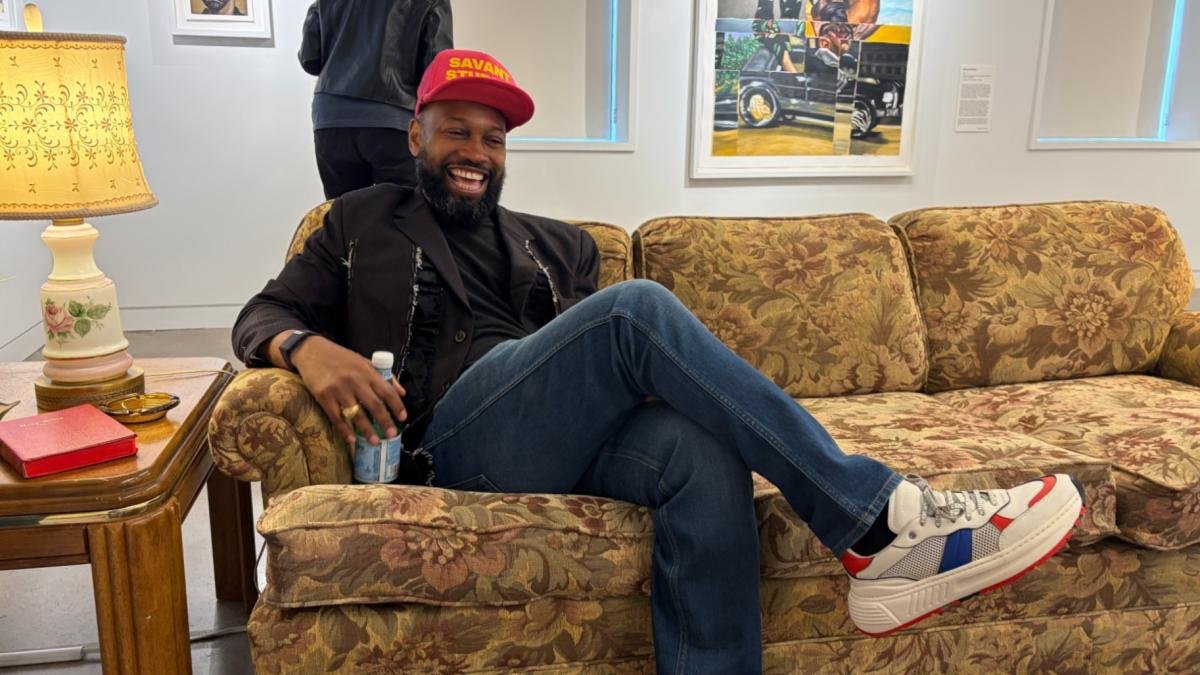
Chicago-born artist Nathaniel Mary Quinn sits in his recreated childhood living room on May 20, 2026, at the National Public Housing Museum as part of his exhibit, “Nathaniel Mary Quinn: A Love Letter to My Mother.” The exhibit runs until Aug. 23. (Eunice Alpasan / WTTW News)
Chicago-born artist Nathaniel Mary Quinn described his experience growing up in public housing at the Robert Taylor Homes as a cycle of pain and violence with a lack of resources.
But the walls of the apartment also served as his first drawing pad.
Quinn, now based in Brooklyn, is opening his first museum show in Chicago this week.
“Nathaniel Mary Quinn: A Love Letter to My Mother” opens at the National Public Housing Museum on Thursday and runs until Aug. 23. The exhibit is dedicated to his late mother.
“I always say that Robert Taylor Homes were incredibly efficient at killing dreams,” Quinn said. “If it had not been for my mother, that community surely would have killed my dream.”
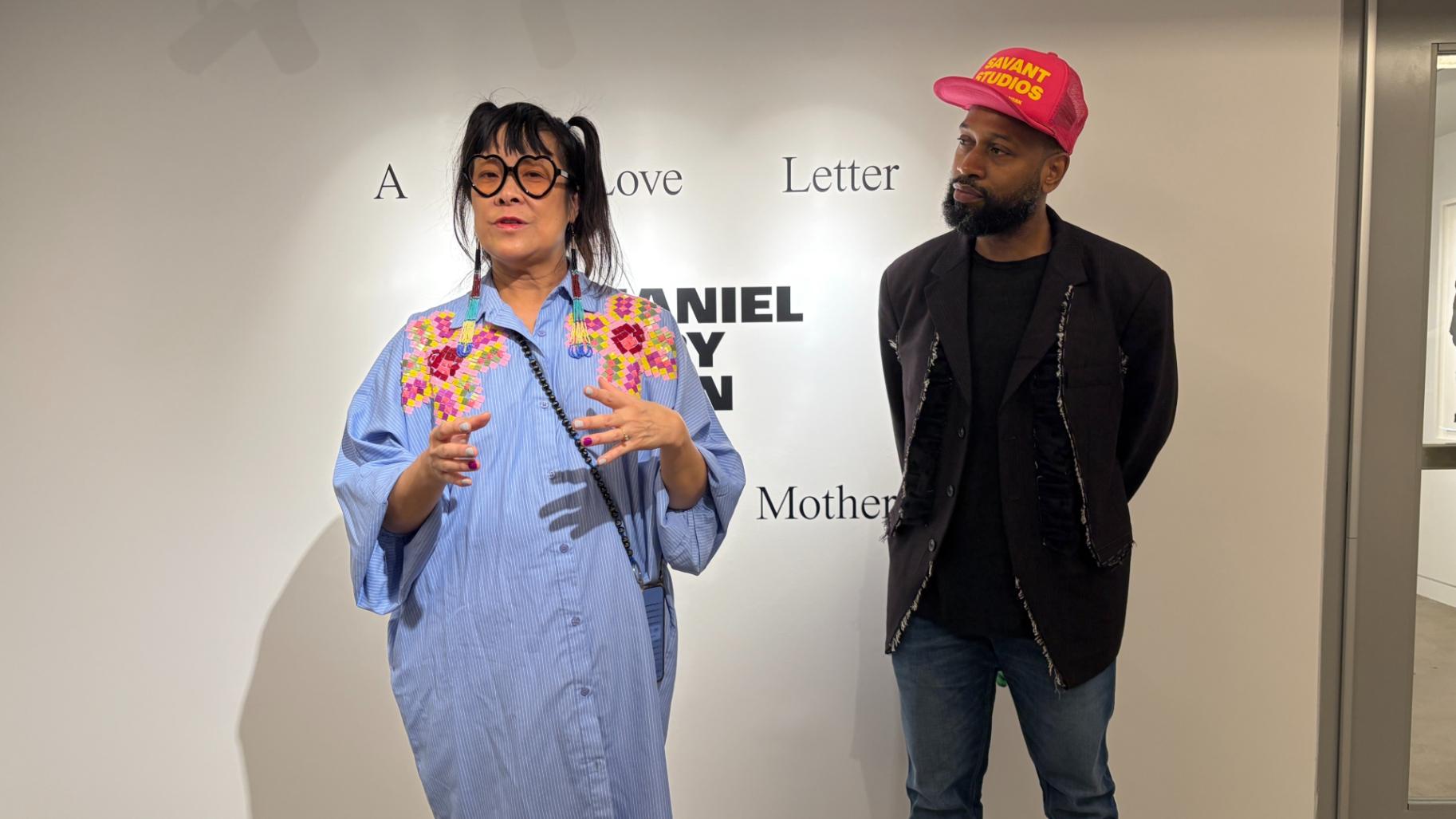 National Public Housing Museum Executive Director Lisa Yun Lee, left, and artist Nathaniel Mary Quinn share remarks during a May 20, 2026, media preview for the exhibit, “Nathaniel Mary Quinn: A Love Letter to My Mother.” (Eunice Alpasan / WTTW News)
Quinn will celebrate the opening of his exhibit Thursday with a free neighborhood picnic and an artist conversation from 5-8 p.m. at the museum. The opening comes on the heels of Quinn — known for his style of collage-like portraits — creating the album cover for the upcoming Rolling Stones album, “Foreign Tongues.”
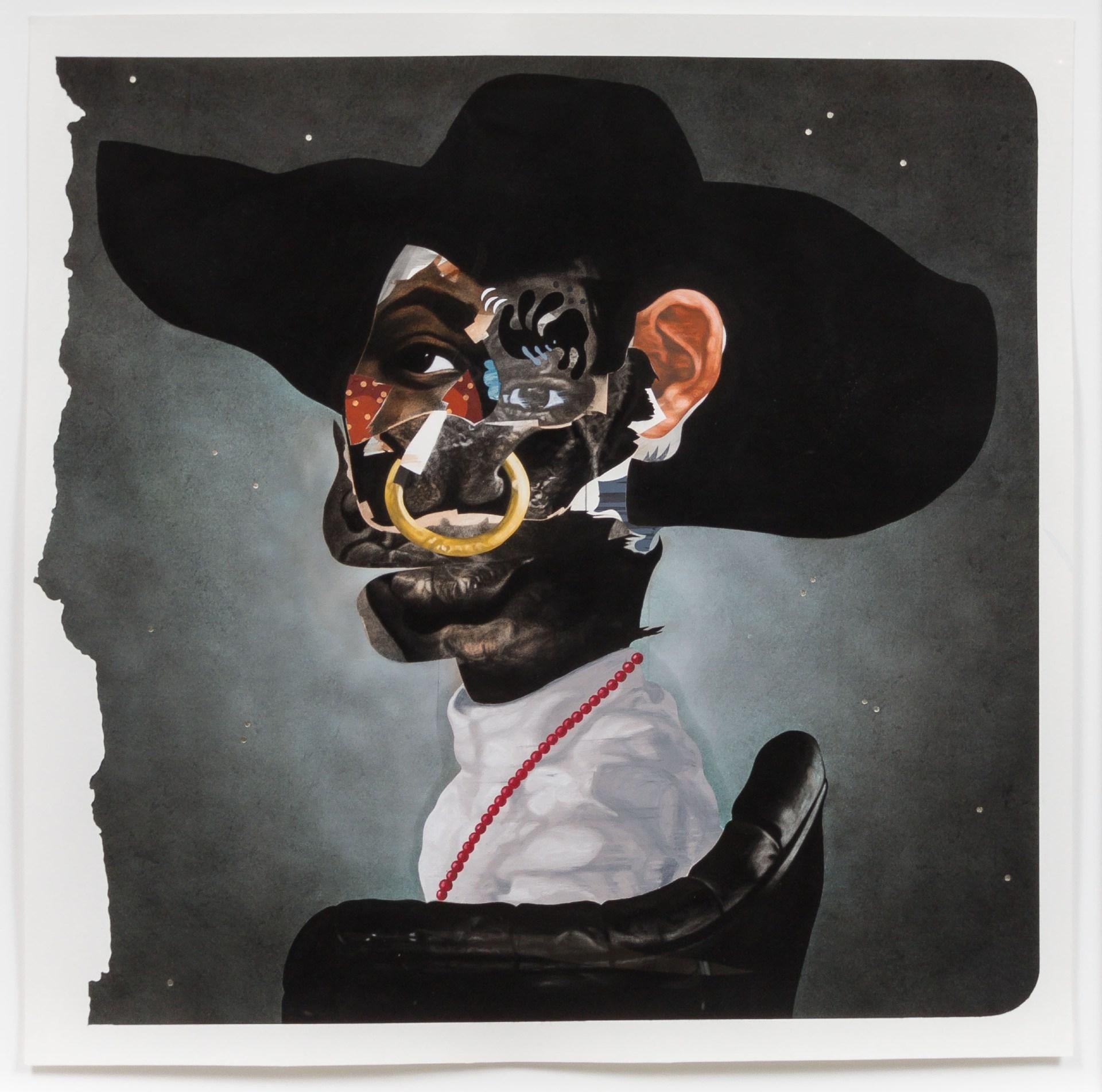 Nathaniel Mary Quinn, Junebug, 2015. Black charcoal, gouache, soft pastel, oil pastel, oil paint, paint stick, and acrylic silver leaf on Coventry Vellum paper. 41 x 44 inches (104.1 x 111.8 cm) © Nathaniel Mary Quinn. Photo: RCH. Courtesy of the artist and Gagosian.
His exhibit at the National Public Housing Museum features 10 artworks, along with a recreation of his childhood living room at the Robert Taylor Homes as he remembered it.
After initial disapproval, Quinn said his mother eventually allowed him to draw on the walls and would even wash the walls down to create a new canvas for him. Quinn also remembered his mother’s physical disabilities following two strokes. He recalled memories of her folding clothes, cooking meals, mopping the floor and even mounting a curtain in the window — all while only using one arm.
“That’s why all the works look so disjointed, but to me that’s beautiful because that was my mother’s body, so I’m trying to reflect her body in all of my works,” Quinn said. “That’s what I’m constantly pursuing: to recreate my mother somehow.”
The museum will host a series of conversations about the history of the Robert Taylor Homes. Speakers include community organizer and former Robert Taylor Homes resident Ron Carter on May 31; and Brad Hunt, Loyola history professor and author of “Blueprint for Disaster: The Unraveling of Chicago Public Housing,” on June 14. View the program schedule here.
The exhibit, with the aim of exploring the relationship between identity, place, memory and perception, draws from memories and people from Quinn’s life. The subjects and stories behind Quinn’s portraits include that of his father in “Fixin’ to Eat,” a girl who lived next door at Robert Taylor Homes in “Erica with the Pearl Earring,” and neighbors from when Quinn moved into his first home in Brooklyn in “JB and Bobby.”
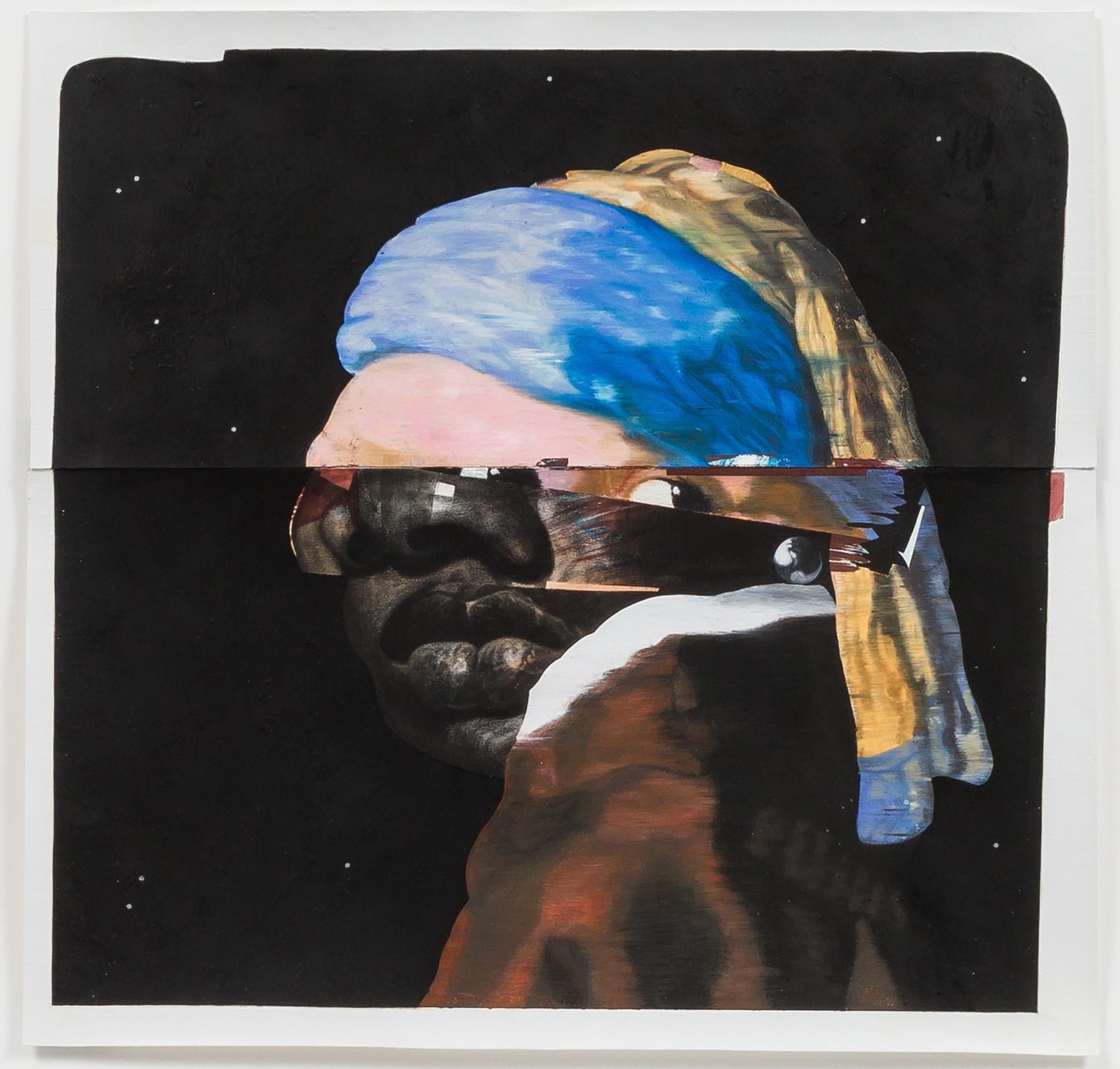 Nathaniel Mary Quinn, Erica with the Pearl Earring, 2015. Black charcoal, gouache, soft pastel, oil pastel, oil paint, paint stick, and silver oil pastel on Coventry Vellum Paper. 25 1/2 x 25 1/2 inches (64.8 x 64.6 cm) © Nathaniel Mary Quinn. Courtesy the artist and Gagosian.
Each portrait contains an entire universe of multiple stories, according to National Public Housing Museum Executive Director Lisa Yun Lee. Similarly, there are also multiple stories about public housing that challenge mainstream narratives that villainize these spaces, Lee said.
“When you say the names Robert Taylor Homes or Cabrini Green, sometimes people have racial stereotypes that automatically pop up,” Lee said. “But we know as public historians and from talking to residents that there are multiple stories about public housing. Public housing is also a space of resilience, of joy, of family. It was also a place of neglect and police violence.”
Robert Taylor Homes opened in 1962 and, at one point, was one of the largest housing projects in the world. As many as 27,000 families lived in the buildings before the city later demolished them in the 2000s.
Quinn, while sitting on the sofa of his recreated childhood living room, said it was difficult for him to wrap his head around being brought up at the Robert Taylor Homes and where he is now as an artist.
“My mother’s name is Mary Quinn,” said Quinn, who adopted his mother’s name as his middle name in honor of her. “This was a poor, illiterate, disabled Black woman who lived in a very poor, resource-starved community on the outskirts of society. Nobody cared about her. Now, today, throughout the world, when people say my name, they have to say her name now.”
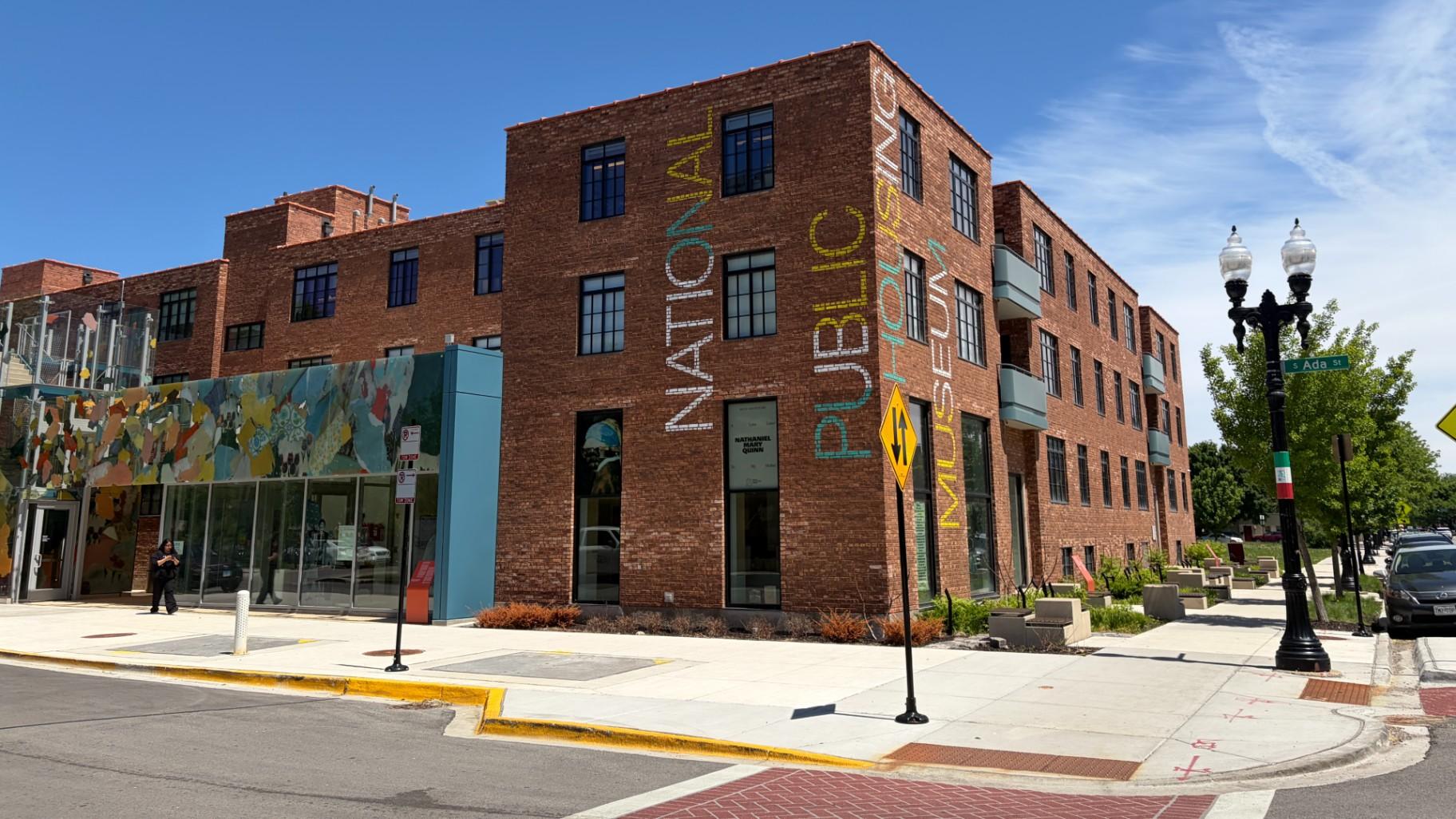 The National Public Housing Museum is located at 919 S. Ada St. in Chicago. (Eunice Alpasan / WTTW News)
WTTW News arts coverage is supported by the JCS Arts, Health & Education Fund of the .
Contact Eunice Alpasan: [email protected]
[ad_2]
Source link