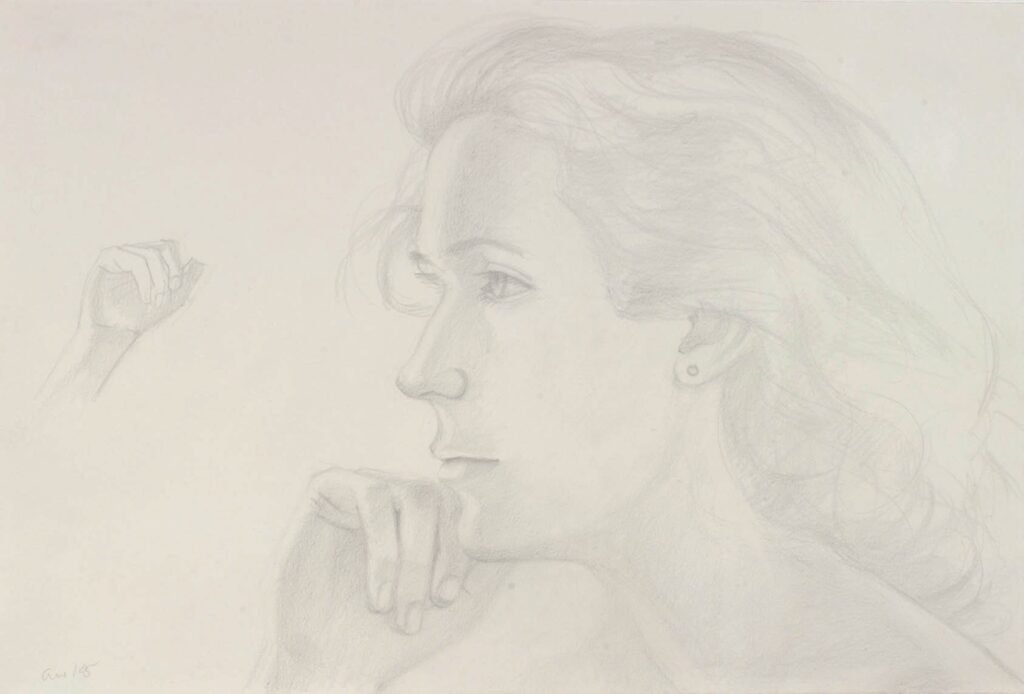
The Colby College Museum of Art in Waterville, ME presents “Alex Katz | Out of Sight,” a landmark exhibition of drawings by Alex Katz, one of the most influential American artists working today. On view May 21 through October 11, 2026, the exhibition is the first in more than 30 years to unite drawings from across Katz’s career, offering an intimate look at his creative process.
Bringing together more than 80 works—including never-before-exhibited drawings from Katz’s personal collection, works from the Colby Museum collection, and select loans from private and institutional collections—the exhibition demonstrates the extraordinary range of Katz’s explorations on paper. From preparatory sketches to presentation drawings, collages, cartoons, and a selection of related paintings, the show offers a rare opportunity to engage with a lesser-known yet essential facet of the artist’s practice.
New research for the exhibition sheds light on his working methods and reveals the process of discovery, experimentation, and revision that has been a hallmark of his oeuvre for eight decades.
“Alex Katz | Out of Sight” is organized by Kiko Aebi, Katz Curator at the Colby Museum.
“Drawing is the foundation of painting,” says Katz, who is collaborating closely on the exhibition.
“For Alex Katz, drawing is a daily practice of paying attention and of stilling, through gesture and line, our constantly mutating world,” added Jacqueline Terrassa, Carolyn Muzzy Director at the Colby Museum. “As the museum of record for Katz’s work, we are thrilled to organize this exhibition.”
Although best known for his large-scale paintings of his family, his creative milieu, and the landscape, it is drawing—intimately sized and employing simple materials—that initially fueled Katz’s artistic ambitions and continues to permeate his practice.
The exhibition opens with a drawing of an antique cast made by the artist while he was still in high school. This academic investigation into the possibilities of line, form, and modeling reveals the adolescent artist training his eye and hand—efforts he would continue to hone in sketchbook drawings of subway commuters while a student at the Cooper Union for the Advancement of Science and Art. Through these exercises, Katz learned to draw from life—an essential, although seldom acknowledged, step in the development of his “direct painting” technique begun in the late 1940s.
The exhibition also includes a selection of his vibrant postcard-size collages from the 1950s, which distill people and landscapes to their most essential forms. Katz’s pared-down approach is also evident in quick sketches of friends and family made at social gatherings. Often captured from multiple viewpoints, these studies show Katz experimenting with composition and radical cropping.
Also on view will be one of Katz’s cartoons—a type of preparatory drawing, originating in Renaissance workshops, used to scale up a composition for transfer onto canvas. The intentionally unfinished quality of many of these works offers a striking counterpoint to the concise legibility and sense of resolution in Katz’s paintings and prints.
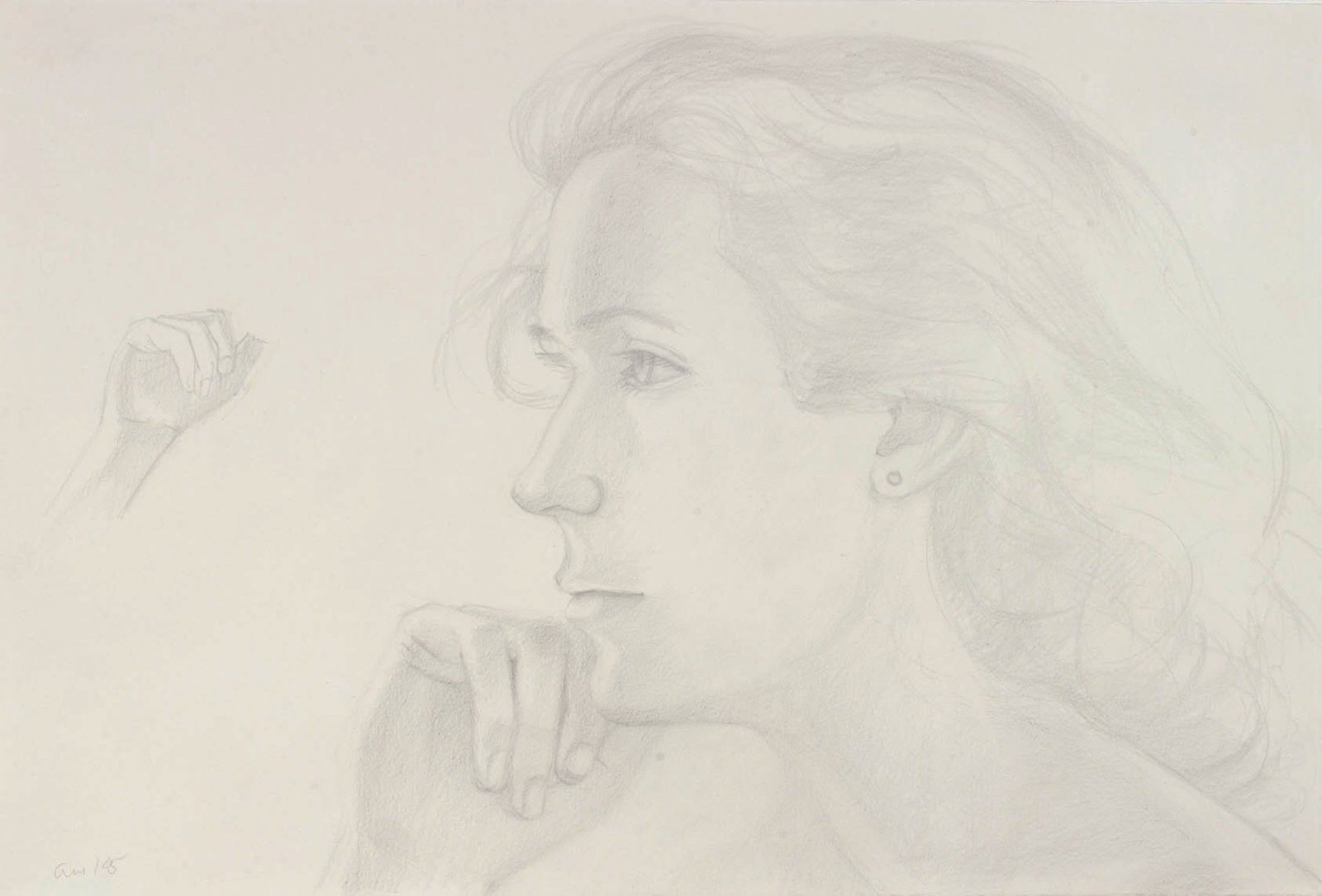
In contrast to these preparatory works, Katz has from the 1970s onward also made highly finished portrait drawings. Approached in stages and often over longer periods, these luminous drawings are built up slowly, with multiple layers of graphite or charcoal. Only once the drawing is completed does Katz faithfully translate the image into a painting. He notes that this approach enables his paintings to be “essentially premeditated . . . using the best elements from all the preliminary studies.”
The exhibition reunites examples of the various stages of Katz’s creative process, tracing the development of his motifs from preliminary sketches and finished drawings to cartoons and, ultimately, paintings.
Inscribed with the time and labor of their own making, Katz’s drawings reveal the complex procedures that shape his decision making and experimentation. Seen together, they attune us to the very act of perception, revealing vision as a sustained, iterative inquiry, sharpened by technique and time. Bringing into focus an under-recognized dimension of Katz’s fascinating practice, the exhibition foregrounds drawing as an engine of his creative and continually inventive process. It highlights the artist’s perspicacious observation, and in our present moment, his depictions of both the human figure and the natural world take on new inflections. In his preoccupation with the temporality of everyday life, concern with people in relation to one another, and attention to style and the way it changes over time, viewers encounter an artist deeply invested in the way we see and relate to the world around us.
About Alex Katz
Widely recognized as one of the leading artists of his generation, Alex Katz has developed a distinctive and remarkably influential approach to contemporary representational art, creating a celebrated body of work spanning painting, drawing, sculpture, and printmaking.
Born in Brooklyn in 1927 and raised in St. Albans, Queens, Katz studied at the Cooper Union for the Advancement of Science and Art (1946–49). That same year, a scholarship to the Skowhegan School of Painting & Sculpture brought him to Maine for the first time, initiating a lifelong connection to the state and its distinctive environment.
Alongside his landscape practice, Katz has consistently turned to the people and places of New York City as vital sources of inspiration.
Katz has been the subject of more than 250 solo exhibitions, and his work is held in more than two hundred institutional collections around the world.
The Colby Museum is home to the largest number of his works in any institution, with nearly nine hundred paintings, drawings, and prints, primarily gifted by the artist. A rotating selection is continuously on view in the Paul J. Schupf Wing for the Works of Alex Katz at the Colby Museum. Opened in 1995, the wing is one of the only museum spaces in the country devoted solely to the work of a single living artist.
In 2004, Katz established the Alex Katz Foundation, which has placed hundreds of artworks—many by contemporary artists—into museum collections across the United States and Europe.
About Colby College Museum of Art
Since its founding in 1959, the Colby College Museum of Art has been dedicated to its mission of access to, meaningful engagement with, and joyful connection through art. Free and open to all, with locations on the Colby College campus and in downtown Waterville, ME, the museum advances Colby College’s educational and research mission, enriches the region’s cultural and community life, and contributes to the great field of American art.
With an outstanding permanent collection, community-engagement programs, and path-setting exhibitions, publications, and convenings, Colby Museum has earned a reputation as both a leading teaching museum and premier destination for American art. The museum and its Lunder Institute for American Art bring extraordinary art experiences to central Maine and generate new scholarship with national and international impact.