
[ad_1]
Never tag a tree, a church, a car, or the ground people walk on. These are some of the unwritten rules of a graffiti writer, as told to Britt Coker.
There are three main styles of graffiti art. There is the tag, the piece, and the throw up. The tag is the writer’s moniker without too much fill or colour. Then there is the piece, short for ‘masterpiece’, and judging by the title alone you know there is going to be greater effort and creativity put into that. The last style is the throw up. This is the competitive graffiti writing, also called bombing. You are making a big statement to everyone else that you were there.
“Throw ups are like ammunition to get famous quick. They’re amazing. They’re more hardcore, there’s more foundations and maths and geometry in these throw ups than there is in a piece. And a piece is just a rendition of a tag that’s enlarged and coloured and stuff. So kind of going from a tag to the piece and then a throw up, that’s incredible. I dare you to try and draw one [It’s not easy].”
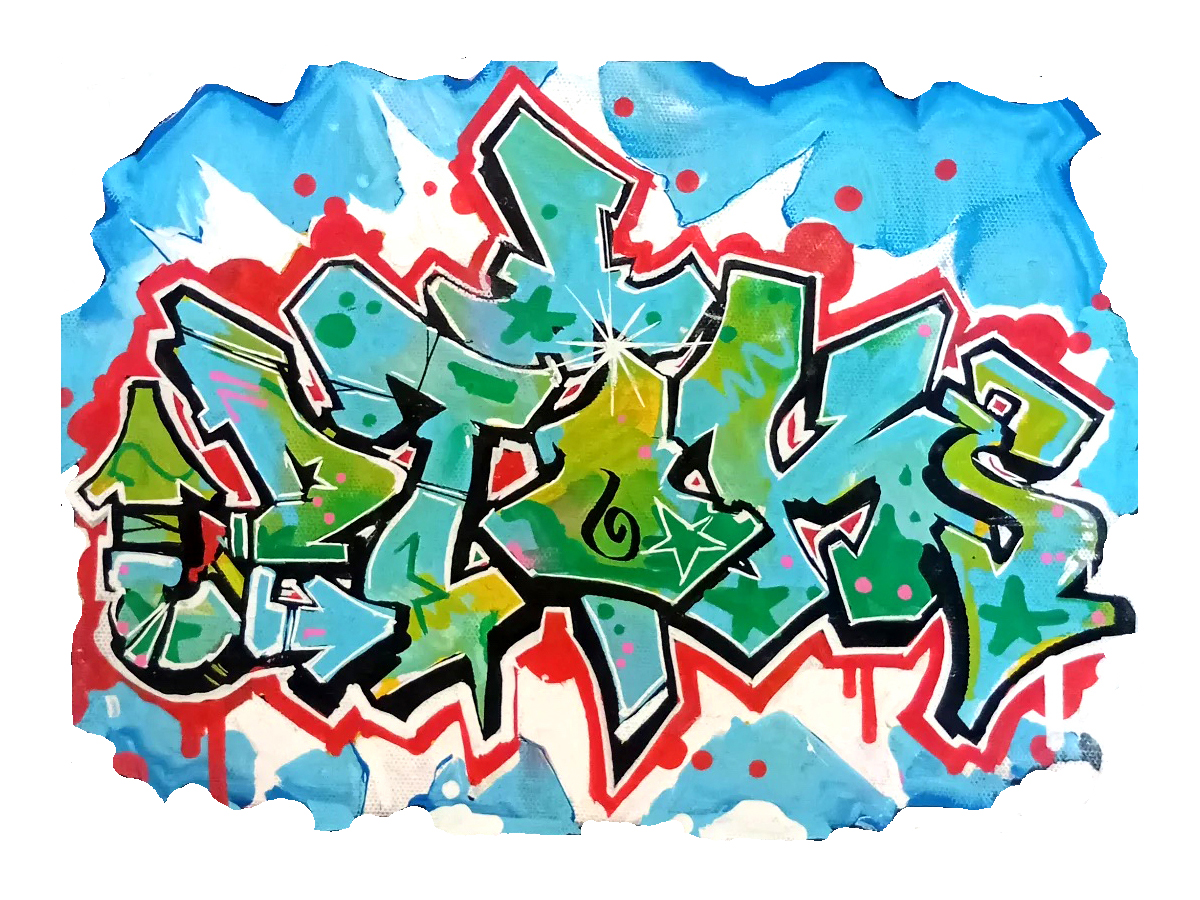
I’m getting schooled on the laws and styles of graffitiing by DTOK who has been a graffiti artist since he was 11, when his uncle – visiting from Australia where he was ‘painting’ trains – showed DTOK a book called Subway Artby Martha Cooper and Henry Chalfant. Published in 1984, it offered a previously unknown glimpse into the New York City graffiti subculture from the 1970s and 1980s. Its stories and images became insight and inspiration for what has been for DTOK a two-decade obsession with paint, pens and concrete walls.
He wasn’t always DTOK. His uncle was SEME, so for a little while he was SEME TWO, practicing down at his local skatepark in Wellington. Your local skatepark is a ‘writer’s bench’. Somewhere to learn and refine your skills, develop a style and meet other writers. Somewhere you start as a toy (newbie) but eventually become a writer, and presumably if you’re good enough, referred to as an artist.
Not that SEME TWO needed to practice at a bench for too long. He was naturally good at art at school, so he had a headstart on the others who have the interest but not always the talent. “The thing is graffiti writers, they can be any type of person who has just learned to draw graffiti. You get digger drivers and mechanics and all sorts of weird people, they just love graffiti and you wouldn’t catch them drawing a tiger or a landscape.”
DTOK explains the experience. “It’s a very magical feeling, drawing on a wall. People love it, even people that don’t do graffiti are like, ‘Can I have a turn?’ “It’s definitely a statement being made. Some kind of expression or communication. It’s the energy output. Positive or negative.” He thinks many channel their energy into paint on a wall instead of going elsewhere to be more destructive.
He was still in his teens when SEME TWO became DTOK. A concern for some of his fellow graffiti friends’ love of ‘dumb shit, it was pretty destructive’ compelled him to want to leave a message (DTOK = detox) that might encourage them to leave all that self-destruction behind. He had his fair share of it, as you’d expect he says, a teenager hanging out with people in their 30s and 40s. But then at some point, it changed for him and he wanted to leave a more hopeful message for his friends. “Bring them back to food and art and healing, and just real life, you know. Doing cool stuff instead of them chasing a bag. As a friend, I usually would be a good inspiration to those people… There’s a small community. We all know each other very well.”
As he points out, if you’re going to write something, you may as well choose the right message. “A graffiti name should have some kind of purpose to it.”
There are more rules. It reminds me of the film Fight Club. The first rule of Write Club is… #1: You never write over someone’s work that is better than yours. It’s bad form. Literally. Though if it was a masterpiece that you have just written over (‘kidnapping’), it’s not unheard of to tag in the top corner or in a bubble somewhere the initials of the writer whose work you have just replaced. A mark of respect if their piece was good, but now gone.
Another rule: You can’t steal someone else’s style. When you’re first starting out, there might be imitation but you’re breaking the rules if you keep doing it. So only toys do it… DTOK explains.
“Any graffiti writer, we know who’s written what. You can tell by the style, the style is very unique. That’s another rule. There’s no biting, which means no stealing other people’s letters or [established] names, unless you put a number after it, maybe. [Don’t copy] the shape, or even the colour, the fill-in. If you’re just ripping it, it’s like the same as ripping a song, but you can chop stuff up and make it new.”
One of the few exceptions allowed to this rule is when a writer dies. You might see their name all over town as other graffiti writers pay tribute in paint.
Is it ironic that all these rules aren’t written down, despite everyone holding pens?
While the rest of us are going about our lives, walking past tags, pieces and throw ups, we are oblivious to the respect that many of them receive by their own community. There is not so much lauding here in Nelson Tasman where the scene is small, but DTOK cites the graffiti cultures of Wellington and Christchurch where writers express themselves more fully. Their works are scrutinised not just by the public, but the respect and vilification are also doled out by their peers. “You can always put two pieces together and you can always tell which is better. It’s not like art, ‘oh that’s a lovely picture’, it’s more like, ‘that’s a piece of shit’, or ‘that’s amazing’. There’s a huge expectation of all writers; you have to be good at it.”
There is some complex jostling of position in there too. Like when you are starting out and maybe you are writing over another person’s art and they are writing over yours, then it “might start with a beef”. But sooner or later, writers meet writers and become friends. Though becoming not-friends is also an option if the synergy isn’t there.
DTOK does paid freelance work too. “Big legal ones full of colour”, mostly in Wellington when he lived there. He says the joy he gets from writing is no different whether it is legal or not. However, when you are doing the legal stuff, you can spend more time and effort on your work and you also don’t risk having your tenth brush with the law. He’s had multiple fines and infringements over the years that would deter many other graffiti writers, but not DTOK. He’s addicted. “Most people do give up but it’s deep in my soul. I believe I was put on this earth to be a graffiti writer as much as I was to be a good person, or fall in love or whatever. It’s part of my culture, like a religion, a way of life.”
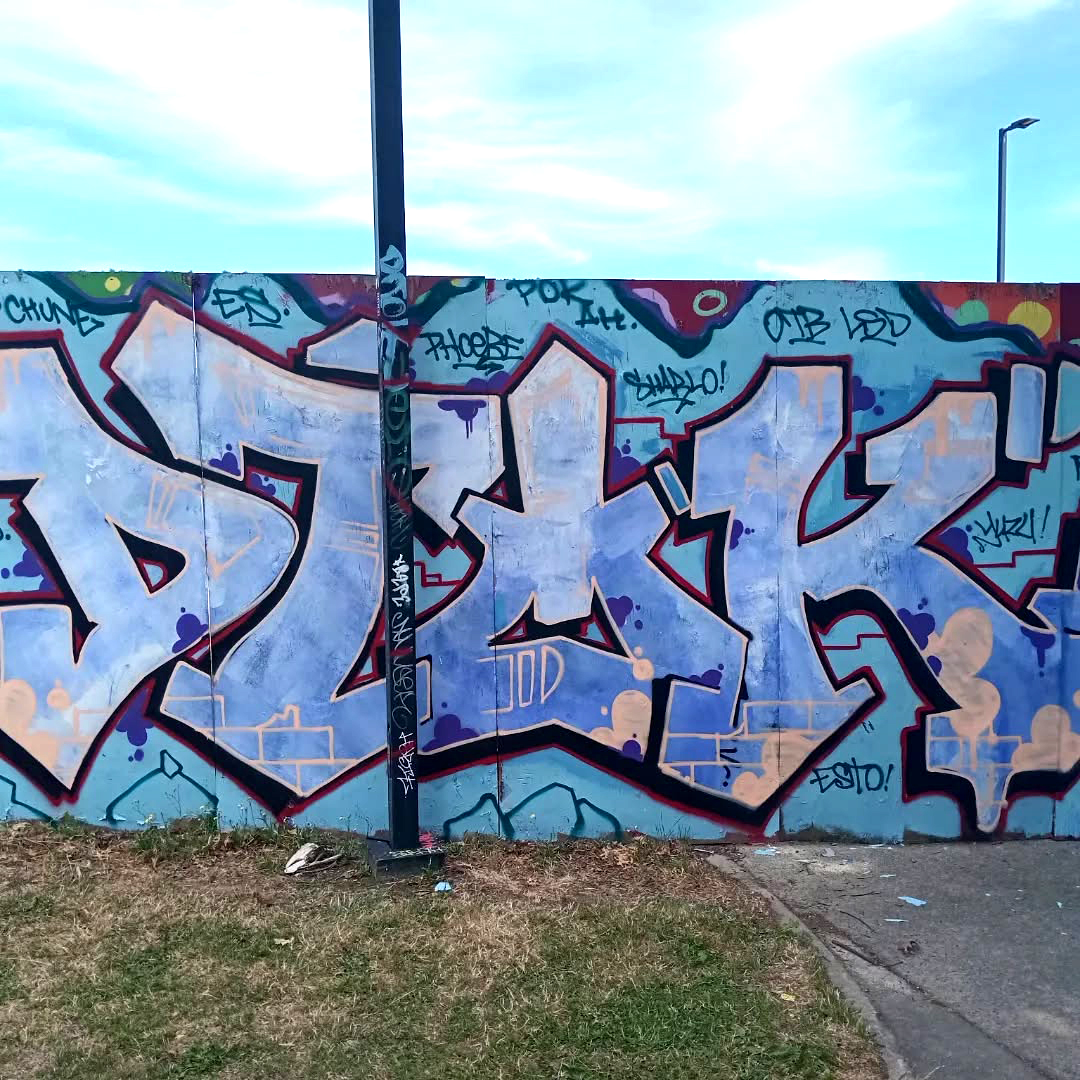
“I’ve also learned that it’s having good friends, graffiti friends. That’s the times we treasure, going on those five-hour walks along the motorway or train tracks with someone. Just talking away from 10 o’clock at night to six in the morning, and you actually get time to talk to each other in that time.”
The law aside, he doesn’t think the populace has quite the same view of graffiti now. Certainly, councils now create spaces for people to feel seen and direct their creativity. And those writers that get legal work do so because some businesses now want to be aligned with creative expression that is seen as artistic, edgy and controversial. Graffiti – or the lack of it – much like street art, says something about a city.
He has a theory on why certain places get all the attention from graffiti writers too. “I’ve noticed over the years that graffiti is in places where there is an imbalance in nature. Say when you get a broken down old house, I think subconsciously, graffiti writers are sending a message that that place needs help or fixing up or utilising. And then you got your super expensive, $2 million homes and you’ll get big funky hood tags on the $1,000 gate. I think the imbalance is there. I think there is a deeper message behind it without people knowing why they’re doing it.”
DTOK says Nelson has a level of respect and that’s why writers don’t go hardcore. Intimation perhaps, of a city balancing itself well. “I think it’s at a really low level, almost non active and I think the town likes that. Compared to Wellington or Christchurch, where everything’s a bit of a muck. Nelson is really nice, and the motorways don’t get destroyed. I think because there’s no one to impress in the graffiti community, they’re not battling each other for spaces.”
Making a scene
Jayde McDonald is the graffiti artist’s artist. He paints in oil, and for three years he’s been capturing graffiti scenes from around New Zealand and on his travels in the UK, Germany and the States. He actually started just photographing them, a curious observer and collector of things, recording them before they disappear. Then one day he was in Christchurch taking a photo of graffiti and a woman came up and expressed her anger and frustration. An impassioned this-is-not-art kind of ripping apart, which was a defining moment for Jayde. In the processing of the experience, he thought, ‘I wonder if I painted them, is the subject matter then art? Would she accept that, and would I?’ I was already starting to do oil paintings, portraits and stuff, so I thought I would combine the photography and the art.”
“Some people consider calligraphy to be a really beautiful form of art, but then calligraphy on the street with a can, not so much. There’s a whole bunch of aspects that will go into that. That’s absolutely fine that people will draw the line somewhere different. But it got me thinking, where that line is, if there is a line.”
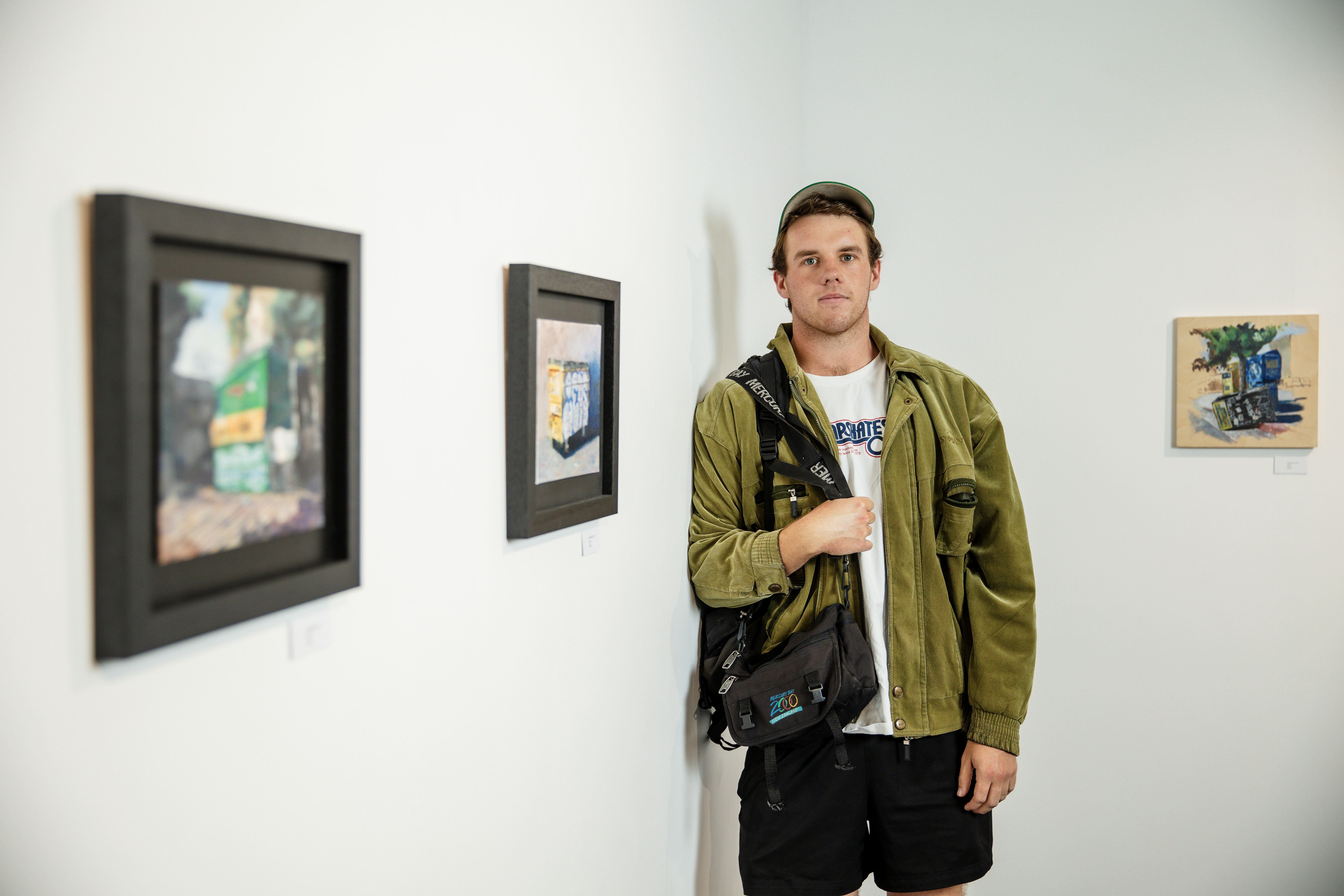
He reminds me of humans’ prehistoric cave paintings. We’ve been writing on walls for 64,000 years.
Fully embracing his subject matter, Jayde paints en plein air, setting up his easel and canvas at the scene of a crime. “I really like it. It’s so much fun getting out there and painting. And people will come up to see what I’m painting and it’s like a tag on the wall and they’re like, ‘Oh… that’s interesting’.”
So is graffiti now art in this context? Has Jayde, through osmosis, become a graffiti artist with his masterful works of tags on dumpsters, pieces on walls, throw ups on the undersides of bridges? The definition of art has always been complicated.
Jayde talks of a rebellion, citing an example from the USA. “The city was doing something like a public art project, and they called it parachute art. It kind of pops into the city and it’s done. ‘Oh, you want a sculpture? Here’s your sculpture’.” Then local artists created a whole bunch of sculptures in the mudflats without permission, and they ended up getting torn down. “It was the idea of, there is art that is done for people, and then art that is done by people. So I think in terms of graffiti, it is – whether you like it or not – it is done by people who you are living amongst it. Like, Christchurch is Christchurch for graffiti artists. Wellington is Wellington for graffiti artists, all that. You’re making the city more your own and giving it an identity. I think that’s a part of it. And then also, I think of a couple [of graffitists], they had problems with advertisements being around. ‘The city looks so plain and dead, and the only kind of colour we have is from things trying to be sold to us’.”
It can provide heart-stopping moments, photographing and painting graffiti paintings. On occasion, some people wander up, holding weapons. “I thought I was getting robbed once, some guy pulled a knife out, but he was used to trying to trade it for weed.”
“I’ve had graffiti writers come up to me when I’m painting and you know, they kind of do the walk pass and side eye look at what you’re painting. Once they see, oh, he’s painting the graffiti not just the building, they’ll come up and have a chat.”
Jayde has met about 50 writers this way. Side eyes, and knives out. Occasionally this is late at night, which isn’t the safest time to meet someone on edge and suspicious of you. But mostly, he’s out during the day because that’s the best light for painting. Has it ever been nerve-wracking? “Oh, one hundred percent. [In the States,] there were six dudes all blue jeans white shirt, blue bandanas, all come up and be like, ‘What are you doing?’”
A St Louis gang he thought. This experience necessitated a rethink on going to isolated places to paint and photograph. “Okay, I’m probably being a bit dumb here. It helps having a kiwi accent, because then they know you’re not a threat or anything. But in the end, they were chill. Just looking at a harmless graffiti artists’ artist.”
Have you ever been tempted to be a graffiti artist? “One hundred percent, yeah. The whole world looks so exciting. Just not only putting up pieces that you know that that was you, but also just when people have a certain hand style or certain letters that I see, I’m like, ‘that is amazing’. If I could write that, I would be so proud of myself… To see it on the street, and then to see other people see it on the street is very, very alluring.”
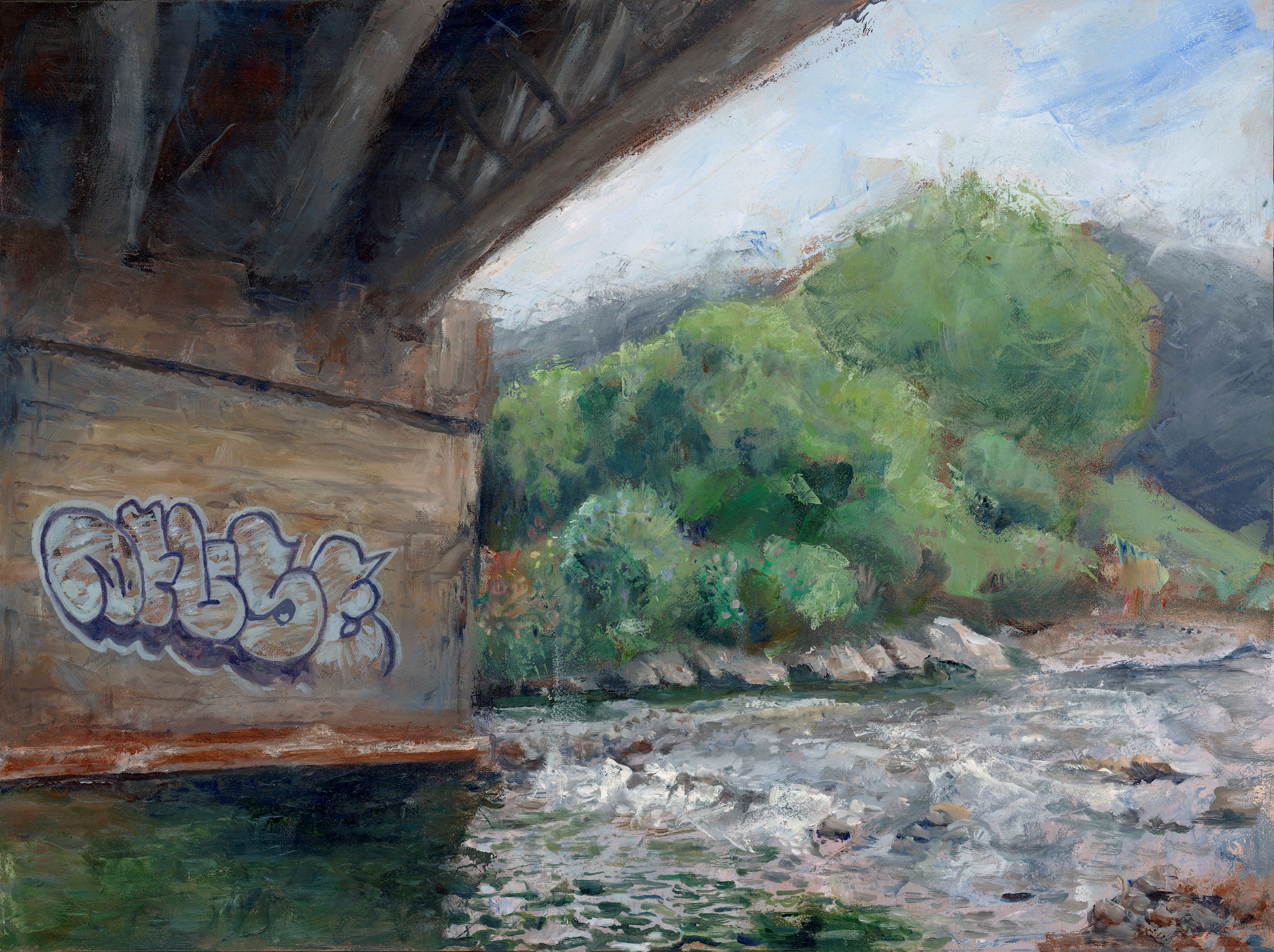
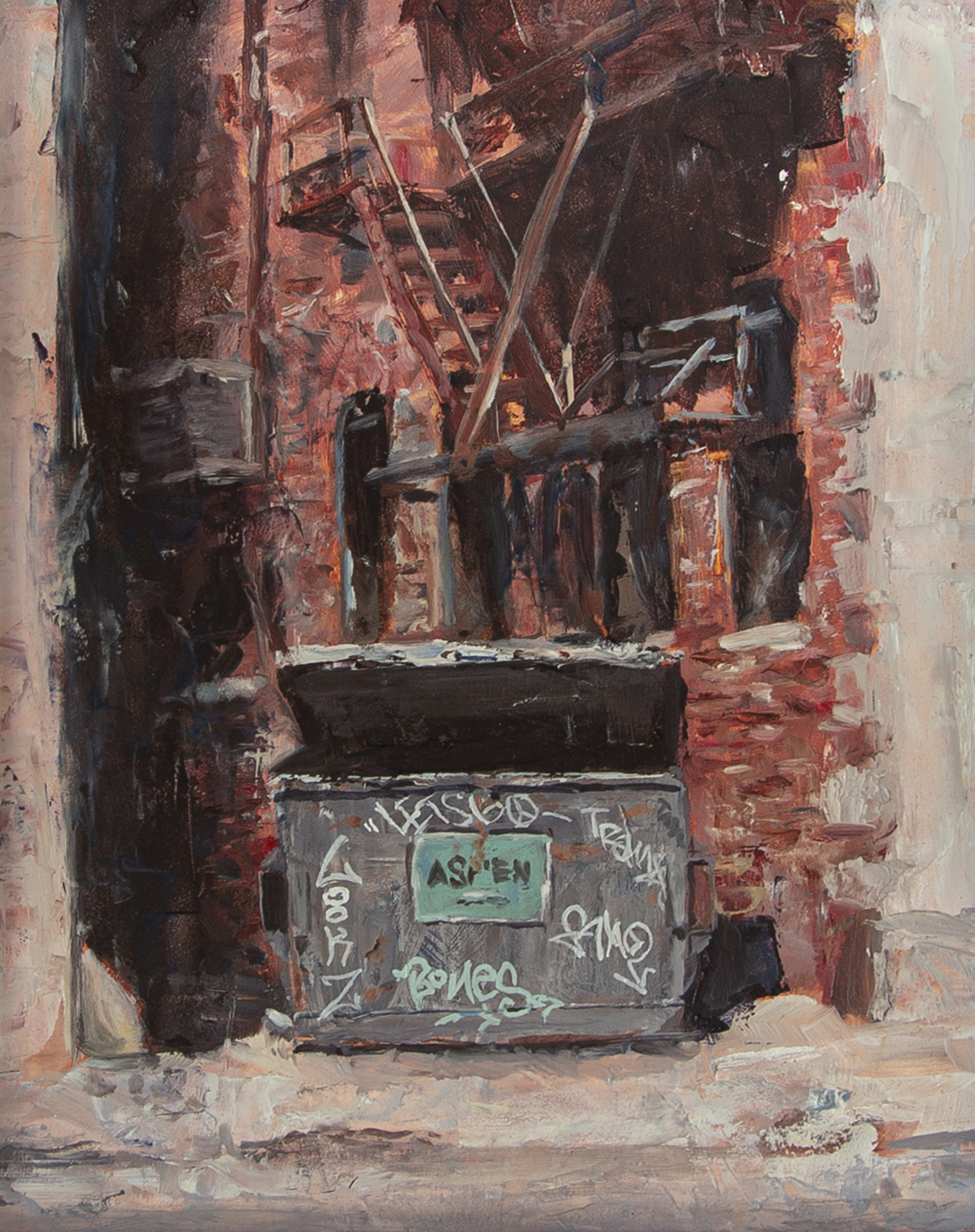
Despite Jayde’s love and fascination for graffiti, it comes with a ‘but’. “As much as I love graffiti, and I love looking at it and finding it and seeing it, photographing it and doing paintings of it. I still don’t know where I sit on writing on other people’s stuff.”
After talking to DTOK and Jayde I find myself studying graffiti rather than just walking by. I’ve realised that what seems to the eye-rolling observer to be reckless, rebellious, criminal behaviour is also something more complex. We see a one-dimensional calling card whereas the graffiti subculture operates within a framework of class and code where respect is only ever earned, where there is right and wrong within the mechanics of lawlessness, and there is genuine human connection and a need to be seen within the community.
[ad_2]
Source link