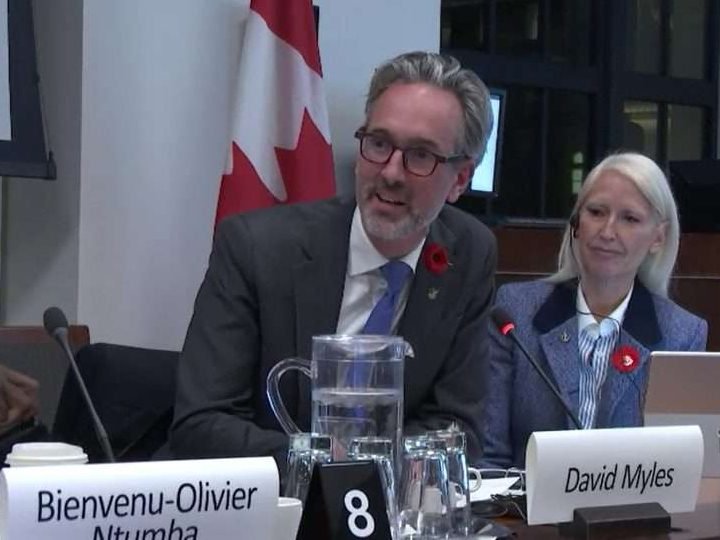

One year after trading the artist’s life for the life of a Parliamentarian, multi-Juno Award-winning musician and MP David Myles is advocating for Canadian artists to be treated less like hobbyists and more like the small business owners they are.
Entering federal politics, David said he was worried about being confined strictly to conversations around arts and culture. Instead, he found himself contributing across multiple policy areas before eventually taking on work connected to Canadian culture and identity.
“When I first got up here, I kind of wondered how will it then look for me?” he said.
“Will I just kind of close the door to my past and then look forward?”
Over time, David said he began to embrace the opportunity to speak directly on behalf of Canadian artists.
“I went from being like, ‘It doesn’t need to be me,’ to being like, ‘Oh my gosh. I’m so glad I get to do this. I’m so glad I get to be that voice.’”
Throughout his first year in Parliament, David said one of his goals has been to reframe how the government views artists.
He argues that musicians often rely on only a handful of revenue streams, including touring, merchandise and other forms of intellectual property.
In a survey conducted by Statistics Canada in 2024, around 60 per cent of respondents stated that they are not working full-time in their creative field. As a result, many artists are forced to hold down full-time or part-time jobs in other fields to get by.
“It’s not this whole idea that it’s just people waiting for handouts,” David said. “It’s not why people make stuff and put it into the world, it’s because they are compelled to do it.”
David raised concerns about how AI-generated content could affect copyright protections for artists during a recent study by the Standing Committee on Canadian Heritage.
As artificial intelligence becomes increasingly embedded in the music industry, David said, questions around ownership and authorship are becoming harder to ignore.
“What’s a human creation as opposed to an AI creation?” he said. “And when that needs to be labeled, how do we move forward?”
David believes that AI can be a useful tool for artists, but there needs to be a regulatory framework put in place to ensure that artists can properly work with it while also ensuring that their work is being respected.
“What [artists] put into the world is what brings us together, what brings us joy… it has so much value to our country,” he said.
For David, ensuring artists are recognized both culturally and economically remains central to the work he hopes to continue in Parliament.