[ad_1]
“Someone had lost their life… and I’m now alive because of that.”
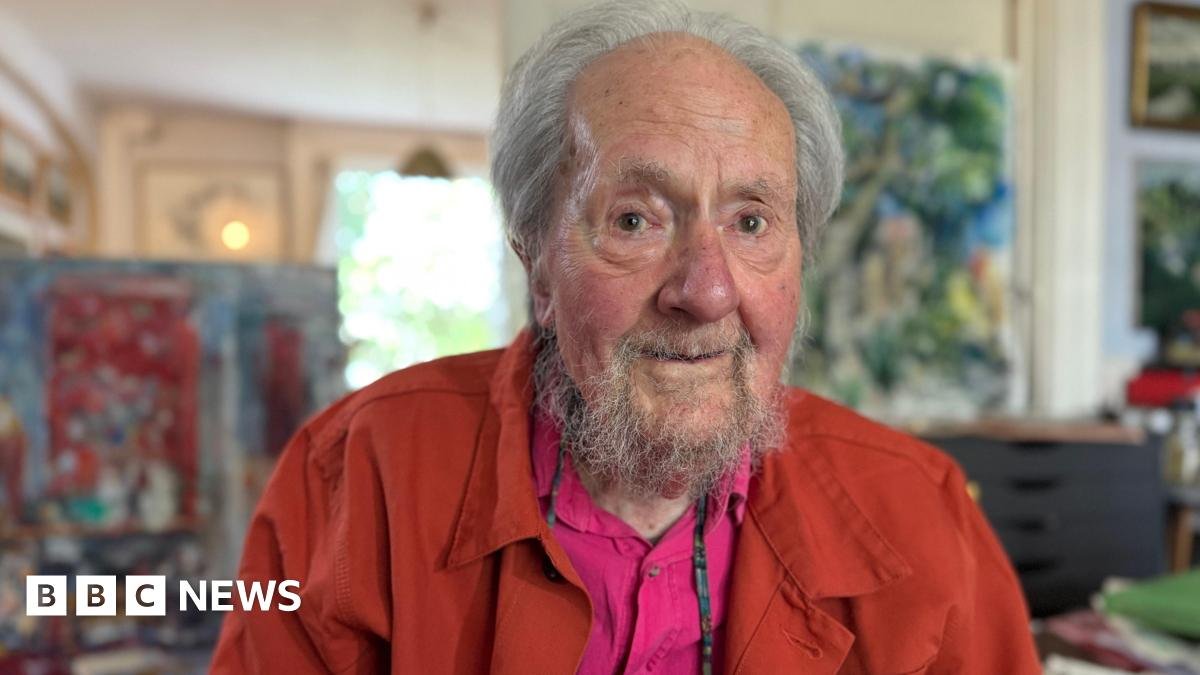
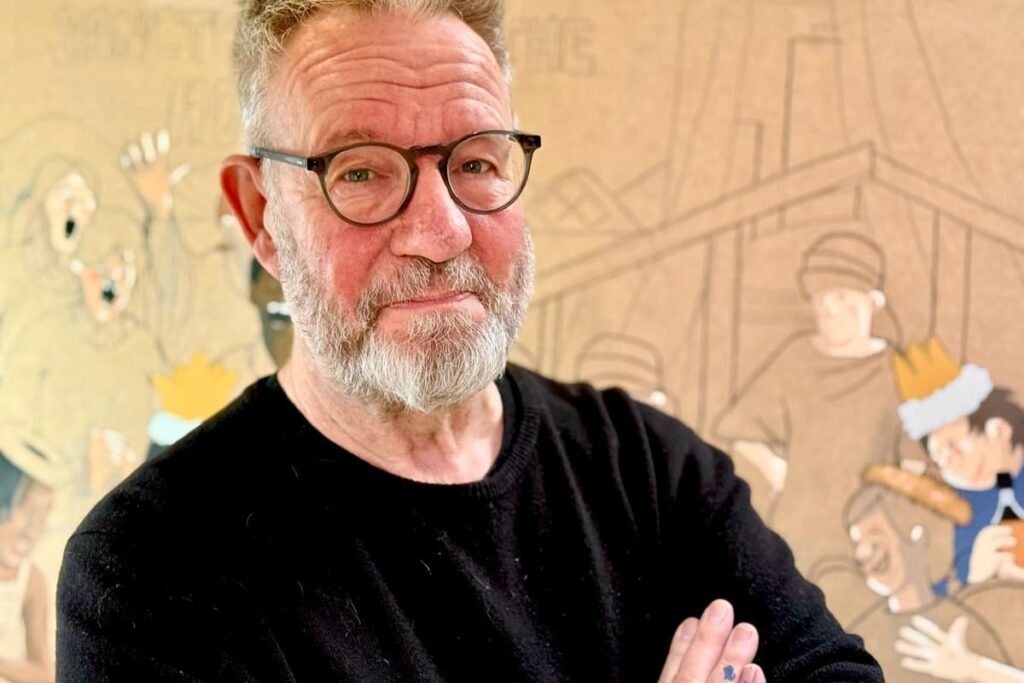
It’s not the kind of sentence you expect to open a conversation about art, but for Pete McKee that gratitude sits quietly at the centre of everything he does. The fabled Sheffield artist, known for his warm, nostalgic depictions of working-class life, is preparing to take his latest exhibition on the road – this time paired with live music, merging the two lifelong passions that have shaped him.
But behind the touring show, the paintings and the 150,000 visitors who passed through his last exhibition lies a different story – one of illness, of survival and of a relentless need to keep creating.


“I never try and let any illness impede what I do,” he tells The Star, surrounded by artwork and trinkets in his Sheffield studio. “I have to keep going.”
McKee is certainly a busy man. On the day we meet, there is a life-sized porcelain lioness in his studio which he is painting, and which will be display and eventually auctioned off to raise money for Sheffield Children’s Hospital.
He is also preparing for his latest project, taking the acclaimed Boy With a Leg Named Brian exhibition on the road and combining the tour with gigs by his band, the Everly Pregnant Brothers.
He turned 60 in February but retains the passion for playing and painting he had as a youngster dreaming of being on Top of the Pops, and later a Tesco worker dreaming of making a living from his art.

“It was a great opportunity to take the show on tour like a band,” he says. “If I’m not painting, I’m playing… they’re the two things at the centre of my life.”
It has, though, not been a journey without its challenges.

McKee’s mother Marjorie died when he was just eight years old, though he has tried to keep her spirit alive in his work. In later life he has been fitted with a new heart valve and pacemaker and, after being diagnosed with liver disease, received a life-saving transplant in 2017.
“It becomes quite an emotional burden at first,” admits McKee, who remains in touch with his donor’s widow after writing her a letter of gratitude.
“You become obsessed by this idea that your life’s been saved, and that you’re going to make the best of it. I think that mind alteration happens when you’re facing that concept of life-ending illness. You have to take that in and think — am I worthy of this?”

McKee’s defiance was inspired by an old schoolfriend, the photographer and filmmaker Sean Bloodworth, who had fought a similar battle.
“He was just such an overwhelmingly positive person about his illness,” McKee remembers. “He was 100 per cent dedicated to keep working and not stopping.
“He kept his illness to himself. I visited him in hospital once when he was getting ready to go for an operation, and he was in quite a bad state, but he was editing photographs he’d taken a week before. Unfortunately, he didn’t make it. He wasn’t able to get a transplant and he lost his life. But he was the absolute key and fundamental centre of how I dealt with any illness that came with me, because he was such an inspiration.”

Life saved and his resolve strengthened, McKee began work on his biggest show at the time, This Class Works, as soon as he came out of hospital. “I never try and let any illnesses impede what I do because at the end of the day, I’m the only breadwinner in my family,” McKee admits.
“So I have to keep going. I have to obviously respect the fact that I’m ill and I can’t do everything. But I try not to let it impede me in any way. I’ve had these major life-altering and life-saving operations but it just reinforces my desire to keep going.”
That mindset – of carrying on, of finding purpose through adversity – runs through McKee’s work as much as his life.
Born on a council estate in 1966, he was greatly influenced by cartoons he devoured as a child and grew up wanting to be a newspaper cartoonist.
Instead he worked as a postman and had a stable job at Tesco before leaving that, with the backing of his wife Jane, and take a punt at becoming a full-time artist at 40. He later achieved his cartoon dream at the Sheffield Telegraph, even if the £15 fee per drawing didn’t exactly offer a viable retirement plan.
“I was never going to be rich or famous doing that!” he smiles. “But that’s never really what I wanted. I just wanted to make a living out of art. Making the move from cartoons to art and painting changed the dynamics and expectations of what I was doing. And the value, as well.
“Once the snowball started, I had a strong indication that this was going to be popular, to a level. Obviously, I could never, ever have envisaged this length of time and the people who have come along with me and supported me. So it’s been an absolute joy. But it’s something that I never take for granted. But I’m forever striving and continually trying to move on to the next thing and keep going.”
It was at the Telegraph that I first came across McKee as a person but his work had long resonated, and some of his work now proudly hangs on my walls at home. Art is subjective but for me, the joy is in his remarkable knack of ensuring that just about anyone can look at one of his works and see something of themselves in them.
For a man who has maximised his gifts and achieved worldwide acclaim, working with the likes of Paul Smith and Noel Gallagher, there remains a humility that comes across in the art. “I try and see myself in every piece I do,” he admits.
“I want it to be relatable, something that I can connect with personally. And if I’m physically connecting with it, there’ll be somebody out there that’s got that same shared experience and story. I’m always striving for that connection, one way or another.”
Life playing the ukelele with the Brothers, known for their eclectic and eccentric local-themed versions of popular songs, has seen McKee diversify still. “We always enjoy ourselves on stage,” he smiles. “Whether it’s full or half empty, it doesn’t really matter to us.”
The recent struggles of his beloved Sheffield Wednesday may have cooled his football passion a little but McKee has found a new outlet, chipping away at his handicap at Hillsborough Golf Club and taking the chance to, for a few hours at least, rest a mind that is otherwise constantly buzzing with creativity.
“It’s almost like a disease in a sense,” he admits. “Because I can’t switch off. I can’t stop. I can’t stop creating, whether it’s writing songs for brothers, or drawing or whatever. I have to create something, I have to keep working. It never stops, whether I’m sat down watching telly or going on holiday.
“My brain doesn’t turn off, so it’s a compulsion more than anything else. One of my favourite artists, a Japanese woodblock printer called Hokusai, made his most famous piece when he was in his seventies. So there’s hope for everyone and, as an artist, that my best piece is still to come.”
*The 10-date tour begins in Leeds on April 25, also taking in Manchester and Nottingham as well as Brighton, Bristol and Southampton further south. For more information, dates and tickets, visit petemckee.com.
[ad_2]
Source link