
[ad_1]
As her cat Tea-Cup furtively sashays across the kitchen table in her seaside house in Margate, Tracey Emin can barely contain her excitement at her new 90-work show, A Second Life, at Tate Modern. It’s a blockbuster, which shockingly splits her work into two halves, life BC and life AC – Before Cancer and After Cancer.
Sipping tea, piano music filtering through the white painted rooms, dressed top to toe in black, she’s like the queen on a chess board waiting for her medication to kick in to stem bleeding and reduce pain. Her cancer may be in remission, but the aftermath is still searing. “I put all my energy into art, always have done, always will – against death or illness or pain, art wins. I feel lucky and I feel happy,” she grins. “Remember, my surgeon called me a miracle woman.”
Her good cheer – for two hours she is candid, funny, diverting, shocking, laughing and revealing about her life and art – is heroic as she reels off the content of the first half of her show. “Margate, Cyprus, family, rape, abortion, abuse, unhappiness, sadness.”
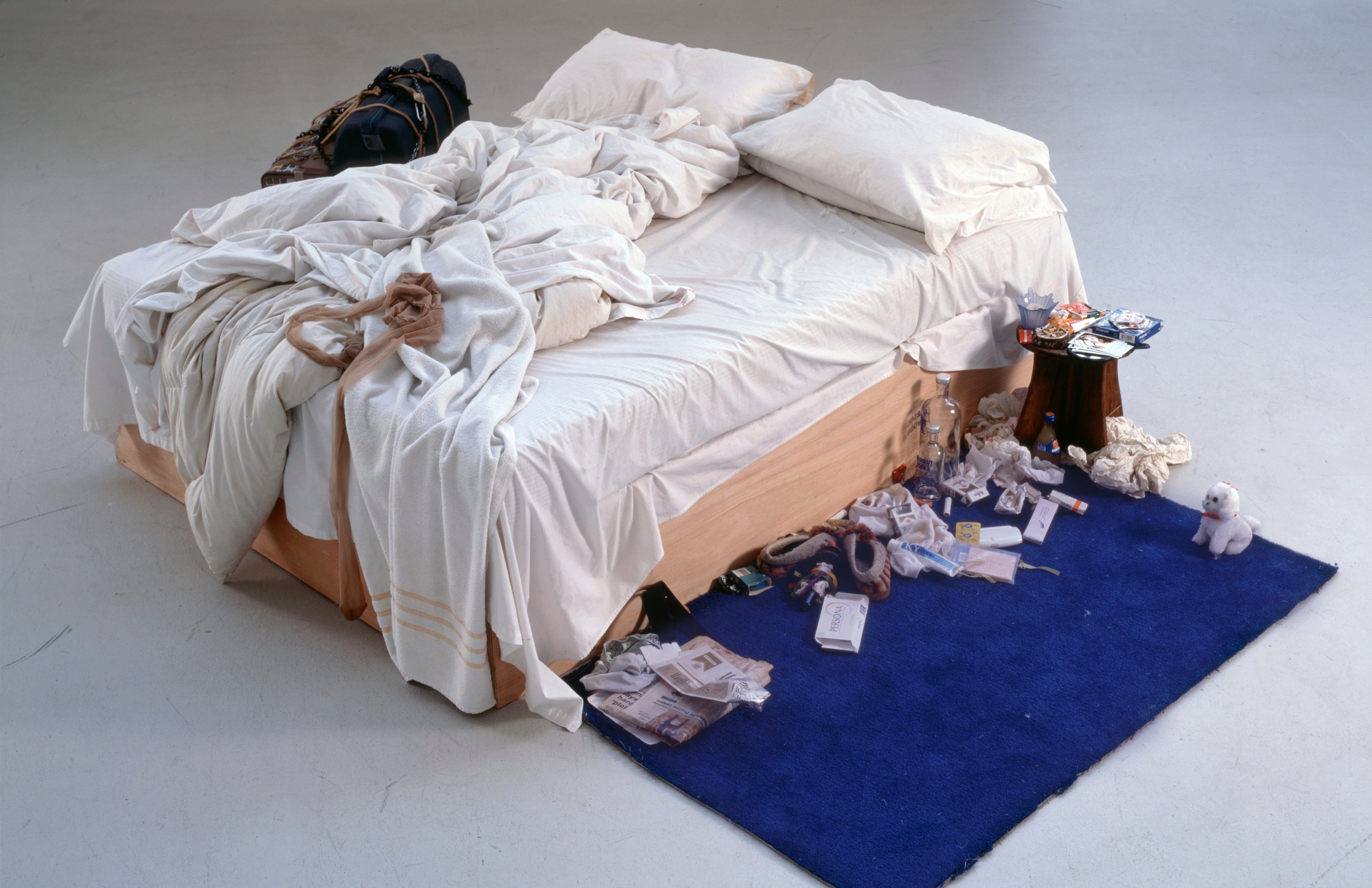
The Tate’s main corridor divides her work with a “very bloody painting and then the first thing you see in the second block is My Bed”, her iconic monument to her chaotic life: crumpled sheets, empty bottles, used condoms and other detritus.
“It was something that saved me in lots of ways. So I put it into the second half of my life, even though it belongs in the first. Why? Because after cancer, my life is unrecognisable. The only thing I’ve still got going for me is painting, is art. The art stayed the same, but nothing else.”
“I just hope that people will think one thing: that she is a great painter,” she says tentatively. Emin’s has been a long journey, and one where early on she now admits she gave the impression of not taking herself seriously – drunken escapades, outrage, partying and never seeming to stand still.
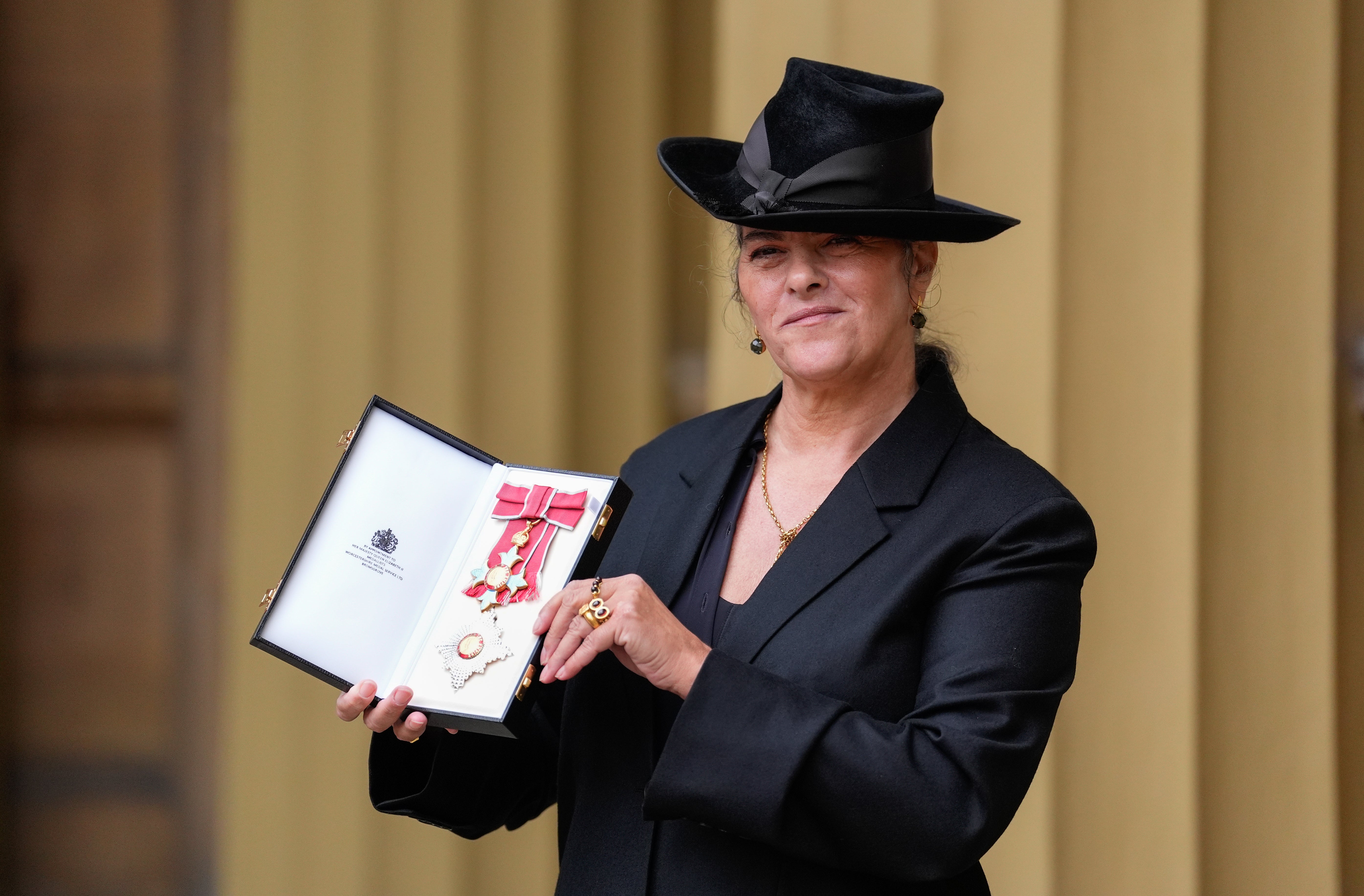
But that was yesteryear. As Tate Modern now honours her with its ultimate accolade with this show, the King has made her a Dame, the British Museum has appointed her a trustee and the Royal Academy has made her their Professor of Drawing. She is now unquestionably the eminence grise of women in the art world – her top prices are in the millions – yet it was so nearly a life cut short by sexual violence, poverty, homelessness, loneliness and shattered confidence.
At times, she considered suicide. “I was going to jump off Waterloo Bridge with my baby if I did not have an abortion.” Then she was surviving on £1-an-hour wages in a sex shop. The Tate show documents the highs and the lows of Tracey, but is mostly a joyous validation for Britain’s greatest female artist through her work – candid, vivid, and beautiful even when delving darkly. She enters the portals of the Greats with this show even if, when she looks back, she sees the trail of despair, destruction, desire and dodgy men. But her work transcends the human cost and empowers transformation as only art can.
Dark facts and stark realities are inseparable from her stellar rise and success as an artist. One such fact she faces head-on is that, just as she celebrates her show at the Tate, it is also exactly 50 years since she was raped aged 13 – just a few hundred yards from where we are sitting in her tranquil, unusually warm house. The assault was in a poorly lit alleyway, and she knew her rapist. He went on to attack other women, but she has no idea where he is now.
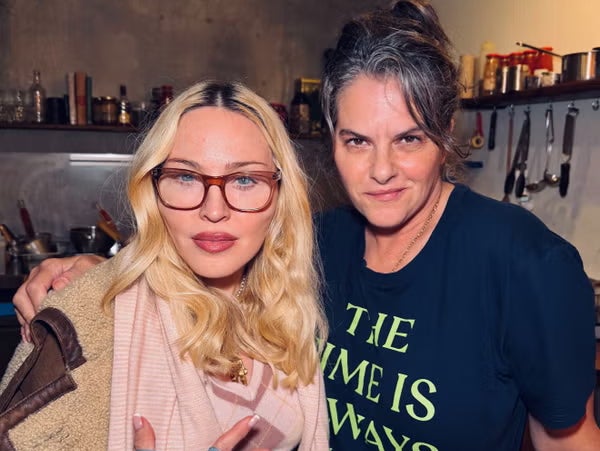
Margate ever since has been both nemesis and sanctuary. A few days ago, her friend Madonna visited to see her and others’ art on display in the seaside resort championed by Emin. The two Margate mavens made international news as the friends of 25 years plus wandered around town.
“We go back a long way, and I was so glad she came to see the art and that she loved Margate.” Emin is proud she has made Margate an artists’ mecca. She owns around 20 houses in the town, which she has transformed into studios and accommodation for artists – she’s even turned a morgue into a community restaurant. She agrees that Traceyville, this extraordinary property portfolio, is partly an antidote to her shockingly impoverished beginnings. Every day, she gets sustenance and joy from seeing her artists find what she never had: a place to work and be supported.
But back to the defining nature of her show: before and after cancer. She was diagnosed in 2019. A massive surgical operation eviscerated her body and she permanently has a stoma attached in place of a bladder. She accepts this stoically, like everything else in her rollercoaster life – miraculously and transformationally, it has become part of her art. A Second Life is testament to grit, determination, brilliance and originality.
It is as if a dozen turbulent lives have been crammed into her six decades: the rape, two abortions, suicide threats, homelessness, grinding poverty, abandonment and plenty of troubling personal stuff, and, revealed with characteristically casual candour, a life without sex for 10 years. But what emerges triumphantly is her obsessional need to make art, as she clearly finds almost dizzying happiness at the prospect of this totemic show at Tate Modern. For many years, she was written off by some as too bad, even mad and certainly dangerous to know, or at least her art was. A small painting of a sink in her bathroom – “a bit coals to Newcastle” she quips – is an archetypal Emin emotional burst of celebration and appreciation of things that she sees, creates and shares.
All of this is despite the cancer that has defined her last few years. “It was not like most other people’s. It almost destroyed me. The most frightening thing is when you’re told you have cancer; everybody sees their life flash before them, regardless of what kind of cancer. I was sort of philosophical because I knew there was something wrong with me, because I was bleeding all the time and other things. The irony is, I was feeling on top of the f***ing world. I was madly in love, and considering having sex for the first time in 10 years.
I had a glass of champagne in my hand and I thought, I’ve never been so happy
“So I thought I’d go to see my gynaecologist to make sure all was OK because I’d had the menopause. I wanted to make sure that I could have sex. The day before I went, it was really, really hot weather and I was in my house in Fournier Street, on the roof naked, sunbathing, and opposite me lived the vicar who was having tea in his garden. He could see my hair from across the roof, but nothing else.
“And chatting to him from the roof, hidden but naked, amused me. I had a glass of champagne in my hand and I thought, I’ve never been so happy. I was going to the studio every day to paint. Covid was very sad and terrible, but it suited me because I don’t like going out very much, and I was working ferociously. I felt fit. I felt good. I was brown, holding a glass of champagne, and I was laughing. I thought, I’m so happy, and of course, you know when you say that… exactly!
“I then went down to the loo, and saw lots of blood, really thick, strange blood, and I knew something was wrong. So when I went to my gynaecologist, I had a scan. By the way, a woman examines you very differently from a male, who will actually avoid examining you if they can. So she says ‘this isn’t very good’, but she doesn’t want me to go and have a scan straight away. So I had to wait until the next day when I had the scan, went back to my studio and sat there.
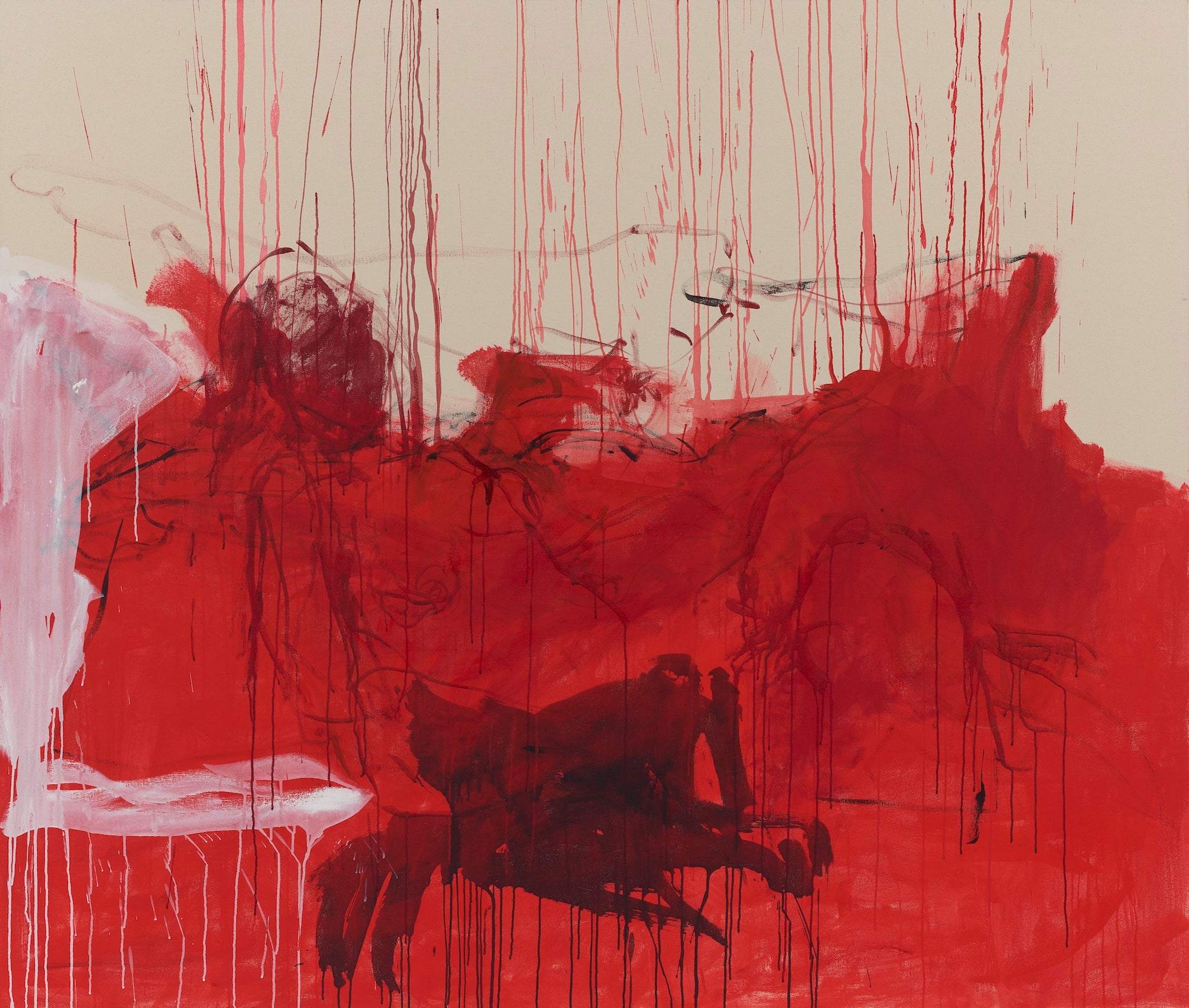
“I was supposed to be driving down to Margate. And then I thought, I probably won’t go, I’ll have another glass of champagne. And I was staring in the studio at this painting for ages and ages, wondering what it was. And it was kind of like unfinished, but it looked finished. Suddenly, my phone rang, and I jumped. It was my gynaecologist. ‘Hi, Tracey, are you alright?’ And I said, ‘Yeah’. ‘Are you with anyone?’ I said, ‘No’. And she goes: ‘Are you sitting?’ and I went, ‘Yeah. It’s not good news. Is it?’ She said, ‘No, it’s not.’ ‘Oh,’ I said, ‘is it cancer?’ And she said, ‘Yes.’” And so the Second Life began. It was dramatic and the end of her First Life.
“So my oncologist told me my bladder was really bad, but ‘the good news is we can replace it’. After a biopsy, that plan was ditched. ‘You’re having surgery as soon as we can get a team together.’ Major surgery. It was devastating.”
Tracey lists as calmly as a shopping list what followed. “I had this operation where they removed my bladder, half my vagina, my urethra, my ovaries, part of my intestines, my lymph nodes and a full hysterectomy.” It does not get much more drastic – there were 12 people in the operating theatre for seven-and-a-half hours.
You’re ecstatically happy to be alive, to survive but then you have the reality of being a survivor, of having a disability , a hidden disability for which you get zero sympathy
Tracey is today almost shockingly calm and without self-pity. “I was really cool about it all the whole time. You’ve got a 70 per cent chance of dying, the chance of living is 30 per cent.”
And yet. There is always Ying to every Yang with her. She combines dire desperation with a determination never to fold. And the echoes and rhythms of her life are as epic, as emotionally draining.
She returns to the origins of Traceyville, created partly in response to a childhood where her valiant single mother was unable to provide a family home, as her father first went bankrupt and then awol. Similarly, her compulsive buying is a response to the shame and pain of “not having”. It’s why she owns so many properties (and may explain why the heating in her Margate house is so high). The gem of her property empire being an enormous London house in Fitzrovia.
The pictures she is showing at the Tate pivot around her famous unmade Bed, a scene of decay, sex, lovelessness and basic instinct. The stained sheets, used condoms and sordid detritus illustrated her inner life turned outwards by brutal exposure. It shocked and it screamed as it became the symbol of a generation upended and left listless in the Thatcher years.
Only Emin could have an abortion room in her show. But life and death she has juggled all her life. “My cancer surgeon told me I wouldn’t be here at Christmas. That was in June.” She defied the odds. She also defied the utter ignominy of cancer. “I had my vagina sewed up with barbed wire stitches – pretty painful I can tell you.” and then she grins, as if she is happy her trauma is something she can now relate to rather than experience. She has somehow conquered it, or appears to have. “When I first learnt I had bad cancer, I emailed all my friends to tell them not to talk to me about it. I had a survival strategy…
“You’re ecstatically happy to be alive, to survive, but then you have the reality of being a survivor, of having a disability, a hidden disability for which you get zero sympathy. But importantly, I am much happier than I used to be. Also, I stopped drinking, which is a massive thing; it was something I had done all my life since age 13.” The one other time she had stopped was when she was broke, “which my dad said shows I wasn’t an alcoholic!”
She points out that Munch gave up drink, and so has David Hockney; it makes artists more productive. “I don’t paint at four o’clock in the morning after two bottles of wine, do I! Massive difference.”
But some things have not changed. She paints always when there is a full moon. “I used to make jokes about this, but it really is true.” She feels there are forces which alter her creativity. “When you are painting, there is a force coming through you from a million miles back, 1,000 million miles back, and it comes through you if you’re there at the right time and you have the right canvas in front of you.”
I am not afraid of death but also, to be clear, I don’t want to die
She credits an outside force at work. “One thing I know is everything I paint isn’t just down to me because I don’t know what I am going to do. I have got my shapes in my head, which I call my cavewoman painting. My leg up. My leg down. My bridge thing, these templates are in my head and where I go first, but I never know what the image will end up as.”
She describes starting a picture by drawing a kitchen table, but quickly hates it, so paints over it a blue colour which then – with the table coming through the paint – looks like a landscape to which she adds a figure and then a house. Then she overpaints it white, but this leads to another figure somehow emerging, which looks like her mother, and the fruit bowl she started with now looks like a bed, and then she remembers her mother, when she was dying, trying to tell her that her grandmother was at the end of the bed. And so then it changes again, and now the figure looks like Tracey herself, and through this slightly hallucinogenic process, a self-portrait emerges.
There is a fearlessness to the process of exploration, and that fearlessness is what defines so much of what she does or tries to avoid. “My surgeon said to me, ‘Are you not afraid of anything?’ And I said no, not really and definitely not of death. He said, ‘Why not?’ I said death looks after itself, it’s unavoidable. It’s life we have to focus on. This was when I faced cancer and I said I just want to make the most of it now because I don’t think I have ever done that before in my life. But he persisted and said, ‘Are you not afraid of anything?’ and I said just one thing: torture. And he said, ‘That is because they keep you alive,’ and I said, yes. So I am not afraid of death, but also, to be clear, I don’t want to die.”
There is a heightened drama at the very beginning of her life as an artist. At the Royal College, she was so poor she could not store her pictures at home, and unlike every other student, she did not have parents with a garage to house her works. In a rage, she took a sledgehammer and destroyed them in the art school courtyard. “I destroyed all the paintings that I did before I got into a college of art. I just smashed them all up. I had nowhere to put anything. I just had, like, nothing, nowhere.”
It was the start of trying to fit in for a young woman who left school at 15. “I was put on the pill by my mother aged 14. I also had a massive chip on my shoulder and didn’t fit in. Even filling in forms at the Royal College of Art, it says: father’s occupation, mother’s occupation. There is no room for ‘unemployed’ and no room for nothing, nothing, nothing. There is only room for something, something, something.
But always good humour saves her. “I never took drugs so I was able to buy a house as soon as I could when I started to sell work. In the end, art kept me alive. Art has always been there for me. When I was young, I was so nihilistic and so suicidal in my head, but whenever I took on the idea of suicide, something bizarre would happen and give me a high, and it would always be something artistic.”
And so she bubbles on. Unstoppable and riveting. She is passionate about helping other women who faced the attacks she suffered, but lightheartedly suggests a plaque should mark where she and other women were raped. She would fight to the nth degree for women to have final say on what they do with their bodies.
The Tracy Emin of today is rich, loved and wildly successful. She has an able team around her led by Harry Weller, her assistant and manager. She has a life of comfort and security, which she appreciates with a passion. Never forgetting she was at risk of losing her life and her existence. Art and her survival instinct has always stepped in. She says if there was a plane crash and only one passenger was reported as having survived, she always knew it would be her. She laughs. She pauses. She knows, for all her joy and her triumphs, how hard life can be. Cancer takes few prisoners. She has survived. Brilliantly. But there is always a cost. And that cost is here at the Tate, for all to see, admire and wonder at.
‘Tracey Emin: A Second Life’ at Tate Modern from 27 Feb to 31 August; tate.org.uk
If you are experiencing feelings of distress and isolation, or are struggling to cope, The Samaritans offers support; you can speak to someone for free over the phone, in confidence, on 116 123 (UK and ROI), email jo@samaritans.org, or visit the Samaritans website to find details of your nearest branch.
If you are based in the USA, and you or someone you know needs mental health assistance right now, call National Suicide Prevention Helpline on 1-800-273-TALK (8255). The Helpline is a free, confidential crisis hotline that is available to everyone 24 hours a day, seven days a week.
If you are in another country, you can go to www.befrienders.org to find a helpline near you.
[ad_2]
Source link