[ad_1]
He is quick to recognise his luck in having had enormous freedom at a crucial time. As he says, “It was fun too!”
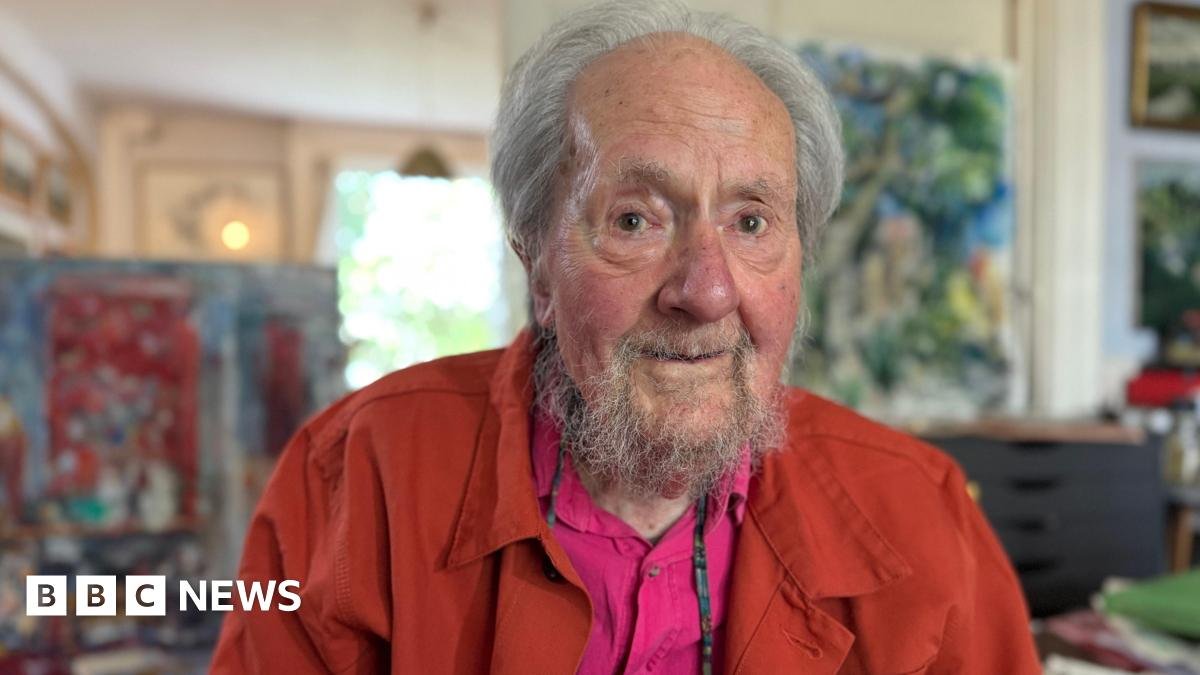
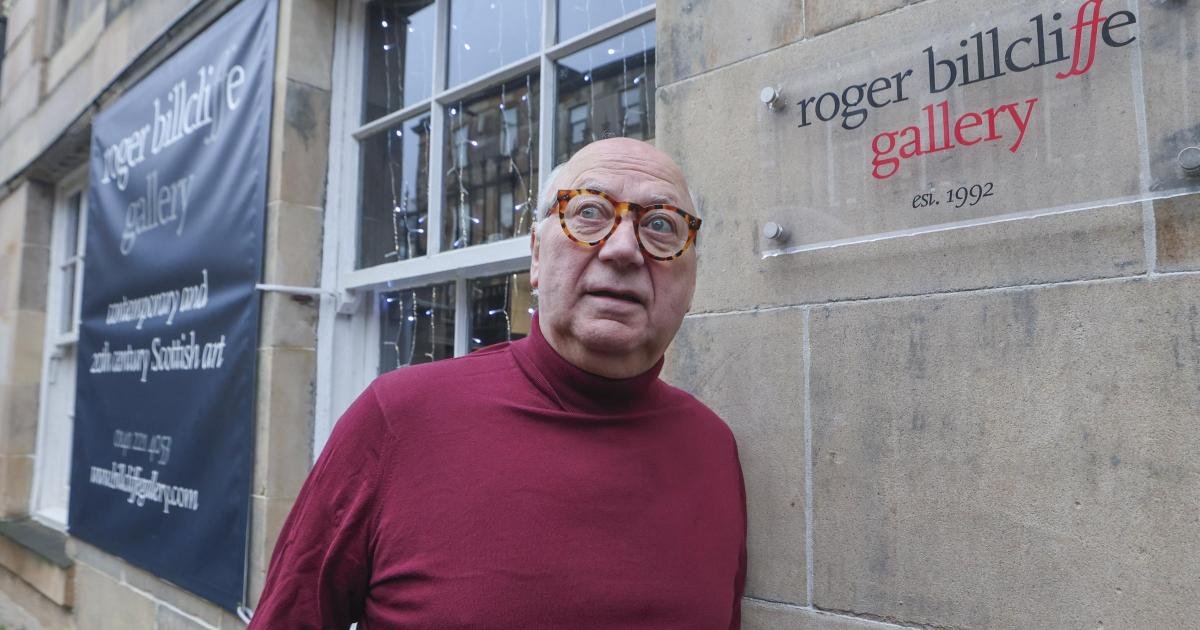
Seen by many as a “national treasure and a force for good,” now 80 he’s retiring, and closing his eponymous Billcliffe Art Gallery at the end of the year. It’s a sad day for Glasgow, for the many artists he’s exhibited, also for the stream of art lovers who’ve enjoyed buying pictures from him.
Billcliffe opened his Glasgow gallery in 1992 acquiring premises from The Fine Art Society where he’d been a director since 1979, responsible for the Society’s galleries in Edinburgh and Glasgow. When the Billcliffe Gallery started it was Scotland’s largest private gallery, occupying five floors in the heart of Glasgow. Latterly he relocated to Bath Street. How on earth has he managed to fit it all in?
Read more:
But ‘retiring’ doesn’t mean putting his feet up, for this superhuman guy is currently working on Mackintosh and The Four, plus painter J D Fergusson, “but going at my own pace.”
I first met Roger Billcliffe in the late 1960s. He arrived in Glasgow from Liverpool’s Walker Art Gallery where he’d been from 1967. He was the assistant keeper of the new Hunterian Art Gallery – with an extra hat as lecturer in Fine Art. In Liverpool he’d worked on a big Sickert show – “a baptism of fire”, plus significantly, Scottish designer Herbert McNair. McNair was an architect pal of Mackintosh’s, married to Margaret Macdonald’s sister Frances, and one of the notable Glasgow “Four.” In August 1968 Billcliffe went to Edinburgh to see the famous Festival Mackintosh exhibition – as did I – and was hooked.
So began Billcliffe’s lifelong Mackintosh career. But the new art gallery was by no means ready. “Yes there was a feasibility study – but no money!! Building was to start in 18 month’s time! I went to London twice a month to see the architect William Whitfield. There were problems, problems, all to do with money. Of course the building design was changed, to cut costs.
In the end Prof McLaren Young got 1/4 million – a lot in those days. He manoeuvred money from the Whistler bequest, claiming ‘it was entirely legal to promote and enhance the Whistler gift’ – and the university approved it!” But the memorable McLaren Young suddenly dropped dead – leaving 3 gaps in the Hunterian staff. Roger was left to run it all. “I was given carte blanche by the University Principal who said just get on and do the job.”

It was a huge task to sort out the details of the Hunterian Art Gallery plus the Mackintosh House, which is now attached to the Hunterian, but was formerly one street down. “Where did the windows go, what kind of skirting boards, moulding, even where to put light switches and wiring? Luckily there were 2 similar houses left in the street. I spent a lot of time there measuring.” But issues multiplied when fire and chaos arrived in the form of a Molotov Cocktail.
At that time, 1975, Hunterian prints and drawings and all the Mackintosh collection of furniture and drawings was stored in the Fine Art Department at number 18- 20 Bute Gardens just off University Avenue. When the adjoining terrace house became vacant the university let it as a home for battered women.
Morally generous maybe, but an angry husband threw a Molotov cocktail through the back lane kitchen window and set fire to the building. The result was severe. “Everything had to be moved out into storeage. I just couldn’t function; It was no longer possible to do exhibitions.” There was a silver lining. “I asked if I could do research on the collection, which resulted in my first Mackintosh book on his Flower sketches .
Yet in 1977 Billcliffe did a swerve when invited to take the job of keeper of art at Kelvingrove. ‘I saw my future as a museum person, so I took the job. And hated it!” Again there was drama as Billcliffe crossed swords with officials while trying to save the now famous Mackintosh Ingram Street tearooms. “Many in Glasgow saw it as ‘a load of rubbish’ I pointed out that the V&A and New York’s Museum of Modern Art were begging for any bits of Mackintosh, but Kelvingrove refused to take it. They already had furniture in the City Chambers cellars and more stored in the old Fruitmarket where the building caught fire when vandals broke in.”

The 50th anniversary of Mackintosh’s death in 1978 provided a focus for a big show of Mackintosh watercolours which went on tour to Dundee, Sheffield, and the Fine Art Society in Edinburgh and London and later became a beautiful hardback book published by John Murray. “Most people didn’t know that Mackintosh did watercolours!” comments Billcliffe. This led to his important 1979 Catalogue Raisonne of Mackintosh furniture. Like all his work it was done in his own time, at night.
Billcliffe comes from Yorkshire. Maybe this accounts for his work ethic, accompanied by a happy ability to be in the right place at the right time. When the Fine Art Society wanted to open a place in Glasgow, Roger was asked if he’d like the job. Meanwhile when Sir Hugh Frazer decided to sell Daley’s department store and the Mackintosh Willow Tearoom became available, they turned to Roger for help.
So what of the tragic two fires which annihilated Glasgow School of Art? “The only optimistic thing I have seen in the last three years was a recent remark by Mark Jones, new chairman of Historic Environment Scotland. He stated that he sees GSA as a priority.” So let’s all put our faith in Jones, – who sorted out the V&A and the British Museum, – while we wish Roger a very, very happy retirement.
[ad_2]
Source link