[ad_1]

(Credits: Raph Pour-Hashemi)
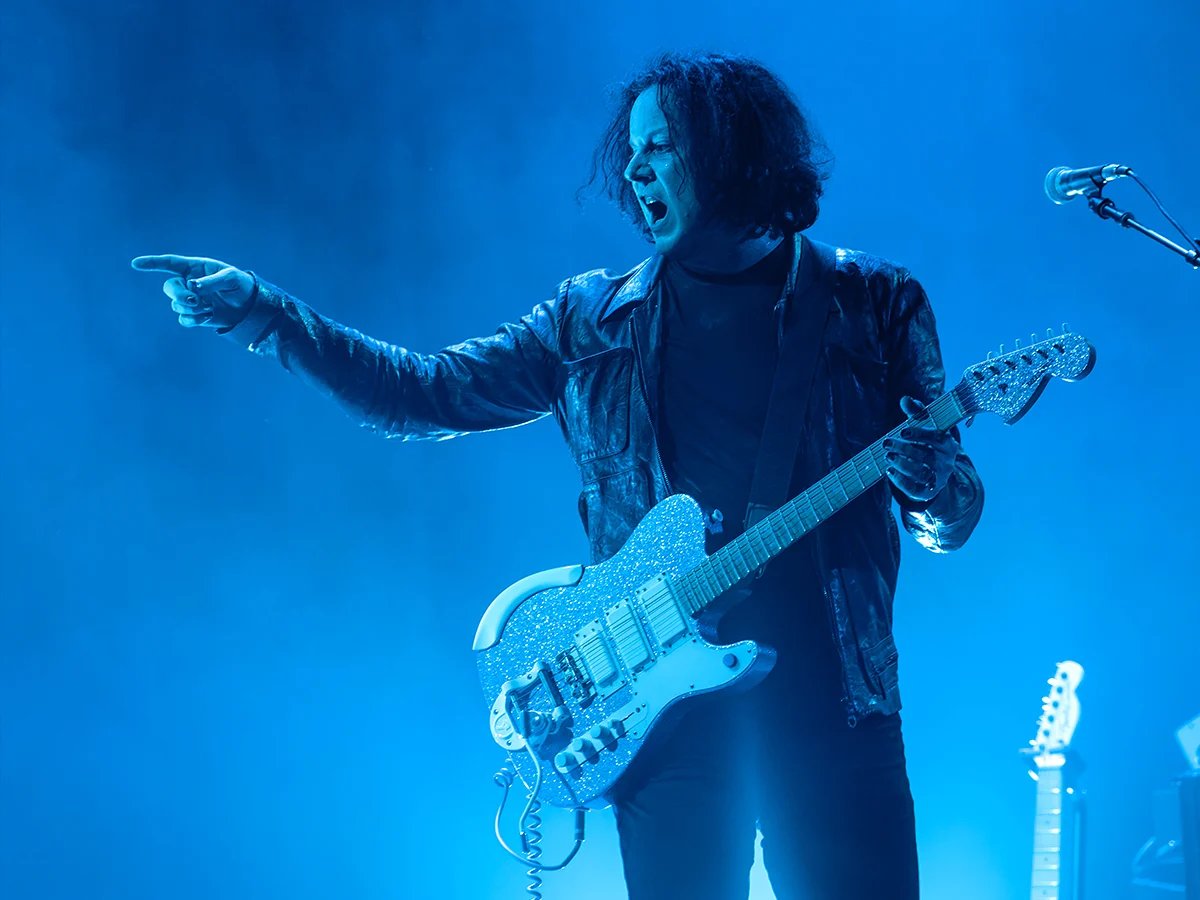
It’s the mark of a true kingpin musician when they not only live and breathe their own output, but also relish in the history of all that came before them as well. In this sense, Jack White is the ultimate aficionado.
Amid his own prolific leagues of rock stardom, White has built up a reputation for himself as a total connoisseur of the game, garnering a pretty impressive collection of classic guitars that are as eye-wateringly beautiful as their inevitable price tags. Naturally, each instrument is bound with its own lineage and countless stories to tell, which is obviously what attracted White to them in the first place. They cast a glimpse of rock and roll history that many can only dare to dream of.
The White Stripes frontman is a prime example of the rare lucky few who become captivated by that dream from their earliest memory, and then manage to go all the way and make it happen. But, of course, it wasn’t as though he came out of the womb with an instant rock star’s persona and a penchant for classic guitars – there had to be the North Stars there to show him the path, and they could only be the best of the very best.
It’s no secret that White feels a particular calling towards the blues; his own work will tell you as much, but his back catalogue of inspirations also serves as an essential blueprint for the genre in all its historic and contemporary forms. The lure of classic rock is hardly far from view either, of course, as he once explained how “I dabbled in things like Howlin’ Wolf, Cream and Led Zeppelin,” but in many ways, they were only the beginner’s guide that would lead him to the real strokes of genius who would forever change the course of his life.
The rockers were all great, White conceded, “but when I heard Son House and Robert Johnson, it blew my mind. It was something I’d been missing my whole life. That music made me discard everything else and just get down to the soul and honesty of the blues.” For an artist who only made his breakthrough in the early years of the 2000s, his pick of two musicians who made their way the best part of a century prior may seem disjointed – but it also spoke to just how soul-stirring an effect the blues has always had on White’s heart.
With both House and Johnson being hailed as two of the greatest pioneers of the blues as we know it today, it’s no surprise that White would search back to the very original roots of the genre to find his pair of ultimate heroes. Indeed, by the way he described them as being “missing” to his life before the moment he heard their first strummed notes, they were painted as an essential lifeblood to the man, without which his own success would never exist.
As the integral music of Mississippi made its way across to strike the heart of a young boy in Detroit, Michigan, all those many decades later, no one could have expected what that influence would be spawned into. But it is a testament to White’s uniqueness and tenacity that he wanted to harbour something so old-school into a whole new world – and now, as a bona fide rock and roll legend in his own right, it seems the gamble has paid off.
Related Topics
[ad_2]
Source link